

Port-Cros National Park
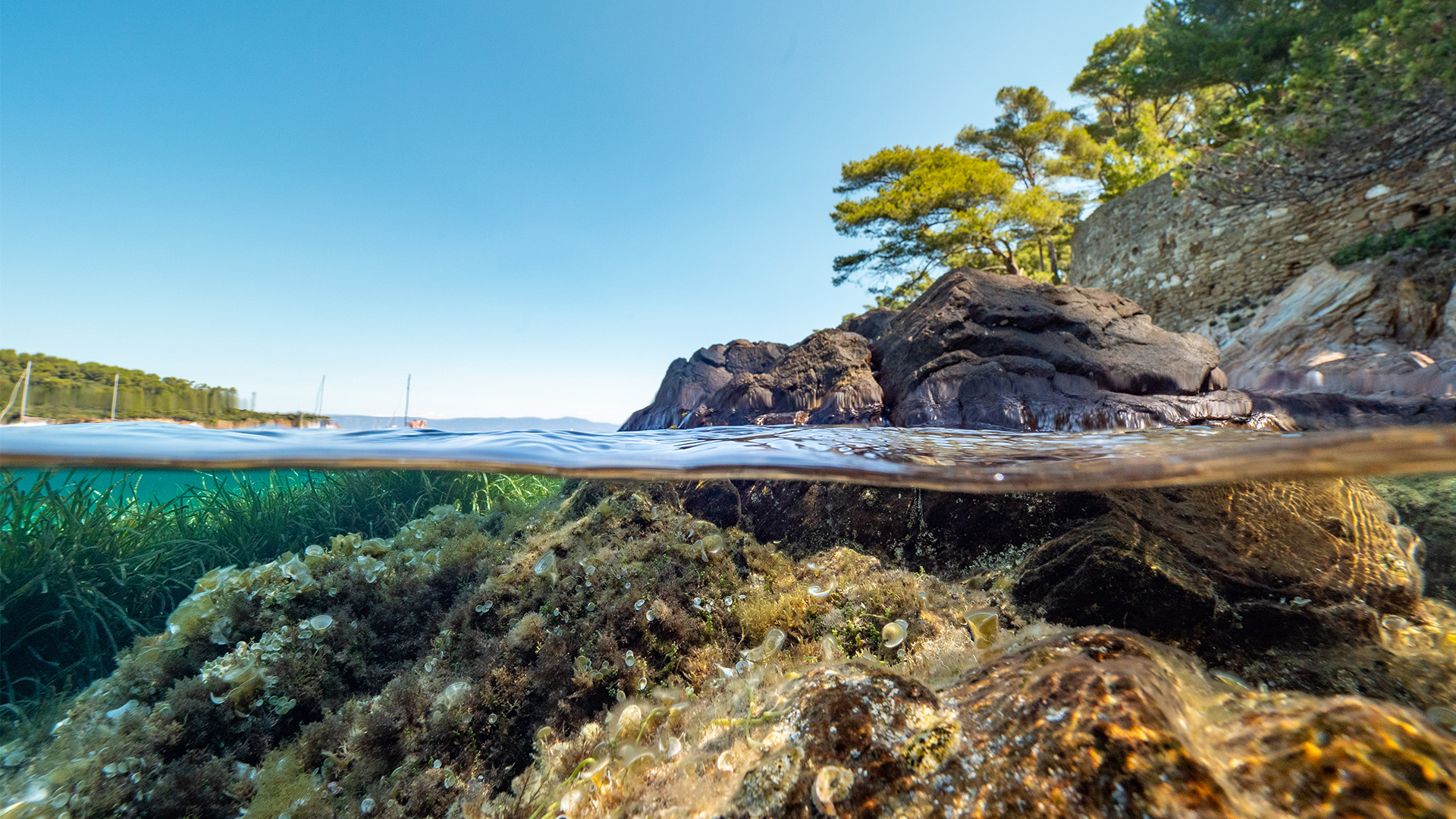
Port-Cros National Park protects one of the most complete Mediterranean landscapes in PACA, extending from the forests, temporary streams and sea cliffs of the Îles d’Hyères into Posidonia meadows, rocky reefs, coralligenous walls and the deep waters of the Pelagos Sanctuary. Created in 1963, it was Europe’s first marine national park. The original protection of Port-Cros has since grown to include the core of Porquerolles, the island of Bagaud, surrounding marine waters and a wider National Park territory extending along the Var coast.
Long-term protection has changed what can be seen beneath the surface. Dusky Groupers and Brown Meagres have increased in number, larger fish are once again present in shallow water and reefs support animals now difficult to encounter along more heavily exploited stretches of the Mediterranean. The terrestrial islands carry a different importance, protecting breeding seabirds, island reptiles, rare plants, mature woodland and Port-Cros’s remarkable Tyrrhenian Painted Frogs.
A Mediterranean Sanctuary Above and Below Water
Landscape & Habitats
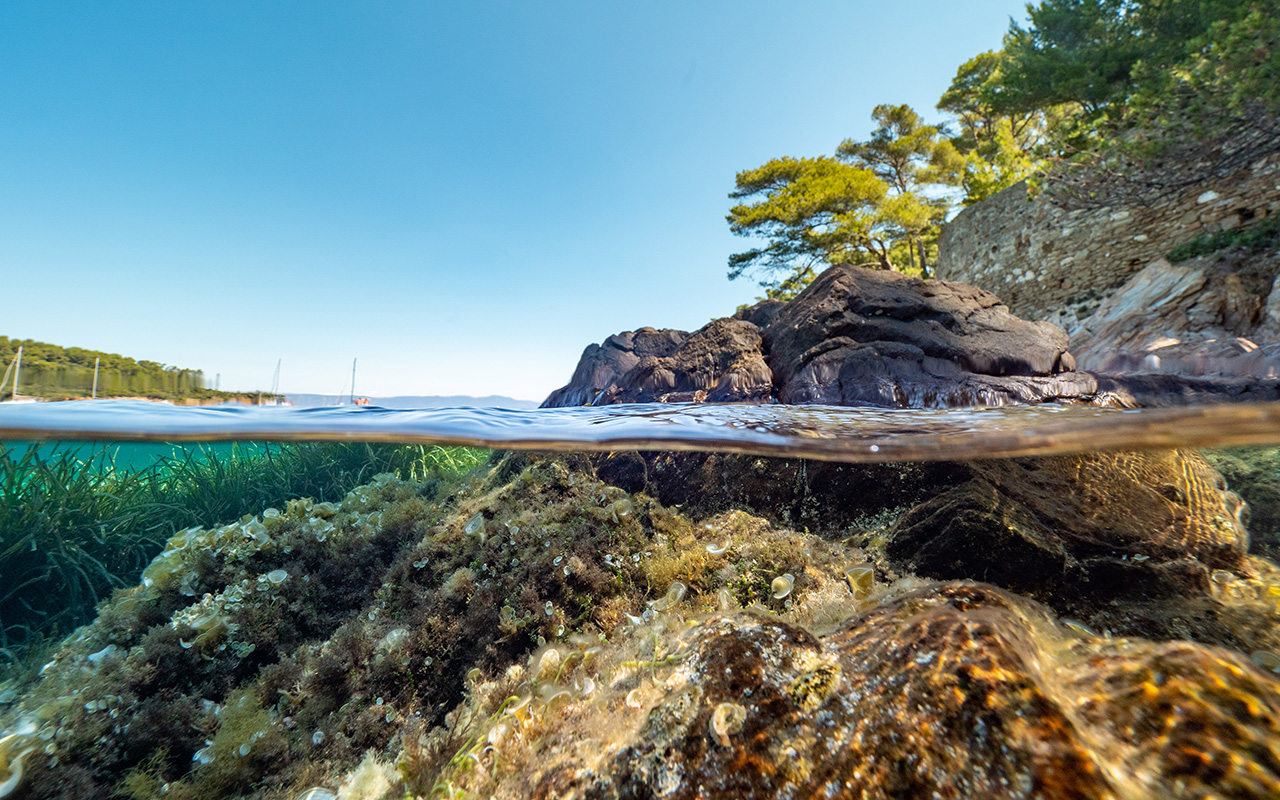
Explore the contrasting landscapes of Port-Cros National Park, from the wooded islands and cultivated valleys to rocky coasts and the protected Mediterranean below.
Birding Port-Cros & Porquerolles
The birding strength of Port-Cros National Park comes from the meeting of Mediterranean woodland, maquis, cultivated island landscapes, wetlands, maritime cliffs and open sea. Migration adds another dimension as birds move between Europe and Africa through the western Mediterranean. The islands hold a characteristic southern resident community. Sardinian Warbler is particularly at home in dense scrub and maquis, while more open woodland and cultivated country bring buntings, finches and other Mediterranean birds into the landscape. Cirl Bunting, European Serin and Common Linnet are among those worth watching for within the wider park.
Spring changes things quickly. Nightingale becomes one of the more conspicuous voices of suitable woodland and scrub, while Hoopoe, European Bee-eater and Mediterranean warblers add to the arrival of summer visitors. After dark. European Nightjar and Eurasian Scops Owl occur within the National Park bird community, adding two easily overlooked species to warmer woodland and open Mediterranean habitats. The rocky coast brings another set of birds. Peregrine Falcon occurs across the Îles d’Hyères, while Common Kestrel is a familiar hunter over more open ground. Blue Rock Thrush belongs naturally to the rocky Mediterranean coastline, with gulls, shags and shearwaters taking over as attention moves out to sea.
Mediterranean Shag is one of the characteristic coastal birds, feeding close around rocky headlands and offshore islands. Yellow-legged Gull is considerably more conspicuous and forms a major part of the island bird community. Offshore, Scopoli’s Shearwater and Yelkouan Shearwater are two of the most important birds of the archipelago. Both spend much of their lives at sea, and the ferry crossing itself can therefore become part of a day’s birding. Sea conditions make a considerable difference. Shearwaters may be distant or absent from view on one crossing and much easier to follow on another, while Northern Gannet, Sandwich Tern and other seabirds add seasonal movement offshore. Migration is where the islands become especially interesting for serious birders. After a Mediterranean crossing, spring migrants can appear suddenly in woodland, vineyards, gardens, open fields and sheltered valleys. Flycatchers, redstarts, shrikes, warblers, wagtails, hirundines and bee-eaters can all form part of this passage, with the mix changing markedly according to weather and date.
Migrating raptors add another reason to keep watching the sky. Honey Buzzard, harriers, kites, Eurasian Sparrowhawk and Ospreycan occur through the wider coastal migration system, but none should be regarded as a guaranteed island sighting. Porquerolles has particular potential for grounded migrants because woodland is interspersed with vineyards, open cultivation, wetlands, hedges and coastline. Port-Cros offers a denser landscape of forest, maquis and sheltered valleys. The two islands can therefore produce quite different birding on the same day. Autumn passage is often more prolonged, with successive movements of flycatchers, redstarts, warblers and hirundines travelling south.
The Vieux Salins and Salins des Pesquiers then provide a completely different experience. Greater Flamingo is the obvious bird, but the shallows and margins also attract Black-winged Stilt, Pied Avocet, Kentish Plover, Dunlin, Common Greenshank and other waders according to season and water level. Herons, egrets, Spoonbill and Glossy Ibis broaden the wetland community, while terns use the lagoons and coast. Winter brings ducks, grebes, cormorants and additional waders into the sheltered waters.
Mammals
The islands support a relatively small terrestrial mammal community, but several species are worth knowing. European Hedgehog occurs within the National Park, while smaller mammals include Greater White-toothed Shrew and Etruscan Shrew. Black Rat is another established island mammal and part of the complicated introduced fauna of Mediterranean islands.
Bats provide much more of the interest after dark. Around ten species have been recorded on Port-Cros and Porquerolles, using the islands for feeding, winter shelter or breeding. Geoffroy’s Bat is particularly significant, with conservation work helping to maintain a breeding colony after the loss of an earlier roost. Grey Long-eared Bat is another characteristic species, while the wider National Park records include Lesser Horseshoe Bat, Leisler’s Bat, Savi’s Pipistrelle, Nathusius’s Pipistrelle, Common Pipistrelle, Soprano Pipistrelle and European Free-tailed Bat.
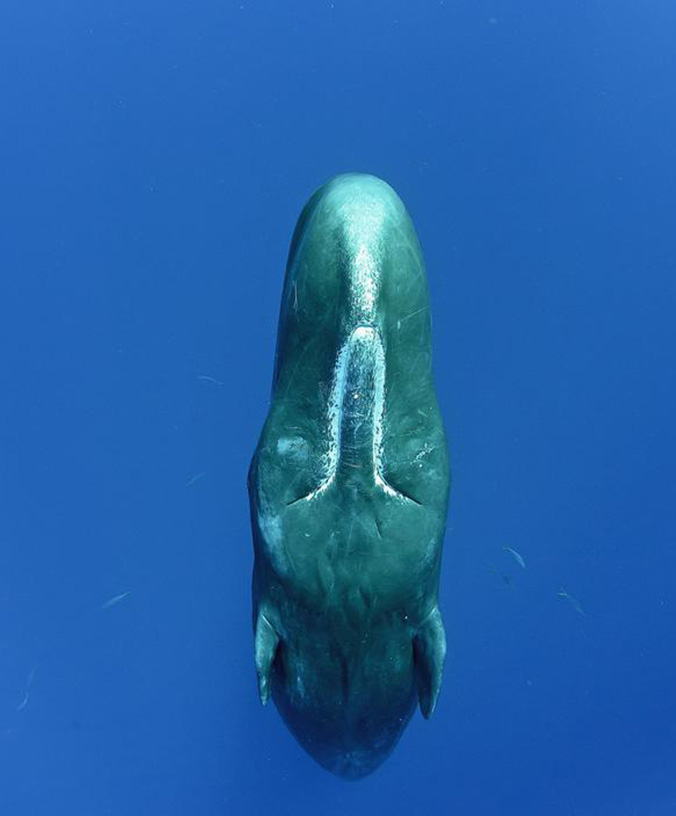
Offshore, the scale changes completely. The waters around the islands lie within the Pelagos Sanctuary, where Fin Whale, Sperm Whale, Long-finned Pilot Whale, Risso’s Dolphin, Cuvier’s Beaked Whale, Bottlenose Dolphin, Striped Dolphin and Common Dolphinoccur across the wider protected Mediterranean waters.
Reptiles & Amphibians
Tyrrhenian Painted Frog is one of Port-Cros’s most distinctive terrestrial animals and the island’s only amphibian. Its wider distribution is remarkably restricted, centred on Corsica, Sardinia, the Tuscan islands and the Îles d’Hyères, where it survives on Port-Cros and Île du Levant. On Port-Cros it uses temporary streams and pools, breeding when seasonal water returns and retreating to humid ground as conditions dry. Surveys have found adults, juveniles and tadpoles across much of the island’s available freshwater habitat, confirming a well-established population rather than a handful of isolated records.
The reptile fauna has a strong island character. European Leaf-toed Gecko is one of the most important species, hiding by day in narrow rock fissures and emerging after dark to hunt small invertebrates. Its flattened body and adhesive toes allow it to move across steep rocky surfaces and squeeze into crevices unavailable to larger reptiles. Moorish Gecko and Common Wall Lizard occupy warmer rock, walls and open ground. Their requirements differ from those of the Painted Frog, giving Port-Cros a striking division between nocturnal reptiles of exposed rock and an amphibian dependent on the island’s shaded freshwater network.
Butterflies & Other Invertebrates
Mediterranean woodland, maquis, coastal vegetation and cultivated ground support a rich invertebrate fauna across the National Park. On the islands, the butterfly season follows the flowering of the maquis and woodland margins. Spring is particularly productive, before heat and prolonged drought reduce flowering across the exposed slopes. One of the most memorable butterflies is the Two-tailed Pasha, closely associated with Strawberry Trees. Its relationship with one of the characteristic plants of the island woodland makes it particularly representative of the Port-Cros landscape.
The islands are equally interesting for less conspicuous insects. Port-Cros, Bagaud and Cap Lardier have all been the subject of specific surveys of their wild bees, reflecting the importance of the Mediterranean flora to pollinators. By summer, grasshoppers and bush-crickets become increasingly apparent. The Predatory Bush Cricket, one of Europe’s largest insects, occurs around dry habitats within the wider National Park territory and is particularly associated with the mainland landscape around Cap Lardier. Moths, beetles, spiders and other less familiar groups make up much of the terrestrial diversity, with island isolation increasing the interest of some populations.
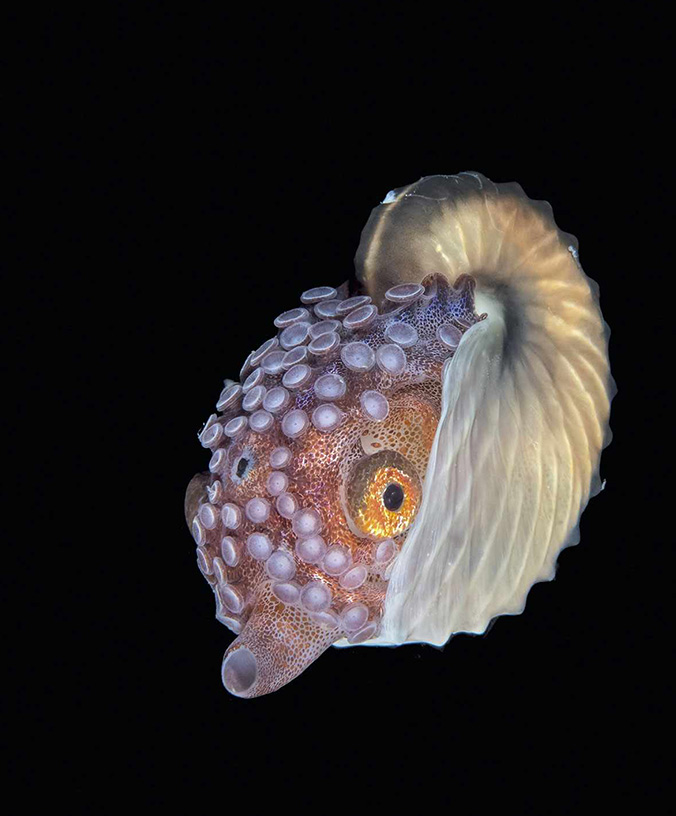
Argonaut
Marine Life
The sea is the defining ecological feature of Port-Cros National Park. Long protection, varied seabed and the close relationship between Posidonia, rock, sand, reefs and deep water have produced one of the best-known marine protected landscapes in the western Mediterranean.
Botanical Highlights
Port-Cros National Park protects a rich Mediterranean island flora shaped by isolation, salt, wind, drought, fire and centuries of human use.
Port-Cros is predominantly wooded, with Holm Oak, Strawberry Tree, Tree Heath, Myrtle and Aleppo Pine contributing to forest and tall maquis. Sheltered valleys can carry surprisingly dense vegetation for an island exposed to the summer heat of the Var coast.
Porquerolles has a broader mosaic of woodland, maquis and cultivated ground. Vineyards remain part of the modern landscape, while collections of figs and olives reflect the island’s long agricultural history.
Spring brings asphodels and numerous smaller flowering plants to open ground, clearings and path edges. The island is also associated with the distinctive Hyères lavender, part of a flora strongly influenced by the particular conditions of the Îles d’Hyères.
Towards the shore, plants must cope with salt spray, strong wind, intense light and very limited soil. Beaches, rocky headlands, cliff crevices and the edge of the maquis therefore support communities quite different from the woodland interior.
Porquerolles is also home to the National Mediterranean Botanical Conservatory, whose work on Mediterranean flora and threatened plants adds an important botanical dimension to the National Park.
Explore Further
- Parc national de Port-Cros – the official National Park website for Port-Cros, Porquerolles, the coastal mainland, terrestrial wildlife, marine habitats and conservation.
- Biodiv’Port-Cros – the Park’s live biodiversity atlas. Its records cover the wider National Park territory and include historical and partner datasets, so individual observations are best checked geographically rather than treated automatically as Port-Cros island records.
- Destination Port-Cros Porquerolles – the Park’s official discovery portal for walking, cycling, snorkelling, diving and exploring the different landscapes of the National Park.
- Pelagos Sanctuary – the official international sanctuary for Mediterranean marine mammals, particularly useful for understanding the whales and dolphins occurring in the offshore waters around the National Park.
- WoodPACA – Pelagos Sanctuary – WoodPACA’s guide to discovering the whales and dolphins of the Pelagos Sanctuary, including where and when to watch for cetaceans.
- WoodPACA Wildlife in Focus: Common Octopus – WoodPACA’s illustrated guide to one of the most remarkable animals of the Mediterranean shallows.