


Calanques National Park
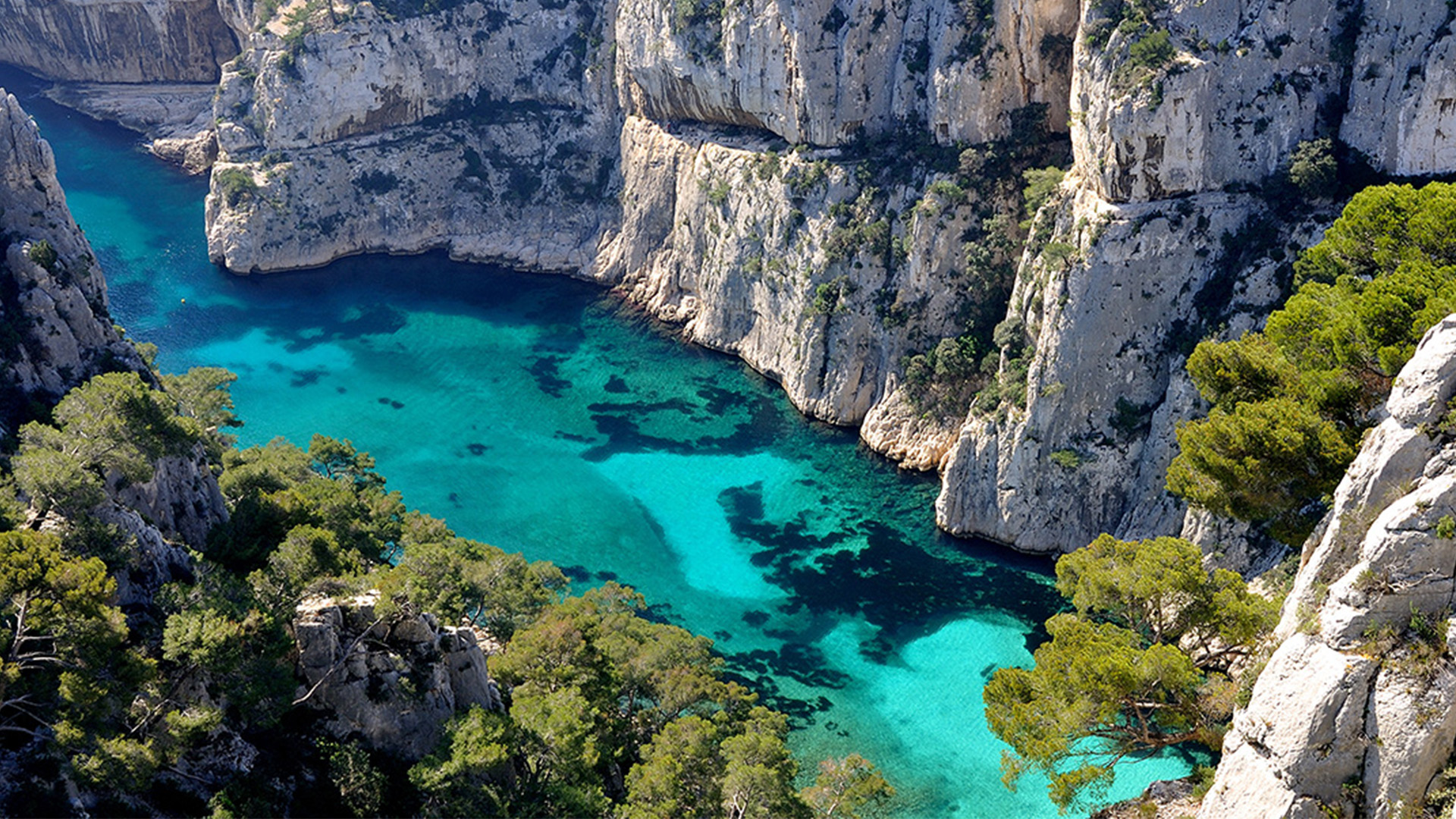
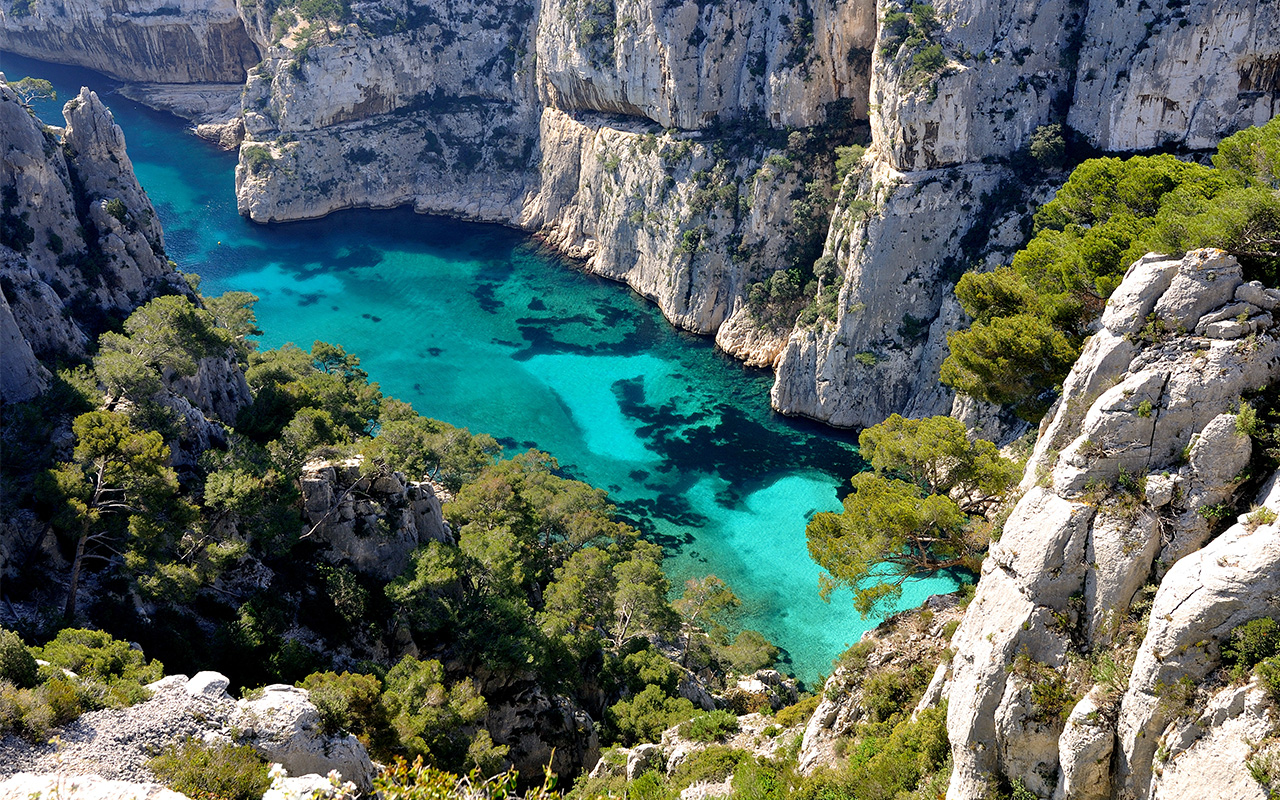
Parc national des Calanques is a place of striking contrasts, sheer limestone cliffs plunging into clear Mediterranean waters, sun-baked scrub overlooking seagrass meadows, and deep underwater landscapes hidden just beyond the shoreline. Established in 2012, it is Europe’s only national park to combine terrestrial, marine and peri-urban environments, protecting a fragile interface between land and sea.
Stretching from Marseille to Cassis and extending far offshore, the park encompasses a mosaic of habitats shaped by geology, light, wind and water. It is a landscape best explored with care, curiosity and respect both above and below the surface.
Where Cliffs Meet the Living Sea
A Dual World: Limestone and Sea
The Calanques are defined by their geology. White limestone cliffs, sculpted by erosion and tectonic forces, form narrow inlets that funnel light, water and life. Above the waterline, Mediterranean scrub clings to thin soils. Below it, underwater cliffs, caves and plateaus host complex marine communities.
This proximity of land and sea creates exceptional ecological richness, but also vulnerability. Many species here are slow-growing, long-lived and sensitive to disturbance.
Life Beneath the Surface
The marine environment of the Calanques is one of the park’s defining features. Clear waters support habitats that are increasingly rare elsewhere in the Mediterranean.
Posidonia seagrass meadows form the backbone of this ecosystem. These ancient plants stabilise sediments, produce oxygen and provide nursery grounds for countless species. Their health is directly linked to water quality and human behaviour.
Rocky reefs, underwater caves and coralligenous formations host sponges, gorgonians, molluscs and fish, while open waters support larger, mobile species. Much of this life remains unseen unless visitors take the time to look — snorkelling quietly, diving responsibly or observing from the surface.
Coastal and Terrestrial Habitats
Above the sea, the Calanques support classic Mediterranean habitats shaped by drought, wind and fire.
Garrigue and scrubland dominate exposed slopes, with aromatic plants such as thyme, rosemary and rockroses. These support a rich invertebrate fauna and provide feeding and nesting habitat for birds.
Cliffs and ledges host specialised plants and birds adapted to exposure and limited soil, while quieter inland pockets support woodland fragments and seasonal wetlands.
Though compact, these terrestrial habitats are tightly interwoven with the marine environment, linked by nutrient flows, species movement and shared pressures.
Extraordinary Sights, Subtle Encounters
The Calanques are visually dramatic, but much of their natural richness is subtle.
- Fish hover over reefs rather than schooling densely
- Seagrass moves slowly with the swell
- Invertebrates and algae form intricate, easily damaged structures
- Coastal birds use cliffs and offshore waters as complementary habitats
This is a park that rewards patience and restraint rather than collection or close contact.
Visiting with Care, On Land and at Sea
The Calanques are among the most visited natural areas in the region, and human pressure is one of the park’s greatest challenges. Small actions have disproportionate effects in marine environments.
Visitors are encouraged to:
- Avoid touching or anchoring on underwater flora, particularly seagrass
- Take all litter home, including food scraps
- Use well-maintained boats to reduce fuel leaks and pollution
- Respect access regulations, seasonal closures and no-take zones
- Observe wildlife at a distance, above and below the surface
Protecting what lies beneath the water is as important as caring for what is visible on land.
Exploring the Calanques
Whether walking cliff-top paths, kayaking along the coastline or exploring the underwater world with mask and snorkel, the Calanques offer exceptional opportunities for discovery. They are a reminder that the Mediterranean is not an empty blue space, but a living system — ancient, complex and increasingly rare.
Species Highlights, Land and Sea
Despite its compact size and proximity to a major city, Parc national des Calanques supports an exceptional concentration of specialised species, many of which are sensitive to disturbance and slow to recover. There are 100 protected animal species in the Calanques National Park, including various birds, bats and reptiles.
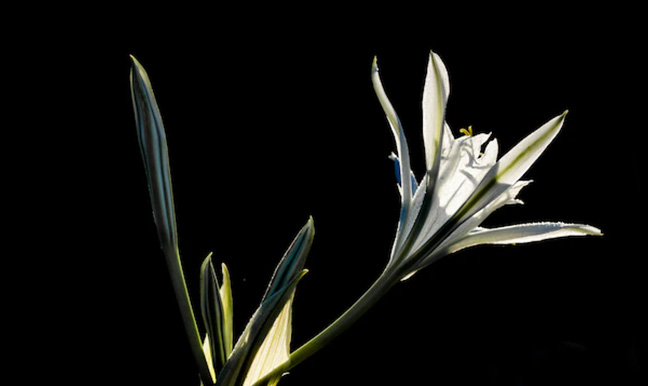
Marine Life
The underwater landscapes of the Calanques host some of the Mediterranean’s most important coastal species and includes no less than 60 heritage marine species:
- Groupers, sea breams and wrasse are increasingly visible thanks to protection measures, particularly within no-take zones.
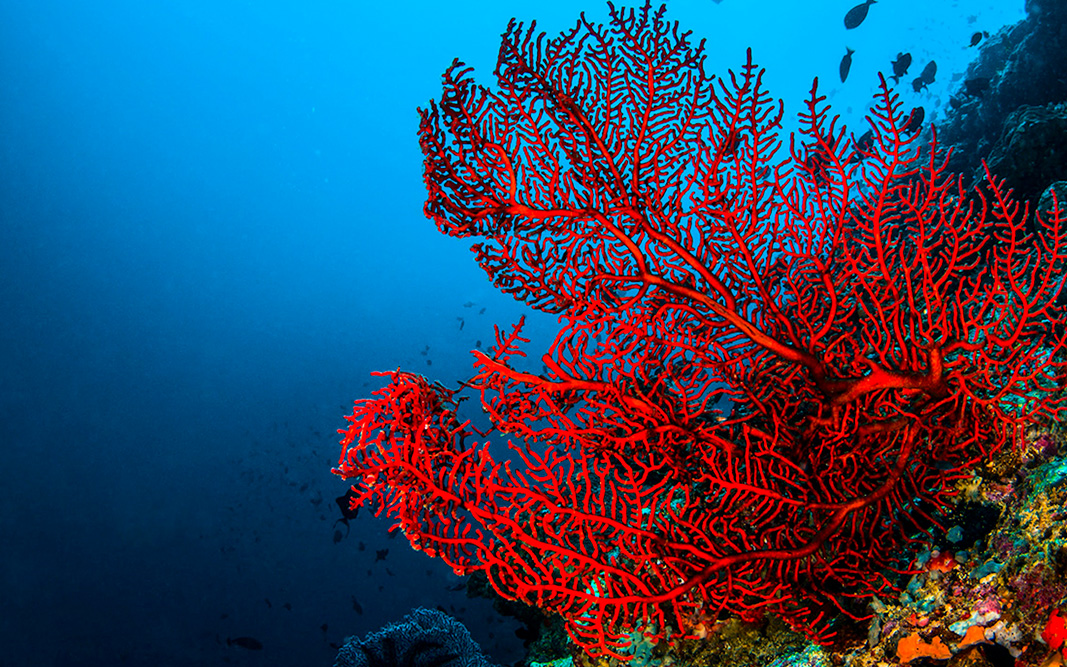
- Gorgonians, sponges and coralligenous communities grow slowly on submerged cliffs and reefs, forming complex three-dimensional habitats easily damaged by contact or anchoring.
Mediterranean monk seal is not resident but remains a powerful symbol of what intact coastal ecosystems once supported and what protection aims to restore.
Coastal and Cliff Species
Above the waterline, the cliffs and islands support species adapted to exposure and isolation:
- Yelkouan shearwater and European shag use cliffs and offshore waters for feeding and breeding.
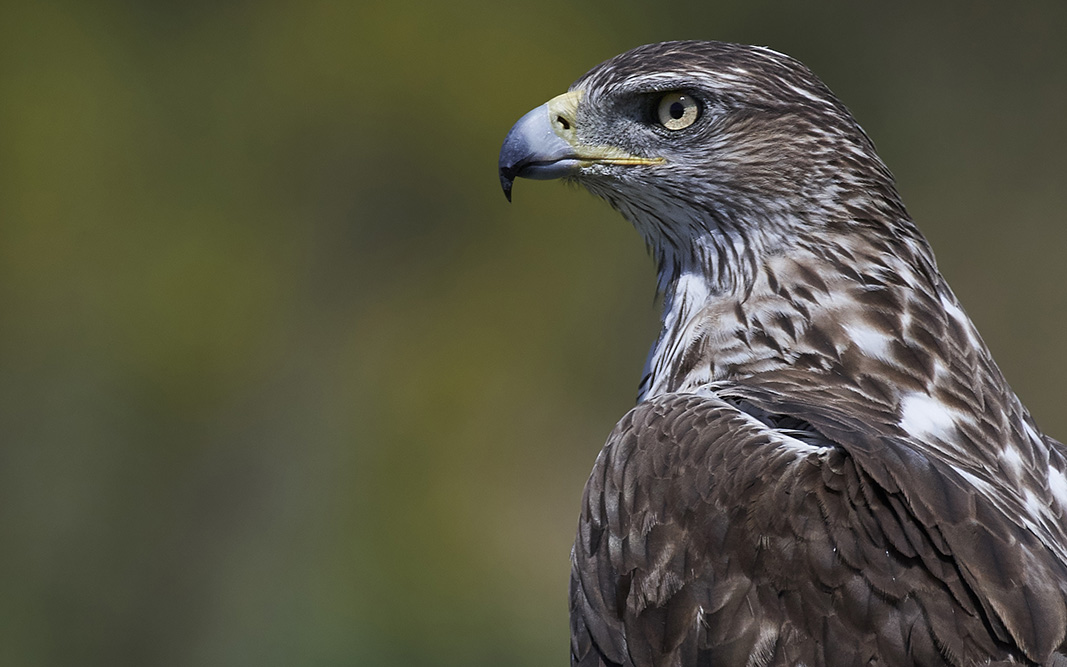
- Peregrine falcon and yellow-legged gull nest on ledges and inaccessible rock faces.
- Endemic or near-endemic plants such as Marseille tragacanth and rock-dwelling saxifrages cling to cracks where soil is almost absent.
Mediterranean Scrub and Garrigue
Inland from the cliffs, drought-adapted habitats support a different assemblage. More than 900 plant species recorded in the Park, 38 are protected and 43 are recognised as remarkable:
- Aromatic plants including thyme, rosemary and rockrose, vital for pollinators
- A rich invertebrate fauna, including butterflies and specialist beetles
- Reptiles such as ocellated lizard and wall lizards, often encountered along paths and rocky edges
Why These Species Matter
Many of the Calanques’ species are:
- Long-lived and slow-growing
- Highly localised
- Dependent on clear water and low disturbance
Their presence is a direct reflection of protection, water quality and visitor behaviour. Seeing them is a privilege but maintaining their habitat is a responsibility.
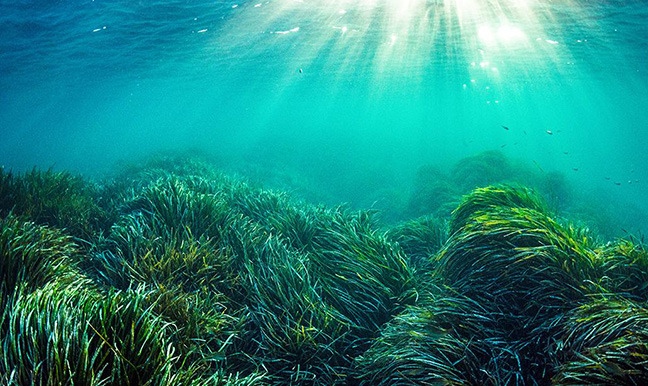
Did you know? Posidonia Seagrass is an Underwater Ecosystem Superstar
Beneath the clear waters of the Calanques lie extensive meadows of Posidonia seagrass (Posidonia oceanica), one of the Mediterranean’s most important and least understood ecosystems.
Despite its appearance, Posidonia is not seaweed. It is a flowering plant that evolved on land before returning to the sea, forming dense underwater meadows that can persist for thousands of years.
These meadows play a critical ecological role:
- They produce oxygen and help maintain water clarity
- They stabilise seabeds, reducing coastal erosion
- They act as nursery grounds for fish and invertebrates
- They store significant amounts of carbon, helping to regulate climate
Posidonia grows extremely slowly, often just a few centimetres per year. Damage caused by anchoring, trampling or poor water quality can take decades to recover, or may be irreversible.
In the Calanques, the health of Posidonia meadows is a direct indicator of the park’s ecological condition. Protecting them protects everything that depends on them from small invertebrates to larger fish and seabirds.
How visitors can help:
Avoid anchoring on seagrass, do not touch or walk on underwater vegetation, and use established moorings wherever possible.
Seeing Posidonia is easy; protecting it requires awareness.