


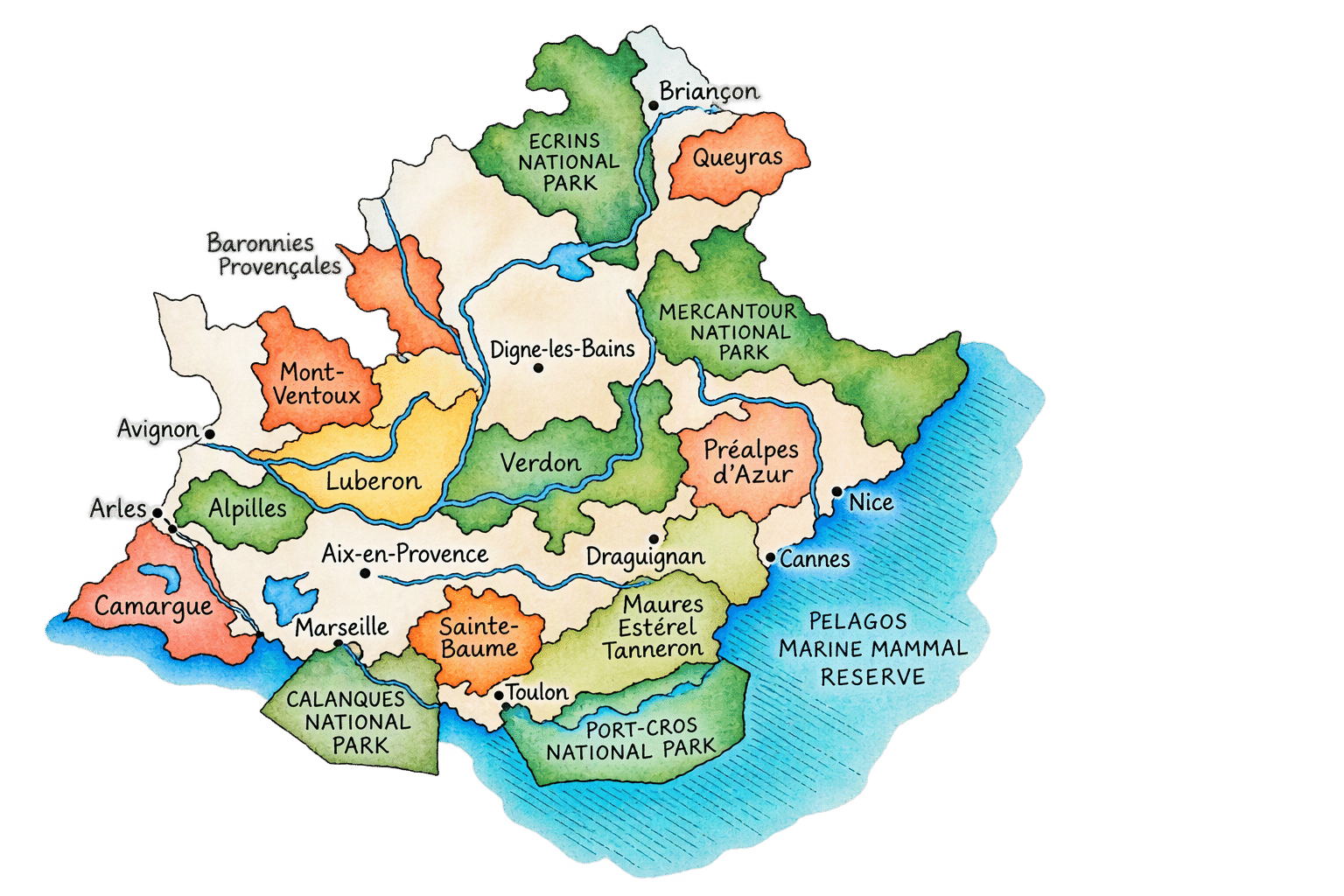
The Provence-Alpes-Côte d’Azur (PACA) region is actually much wilder than the hoards of sunbathing tourists would imagine.
It is full of protected areas that in some cases form an unbroken chain right across the region. They include:
4 National Parks
9 Regional Parks
10 National Reserves
7 Regional Reserves
1 Marine Sanctuary
This makes our region the richest and most biodiverse within the whole of France and the statistics are as follows:
245 Birds nesting out of 275 nationally
70% of 143 Mammal species
80% of the 34 Reptiles
61% of the 31 Amphibians
85% of the 240 Butterflies recorded in France
74% of the 100 Dragonfly species
The Provence-Alpes-Côte d’Azur (PACA) region is actually much wilder than the hoards of sunbathing tourists would imagine.
It is full of protected areas that in some cases form an unbroken chain right across the region. They include:
4 National Parks
9 Regional Parks
10 National Reserves
7 Regional Reserves
1 Marine Sanctuary
This makes our region the richest and most biodiverse within the whole of France and the statistics are as follows:
245 Birds nesting out of 275 nationally
70% of 143 Mammal species
80% of the 34 Reptiles
61% of the 31 Amphibians
85% of the 240 Butterflies recorded in France
74% of the 100 Dragonfly species
Look past your phone – Discover the unknown
When you can put a name to an animal it becomes more interesting and familiar and you start to notice it more. You then begin to see and name more species and all of a sudden you’re hooked.
A new and sometimes life changing event can happen to those that slow down and scrutinise the space around them. Our eyes are trained to spot movement, we were hunter gatherers after all.
It’s amazing how quickly we hone that ancient skill once we choose to stop ignoring all the other lives that co-exist around us.

European Bee-eater
Get out there and start discovering
WoodPACA is built around places. Start with the department you are visiting and explore its landscapes, national parks, reserves and wildlife hotspots. Each area gives you an idea of the habitats you will encounter, the wildlife associated with them and some of the species worth looking for before you set out.
If you have a particular interest, use the Wildlife menu to explore birds, mammals, butterflies and other wildlife across the region. Along the way, illustrated fact sheets introduce some of PACA’s most notable and characteristic species in greater detail, helping you recognise them and understand how they live.
Used together, the two routes let you approach PACA from either direction: start with a place and discover what lives there, or start with wildlife and find out where to look for it.
Wild spaces and species by department


