


Camargue Regional Park
The Camargue is unlike any other landscape in southern France. Formed by the shifting mouths of the Rhône, it is a vast, low-lying delta of lagoons, reedbeds, salt flats, grazing marshes and shallow seas. Here, water defines everything, its movement, its salinity and its seasonal abundance shaping one of Europe’s most important wildlife strongholds.
This is a landscape that never stands still. Wind, water and light are always in motion, and with them the wildlife that depends on this fragile balance.
Alpha Delta
A delta built on change
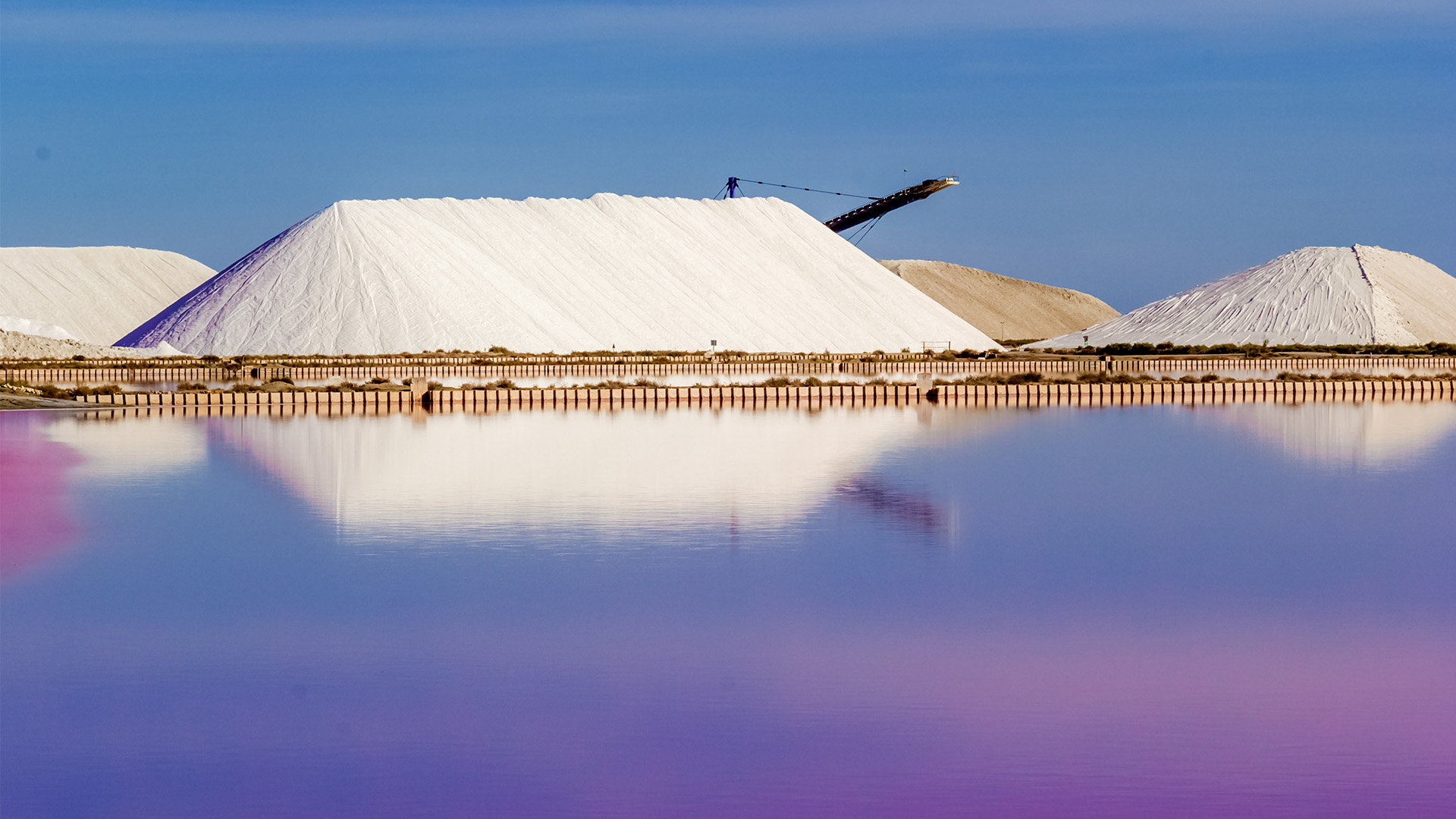
Freshwater from the Rhône collides with Mediterranean saltwater to create a complex gradient of habitats. Some areas flood in winter, others dry and crack in summer. Salinity varies dramatically over short distances, allowing a remarkable range of species to coexist.
This constant flux is precisely what makes the Camargue so productive. Nutrients carried by the river feed plankton and invertebrates, which in turn support vast numbers of fish, birds and larger predators. Few places in Europe still function on this scale.
A global stronghold for birds
The Camargue is internationally renowned for its birdlife and remains one of the most important wetlands on the continent. Flamingos are the most iconic residents, breeding here in internationally significant numbers, but they are just one part of a far richer story.
Herons, egrets, spoonbills and ibis feed in the lagoons and marshes. Ducks and geese arrive in winter in huge numbers, while spring and autumn migrations bring an ever-changing cast of waders, terns and raptors. Marsh harriers quarter the reedbeds, ospreys pass through on migration and large flocks of swallows and martins skim the water in summer.
Even seasoned observers will find something new with each visit.
Life beyond birds
Beneath the surface, the Camargue is driven by invertebrates, insects, crustaceans and molluscs that form the base of the food web. Dragonflies patrol canals, mosquitoes and midges feed fish and birds and saline pools support specialised species adapted to extreme conditions.
Fish move freely between river, lagoon and sea, while amphibians persist in freshwater pockets and seasonal wetlands. Mammals are more elusive but include species well adapted to open, watery terrain, alongside bats that exploit the abundance of insect life.
Plants shaped by salt and sun
Vegetation in the Camargue reflects the harshness of the environment. Salt-tolerant plants dominate the lagoons and salinas, while reedbeds, tamarisk and wet grasslands occupy fresher areas. In drier zones, steppe-like vegetation and coastal scrub take over, creating stark but beautiful contrasts across the landscape.
These plant communities stabilise sediments, filter water and provide shelter and nesting material, the quiet engineers of the ecosystem.
People, tradition and biodiversity
Human presence here is ancient and inseparable from the ecology. Extensive cattle grazing, rice cultivation and salt production have all played a role in shaping today’s habitats. When managed carefully, these activities help maintain open wetlands that many species depend on.
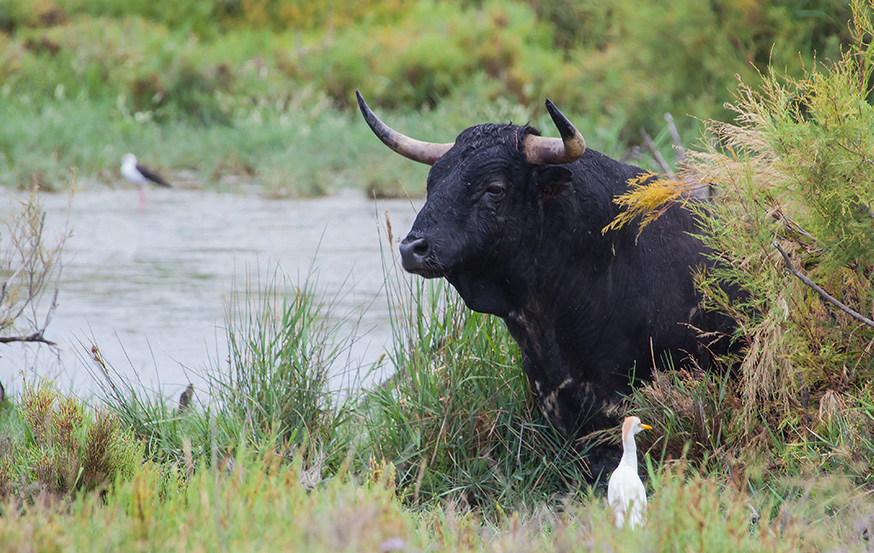
The Camargue horse and bull are cultural symbols, but also part of a working landscape where traditional practices still influence biodiversity outcomes. These iconic animal breeds along with Flamingoes create the rich tricolour the delta is famous for:
Tricolore – Noir
See impressive, prized and armed Black Bulls, the large herds are called “manades” (this word is also used to refer to the farm that breeds the bulls) and are bred solely for the “course camarguaise” (Camargue style of bull-fighting). They are a hardy bunch and well adapted to the conditions of the delta.
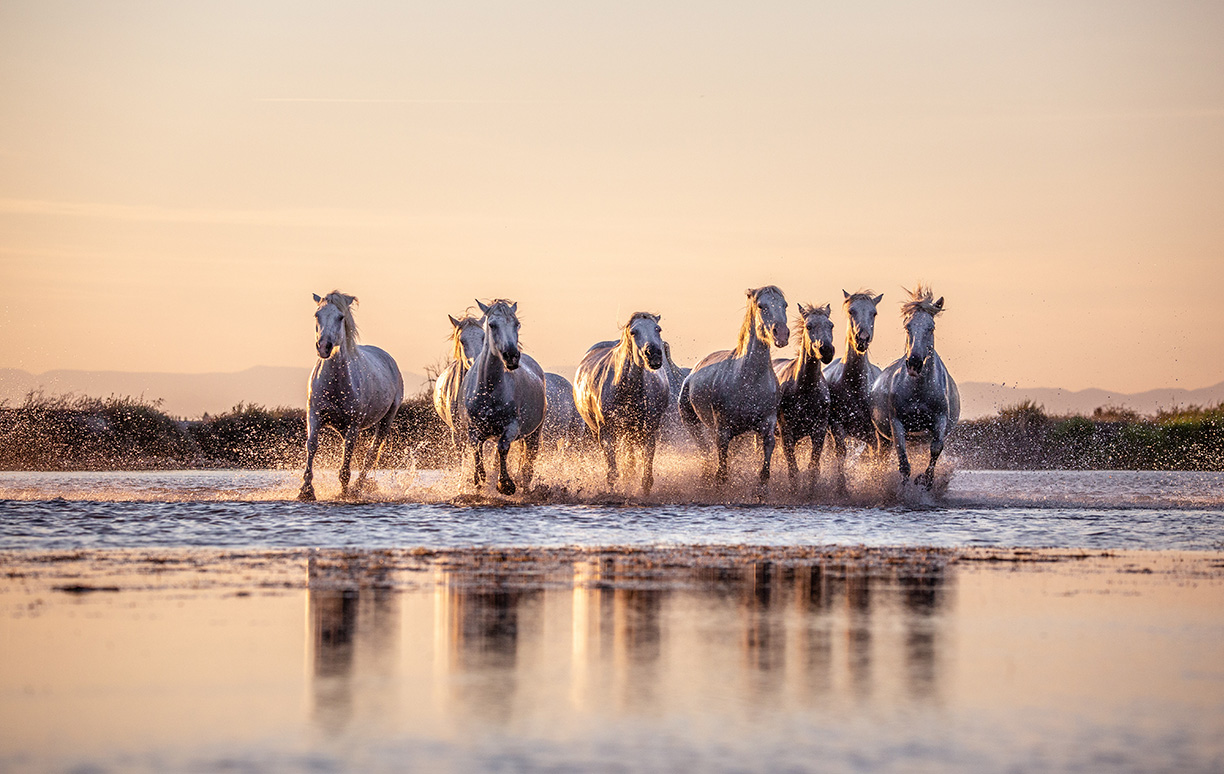
Tricolore – Blanc
The iconic White Horses are descendant of the Solutré horse (horses from the Paleolithic period – 17,000 years ago). They have evolved to cope with the brackish environment in which they live and are loyal companions to local cowboys. They are a cog in the long standing culture of this region.
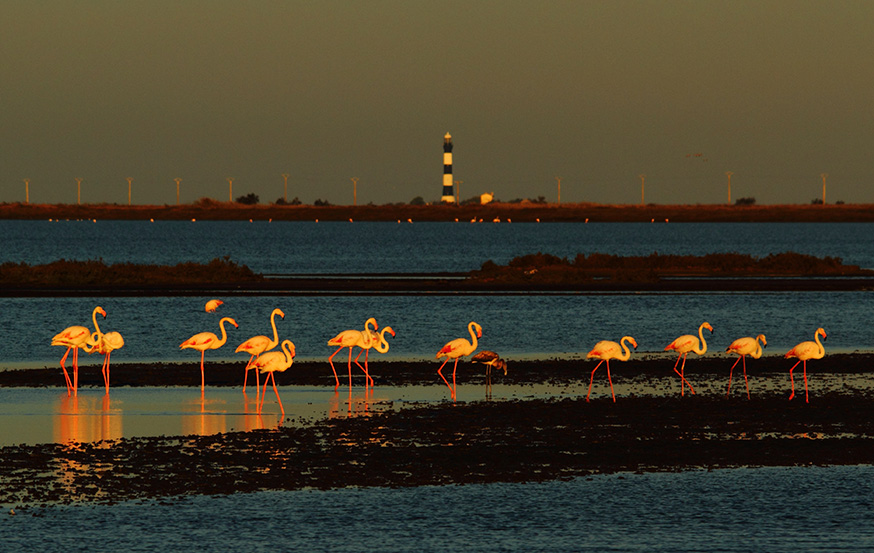
Tricolore – Rose
Flamboyant, noisy, dancing Pink Flamingos are third in our trilogy. They have a long, “coat hanger” neck, big kinked bill which is designed to skim small crustacean out of the water and long pinkish legs. Their pre-nuptial parade is a sight to see, as they all walk in unison and periodically open their wings, exhibiting that deep pink-and-black wing pattern… stunning.
These may be a safari’s top three but there is an absolute treasure trove of other wildlife waiting to be encountered.
Exploring responsibly
The openness of the Camargue makes wildlife easy to see and easy to disturb. Keeping distance from nesting birds, staying on tracks and respecting seasonal access restrictions are essential. Wind, heat and insects are part of the experience; embracing them means sharing the landscape on its own terms.
Slow observation is rewarded here. The longer you stay still, the more the Camargue reveals itself.
Why the Camargue matters
As wetlands disappear worldwide, the Camargue stands as a reminder of what functioning deltas can still support. It is not a wilderness untouched by people, but a living system where water, wildlife and human activity remain tightly interwoven.
Protecting it is not just about preserving species lists, but about safeguarding a dynamic landscape that continues to feed, shelter and inspire life on a continental scale.
Roadkill
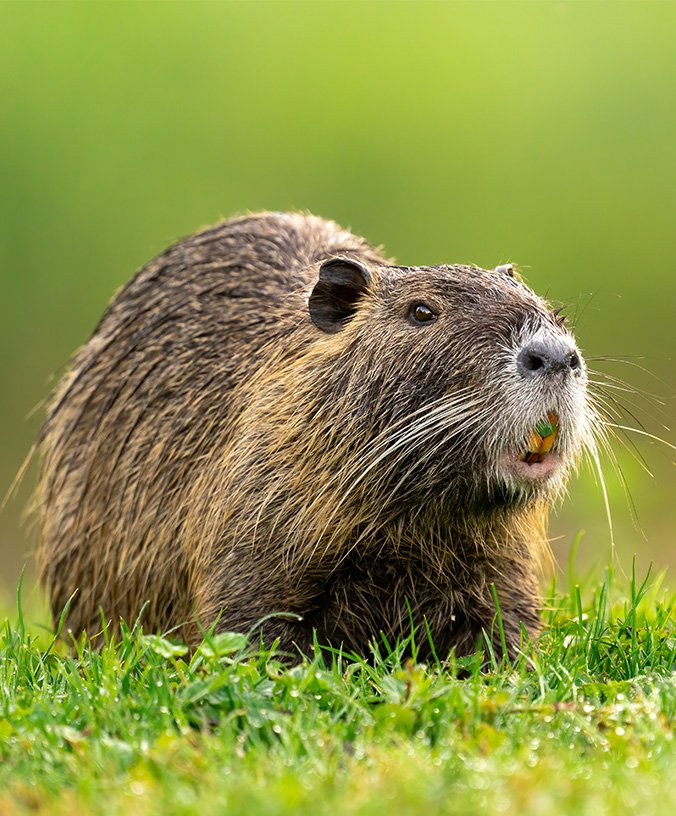
Why did the coypu cross the road? To see his flat mate!
Orange toothed Coypu are abundant and their corpses litter the roadside. The D779 between the etangs du charnier and crey is the rodent equivalent of the death race 2000. These carcasses attract various nocturnal scavengers, like Fox, Martins and Wild Boar, whose tell tale tracks disappear into the distance. These large rodents are an invasive species, originally from South America. Introduced for their fur they are now a fixture in the landscape.
Whatever the season, whatever the weather, (Mistral excluded) the Camargue is an inspirational destination. It hosts numerous animal and plant species. Vertebrates are represented by 75 species of fish, 15 amphibians, 6 reptiles, 32 mammals and 412 birds, with 111 regularly nesting species. More than 1500 of the 4,700 species of flowering plants identified in France are found in the Camargue. It also plays a major role for some bird species, harbouring most of their national breeding populations (Greater Flamingo, Collared Pratincole, Squacco Heron, Glossy Ibis, Eurasian Bittern), wintering populations (Mallard, Gadwall, Red-crested Pochard, Common Teal, Bewick’s Swan, Greater Spotted Eagle), or stopover populations (Pied Avocet, Kentish Plover, Curlew Sandpiper, Black Tern).
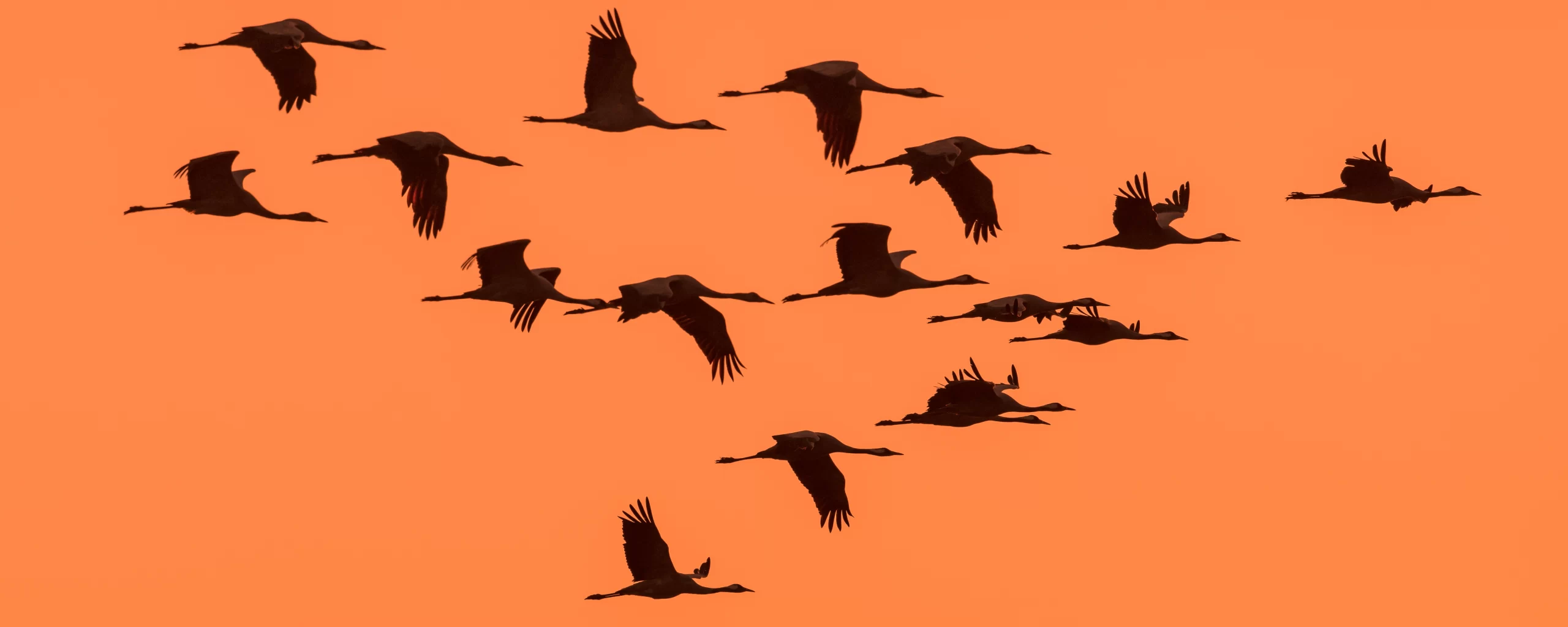
The comings and goings of birdlife, as outgoing species are replaced by new ones. The sight and sound of wintering Cranes is unforgettable; Wildfowl descend on its lakes to hole up during the colder months and their numbers are mind blowing; Busy Bee-eaters and Sand Martins excavating breeding chambers in stockpiled salt, the list is endless.
The Camargue has it all
Learn about
Interesting facts
The L’étang du Fangassier is home to the only breeding colony of Flamingos in France.