


Queyras Regional Park
Set against the Italian border, the Queyras is one of the highest inhabited regions in the French Alps. Here, altitude, climate and isolation shape a landscape of extremes, long winters, intense sunlight, short growing seasons and wide-open spaces. Biodiversity survives not through abundance, but through adaptation. This is a park defined by endurance.
High alpine resilience at the edge of the Alps
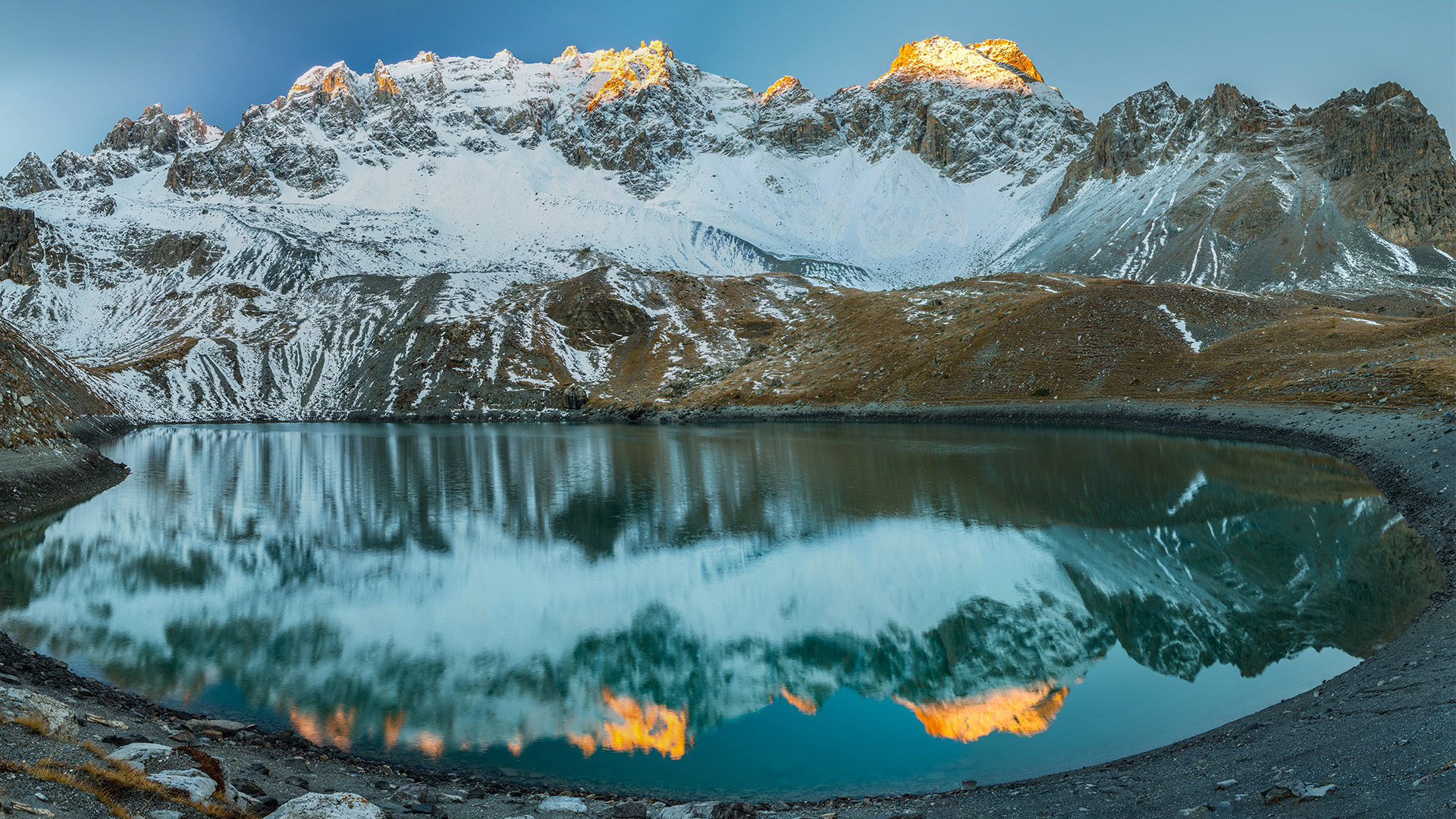
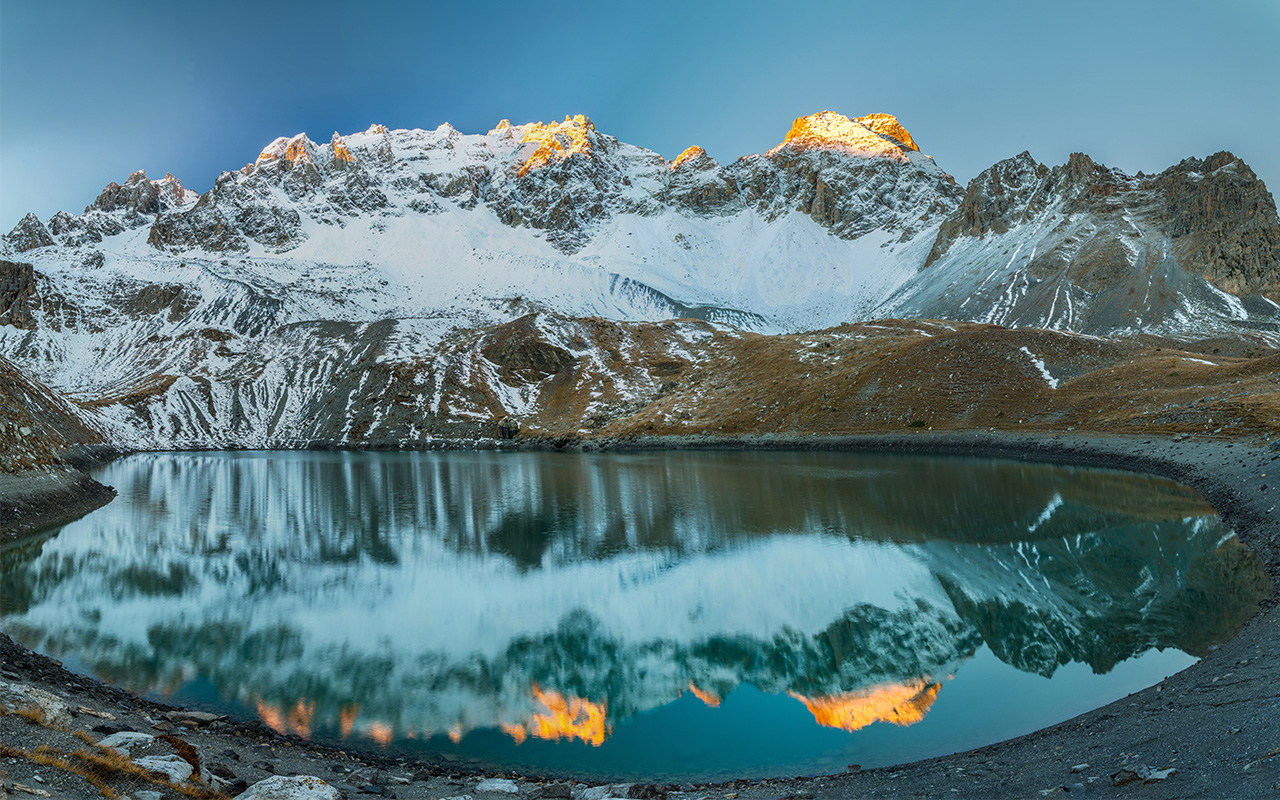
An alpine landscape of contrasts
The Queyras is characterised by high valleys, steep slopes and broad alpine pastures framed by larch forests, a tree uniquely adapted to altitude and cold, and one of the few deciduous conifers in Europe.
Above the tree line, grasslands, scree and rocky ridges dominate. Below, villages and pastures sit tightly within valley floors, shaped by centuries of transhumance and mountain agriculture.
A Lost Land
15 summits higher than 3 000 metres and an average altitude of 2 300 metres.
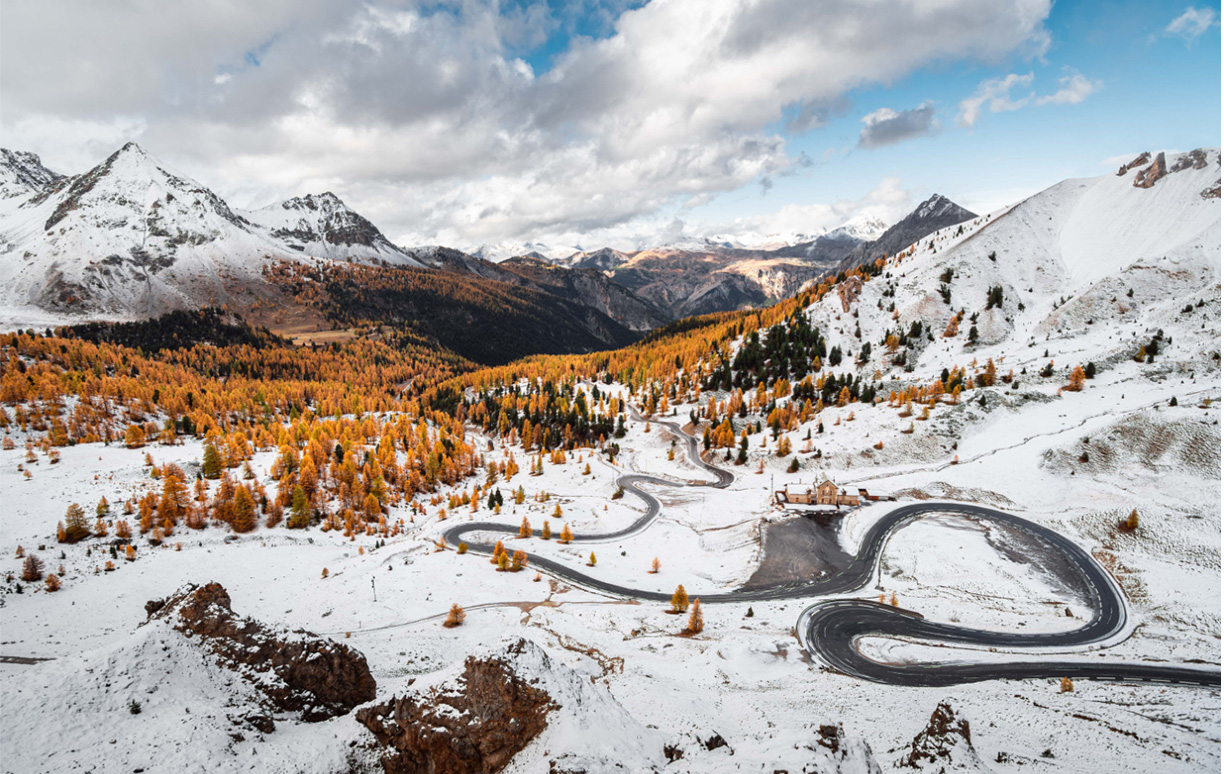
The isolation of the Queyras has helped to preserve its rural character and shield it from the effects of industrialisation. Nowadays it is a unique region in the Hautes-Alpes and the southern Alps in general, owing to the beauty of its high mountain landscapes, its geology, the richness of its mountain flora (orchids in particular) and the variety of its wildlife, which the Queyras Regional Natural Park strives to protect, at the same time as it supports normal human activity. The Queyras has kept its traditions longer than other regions; and out of all the communes, it is perhaps Arvieux which has best preserved its customs, because it was totally cut off until 1897 when the Col d’Izoard road provided access.
Nutcracker Suite
Open to the West and bordering Italy, the park is made up of high mountains peaks, like the famous Mont-Viso. Legendary passes such as the Col d’Izoard and Col Agnel test Tour de France riders to the fullest. The larches blaze here in autumn and the forest is covered in snow in winter. Not surprisingly, timber is an economic resource here, used for construction and for making furniture and toys.
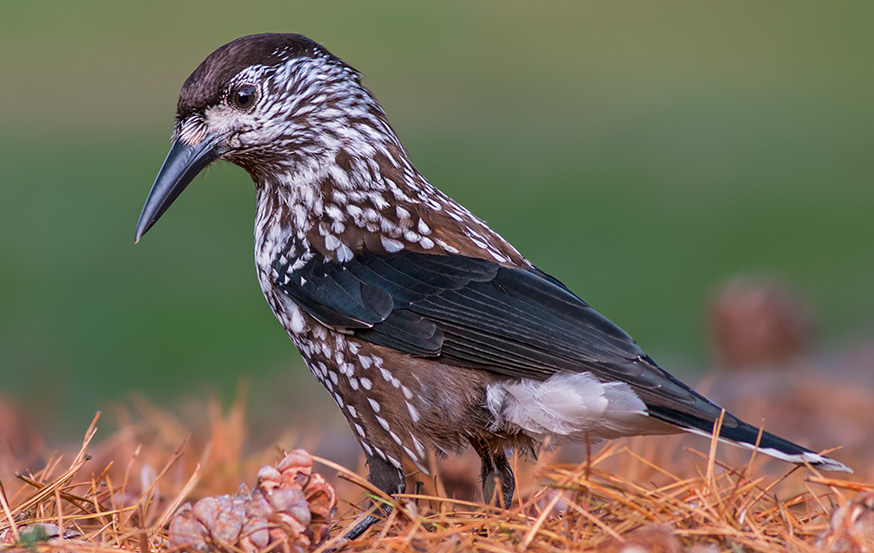
Ptarmigan, marmots, golden eagles and the iconic black grouse live in Le Queyras sheltered from the urban world. It is a haven for mammals like badgers, foxes and mountain hares. More on the bird front, it includes upland species like, alpine chough, northern wheatears, nutcracker and snow finch. Birds of prey are abundant including two owls, the pygmy and tengmalm’s. Enchanting, Le Queyras is one of the rare forgotten paradises of the Alps.
A Conifer Oddity
2 500 plant species are adapted to the following habitats the park provides, they are: wetland, meadow, woodland and rocky exposed high mountain. Junipers and pines are some of families of trees that grace the slopes of the Queyras.
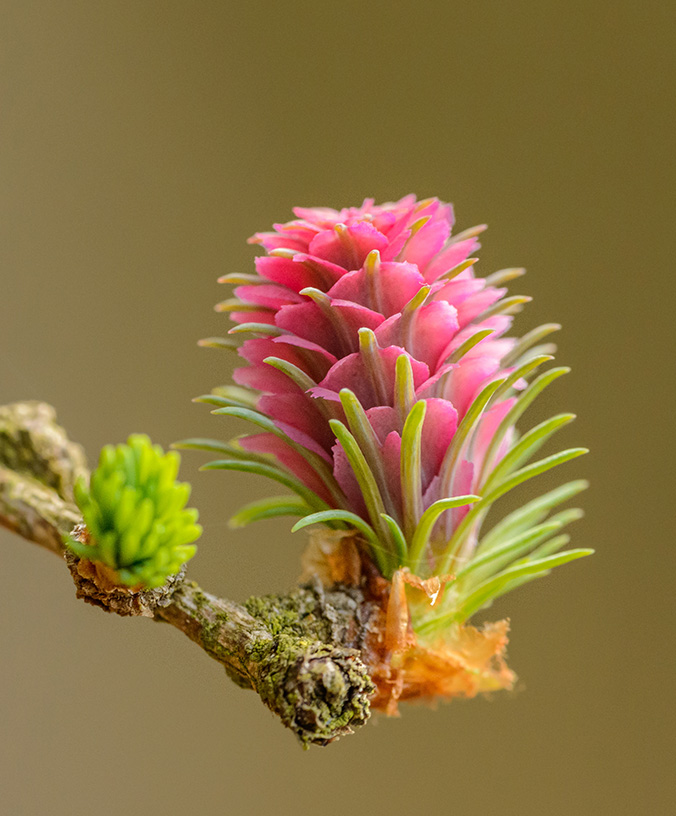
Here we concentrate on the European larch.
It’s an unusual conifer, in that it is deciduous and drops all its leaves each autumn, unlike its evergreen cousins. They are among the earliest trees to come into leaf in spring, with leaves on both short shoots (spurs) and long shoots. Clusters of leaves arise from each spur. The needle-like leaves are usually vivid green, sometimes blue-green in summer and turn butter yellow to old gold in autumn. Upright, summer-ripening cones are borne on the shorter shoots and remain on the tree for some time. In older trees, the branches tend to droop in a graceful manner.
Larches are adaptable to most soils, though wet soils are best avoided for most species. All need full sun. They are an important food source for crossbills and red squirrels.
Big Creatures
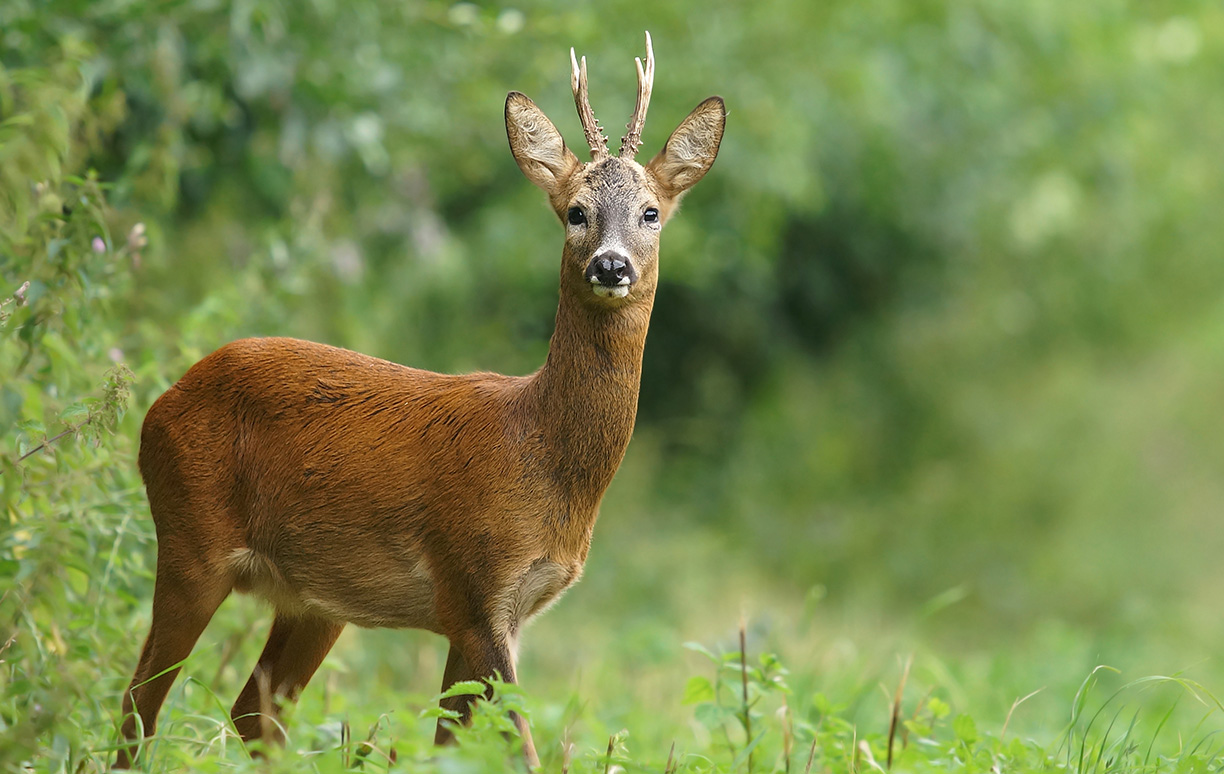
All the usual suspects are found in the Queyras, red and roe deer, chamois, ibex and muflons, an introduced wild sheep brought in for hunting practices. The park is also visited by roving packs of wolves moving in and out of the park via the Italian border. There is another large carnivore entering the park a stealthy camouflaged feline we are going discover below.
Big Cat
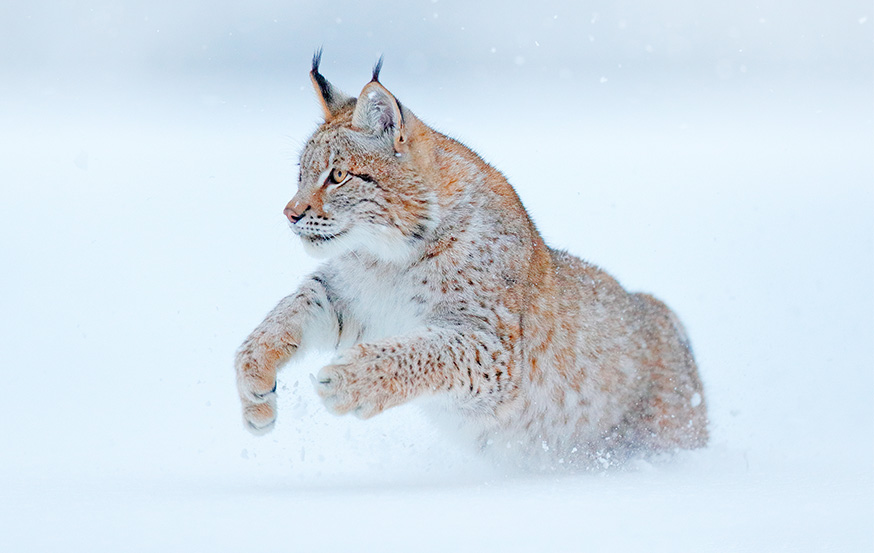
This secretive predator wears a thick pale-coloured fur coat with dark spots and has wide paws that prevent it sinking into the snow. It’s distingusing features are a pair of tufted ears, fluffy white facial ruff, that gives an impression of a manicured moustache and short black tipped tail.
The Eurasian lynx is the largest cat in Europe and can weigh up to 38 kg. it is a pure carnivore. Yet, the animal is far from choosy about what it eats. Depending on the availability of prey, the lynx hunts cloven-hoofed animals such as roe deer, chamois and mouflon, as well as young red deer. Small mammals such as mountain hares and, in rare instances, smaller predators such as foxes. The lynx hunts mainly in the evening, when its prey are also active.
Alpine flora and short seasons
Plant life is shaped by brevity. Alpine flowers must grow, flower and seed within weeks, resulting in dense, low-growing communities adapted to wind and frost. Meadows can appear austere at a distance, but close inspection reveals remarkable diversity.
Lower down, larch forests and mixed alpine woodland create open, light-filled habitats that support insects, birds and grazing mammals.
Exploring the Queyras
This is a place for patience and preparation. Wildlife encounters are often distant and fleeting, but deeply rewarding. Long sightlines, quiet valleys and high passes favour observation over immediacy.
The Queyras encourages immersion, time spent walking, watching and understanding how life persists under pressure.
Why the Queyras matters
In a warming climate, high-altitude ecosystems act as early indicators of change. The Queyras provides insight into how species respond to shifting snowlines, temperatures and land use.
It is a refuge for alpine biodiversity and a living example of resilience at the margins.
Official Links