


Réserve naturelle nationale – Plaine des Maures
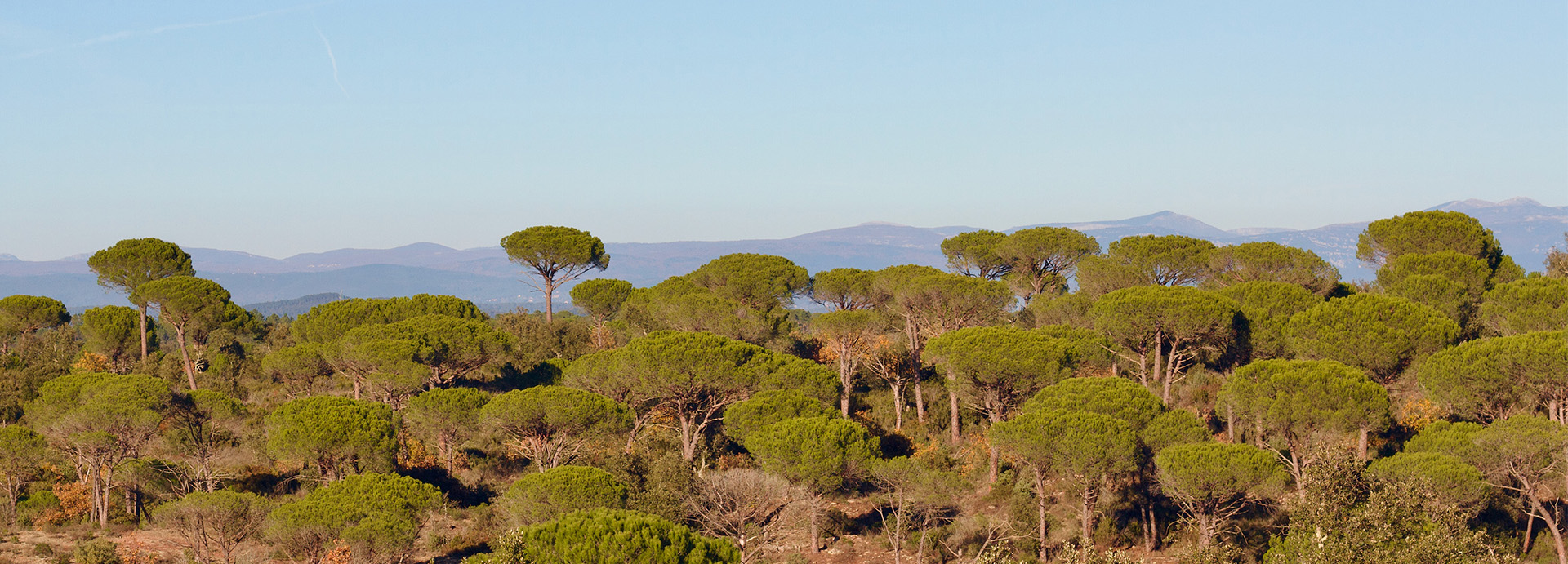
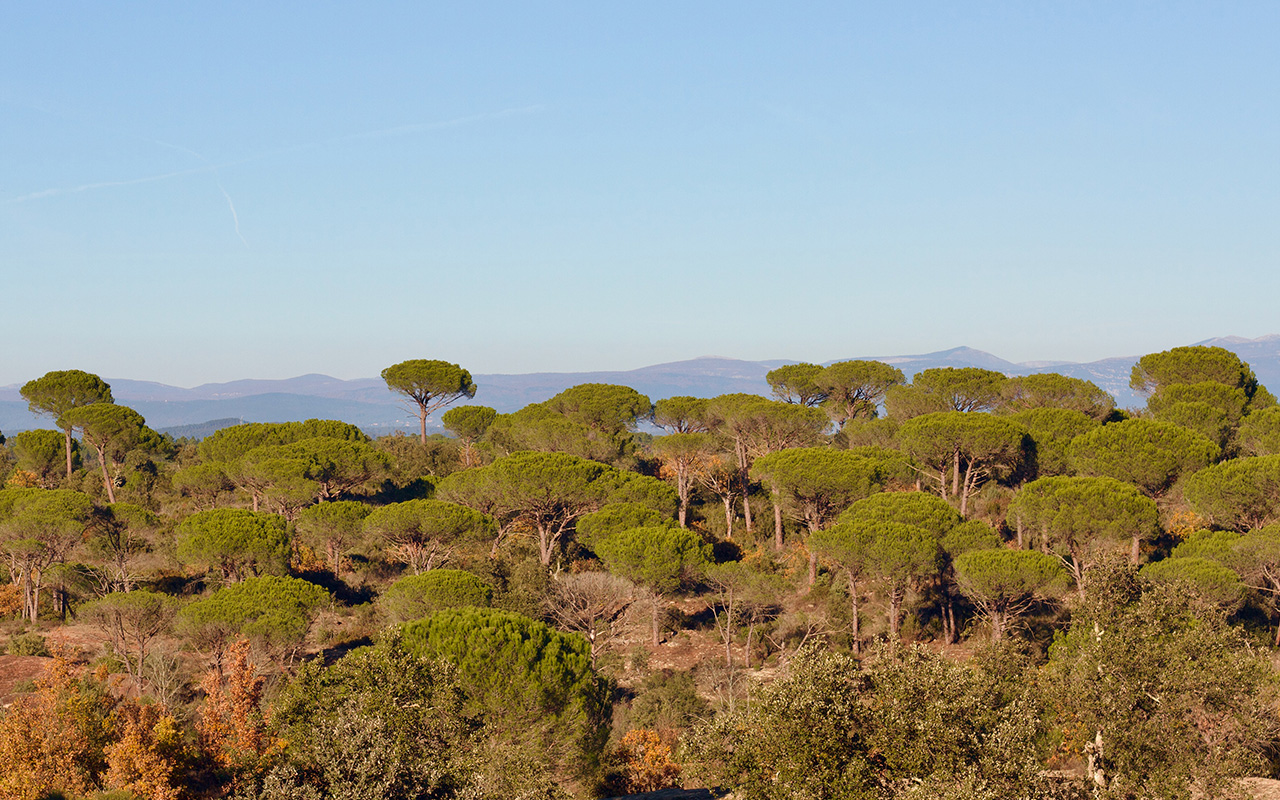
The Plaine des Maures National Nature Reserve protects one of the last extensive natural lowland plains in Provence where open heath, cork oak woodland and seasonal wetlands still function together as a complete Mediterranean system.
Situated between the Massif des Maures and the Argens basin, this is a landscape defined not by elevation or spectacle but by ecological continuity. In a region where lowland habitats have been widely transformed, the Plaine des Maures remains a rare surviving mosaic shaped by fire, grazing, poor soils and seasonal water.
It is one of the most biologically distinctive landscapes in the Var.
Hermann’s Tortoise & Wildflower Reserve
Landscape & Habitats
The reserve extends across a gently undulating plain of siliceous soils, unusual in a region dominated by limestone. These acidic substrates, combined with seasonal water retention and traditional land use, create a habitat structure found almost nowhere else in Provence.
Key habitat elements include:
- Extensive cork oak woodland and open oak savanna
- Mediterranean heath and maquis on nutrient-poor soils
- Temporary ponds and seasonal wetlands
- Sandy clearings and grass-rich openings
- Remnants of traditional pastoral and agricultural land
Seasonal change is fundamental here. Winter and spring bring water and flowering abundance; summer brings heat, dryness and a stark shift in activity. The biodiversity of the Plaine des Maures depends on this annual rhythm.
Biodiversity Significance
Hermann’s Tortoise Stronghold
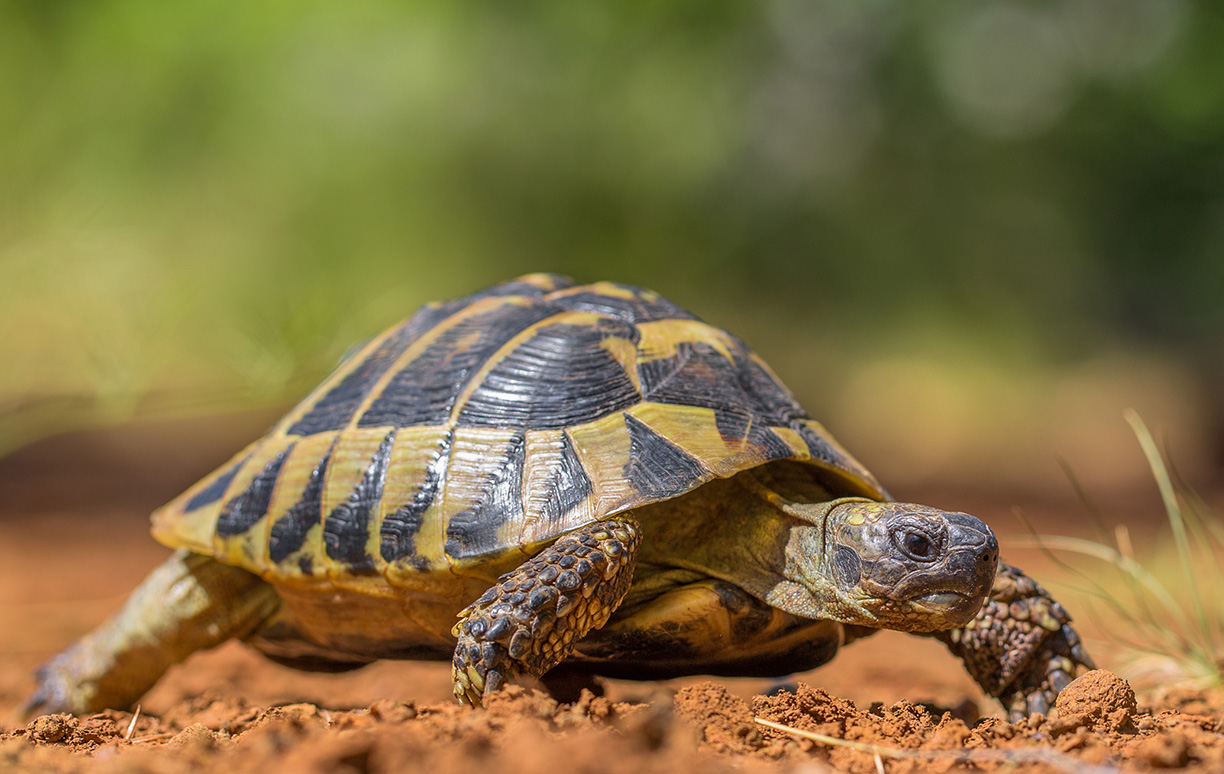
The Plaine des Maures holds one of the most important remaining populations of Hermann’s tortoise (Testudo hermanni hermanni) in France.
This discreet Mediterranean reptile survives only where open woodland, scrub and herb-rich clearings remain connected and relatively undisturbed. Habitat fragmentation and fire pressure have reduced its range dramatically across southern Europe, making the Plaine des Maures a critical refuge.
Conservation management within the reserve focuses heavily on maintaining the structural diversity and continuity this species requires.
Exceptional Botanical Richness
The reserve is widely recognised for its spring flora, with a remarkable concentration of Mediterranean and siliceous-soil specialists.
Seasonal highlights include:
- Extensive displays of annual and perennial wildflowers
- Orchid-rich grasslands in suitable areas
- Heathland and sandy-soil specialists rarely found elsewhere in the Var
- Plant communities adapted to fire cycles and poor soils
In favourable years, the plain becomes one of the most botanically diverse landscapes in the region, rewarding careful exploration rather than quick visits.
Rude Orchids
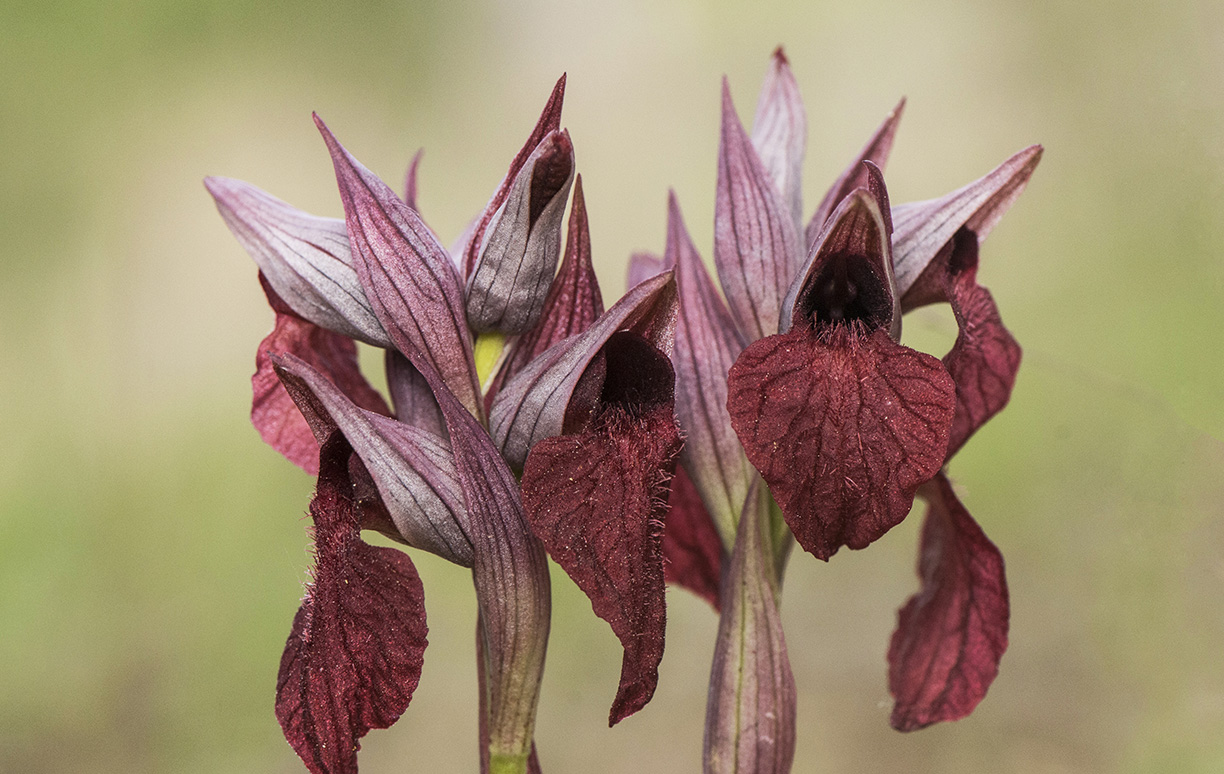
The plain is home to a family of flowers (Serapia) that are reminiscent of Mick Jagger in his pomp. Tongue Orchids blow raspberries at anyone who pays them attention. They range in colour from pale pink to vermilion and have narrow, tubular flowers, from which protrudes a tongue-like, lower petal (labellum).
There are four species found here, Serapias neglecta, Serapias lingua, Serapias cordigera & Serapias vomeracea. Be sure to raspberry back if you encounter them. It might give you great “Satisfaction”
Birds of Open Plain and Woodland Edge
The mix of open ground, scrub and woodland supports a diverse bird community typical of intact Mediterranean lowlands.
Depending on season and conditions, species may include:
- Woodlark and other open-ground songbirds
- Raptors hunting across clearings and heath
- Shrikes and woodland-edge species
- Seasonal migrants using the plain as a feeding and resting area
The value of the site lies in habitat continuity, a functioning lowland ecosystem where species can still complete full life cycles.
Around 150 bird species have been recorded and I’ve seen a few oddities during migration like a handful of Black-winged Stilts. A lot of the birdlife are small warblers, finches, larks, and pipits which can be difficult to spot in the undergrowth due to being discreet. Three types of Shrike frequent the plain, Red-backed, Woodchat and Southern Grey. Around Lac des Escarcets there’s the chance of Water Rail, Great Reed Warbler and Little Bittern.
The most abundant birds of prey are Black Kites but they are dwindling due to the closure of the nearby landfill site. Others overhead are Common and Honey Buzzards, Short-toed Eagle and Golden Eagle (if you’re lucky). It is a favoured wintering site for Red Kites.
Notable Wildlife
Structural diversity across the reserve supports rich invertebrate life, particularly:
- Butterflies and pollinators linked to flower-rich clearings
- Beetles and thermophilic insects dependent on sandy soils
- Reptiles benefiting from warm open ground and cover mosaics
- Amphibians using temporary ponds and seasonal wetlands
Many of these species rely on habitats that have declined sharply across Mediterranean France.
Amphibians
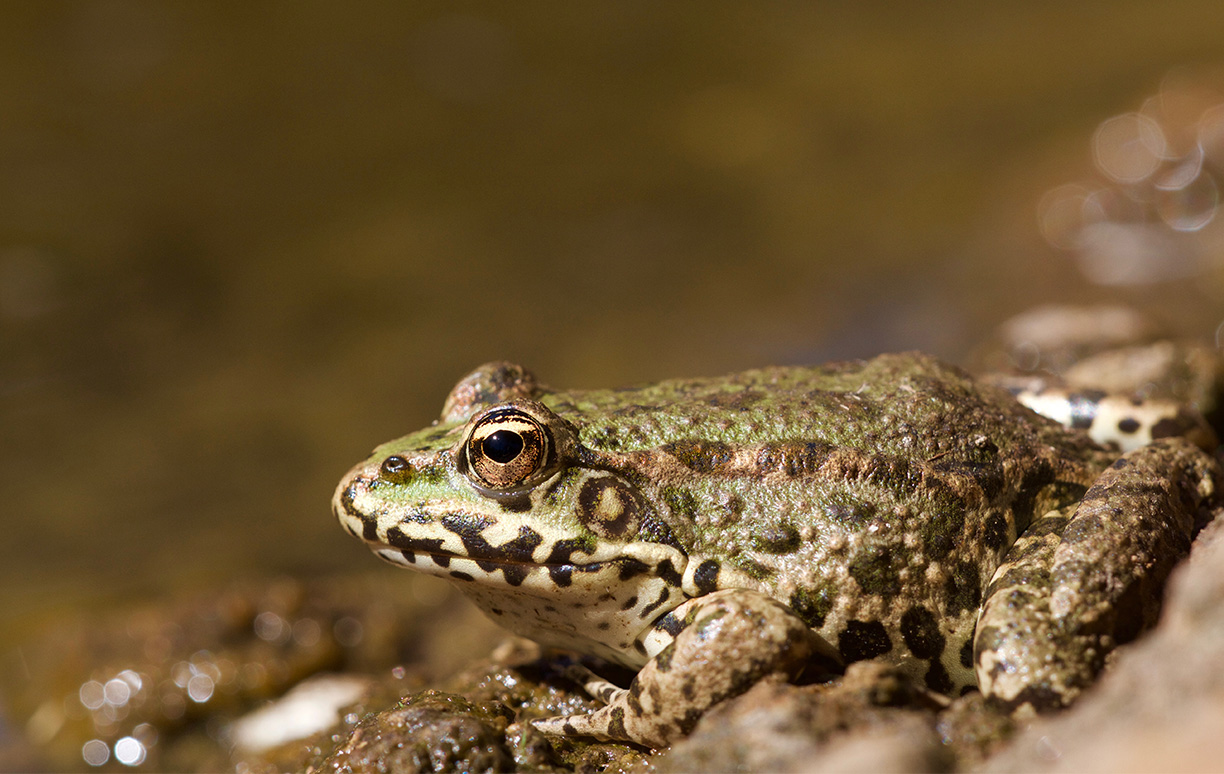
Amphibians abound in the temporary water sources and the tadpoles run the gauntlet of reaching maturity before their watery home evaporates and cooks them. Some of the species that can be found are Common and Natterjack Toads, Mediterranean Tree, Marsh, Agile and Parsley Frogs, Fire salamander too.
Insects
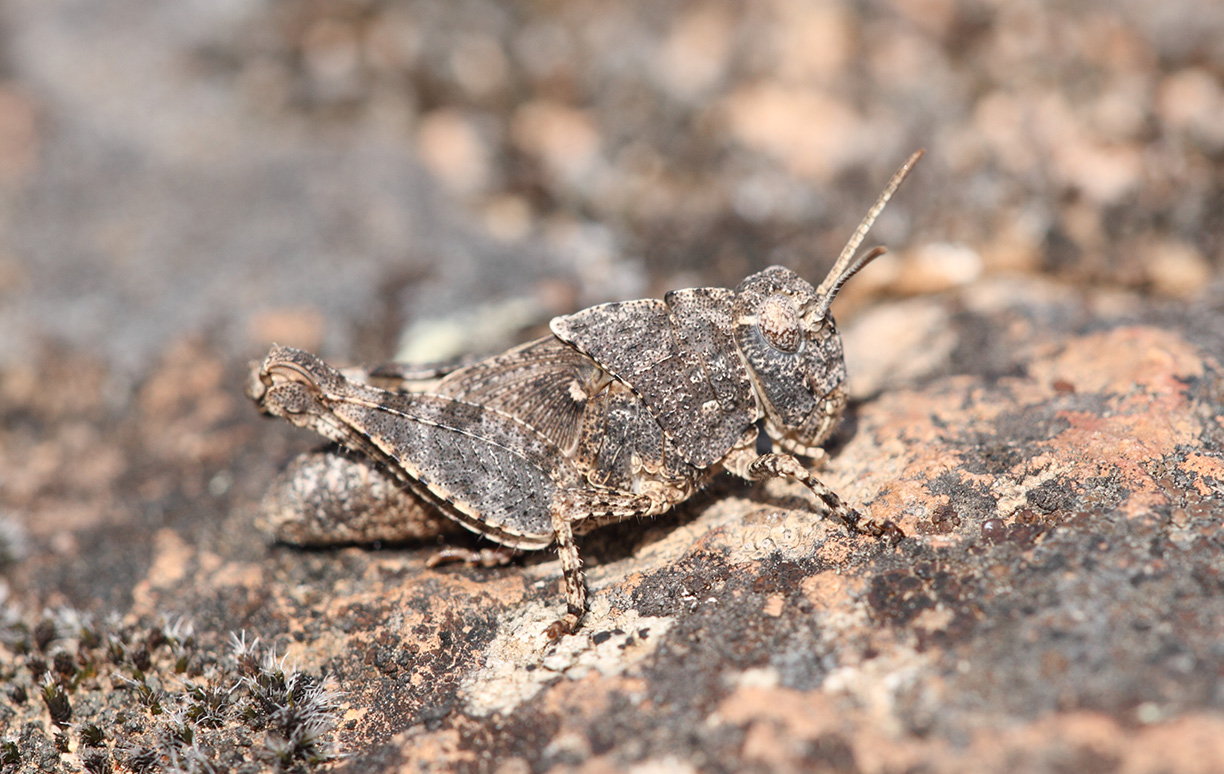
A plethora of invertebrates thrive here from beautiful butterflies and dragonflies to the less liked but just as important blood sucking mozzies, each has its place in an ecosystem and the food chain. Some of my favourites are Owlflies, Antlions and the supercharged assassins that are Tiger Beetles.
Mammals
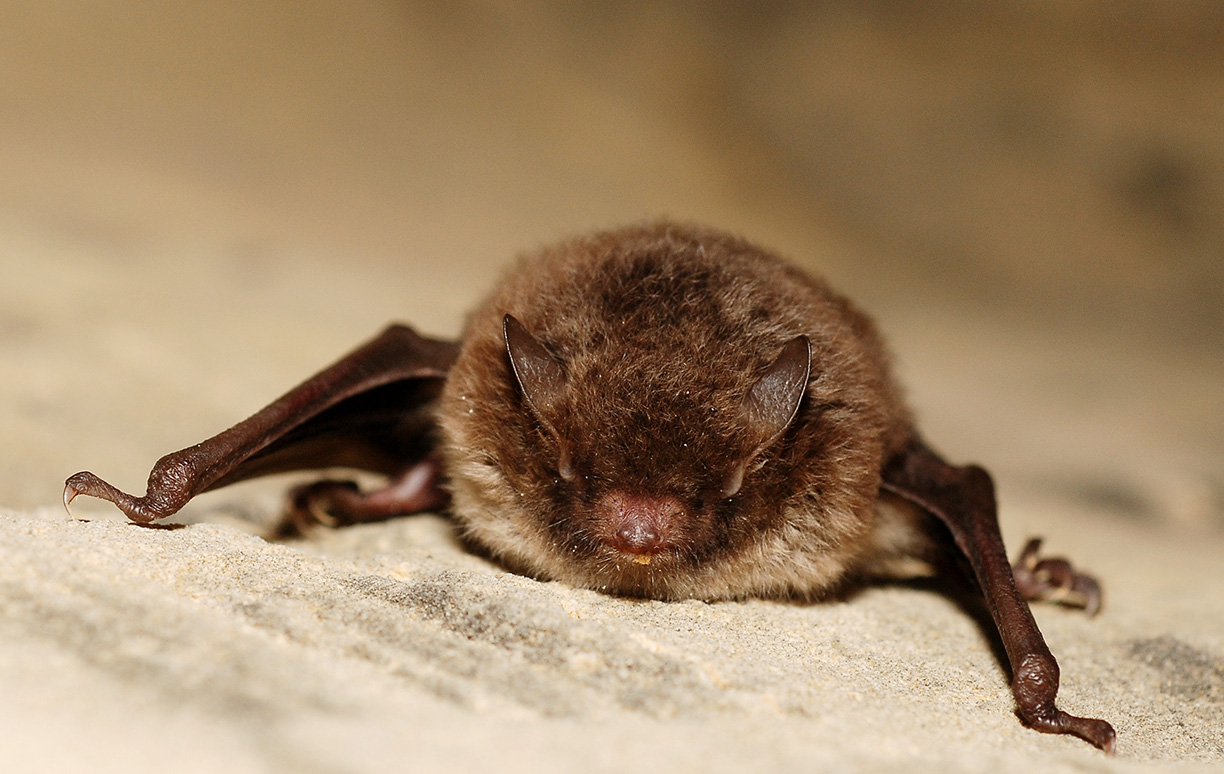
Mammals are shy and most are nocturnal like the 11 species of bats. These include Geoffroy’s, Daubenton’s and Natterer’s plus Common, Kuhl’s and Savi’s Pipistrelles. Larger mammals include Roe deer, Hares, Foxes, Stone Marten and repopulating Wolves, these could be youngsters evicted from their own packs or others looking for new territories.
Tattooed Sandstone
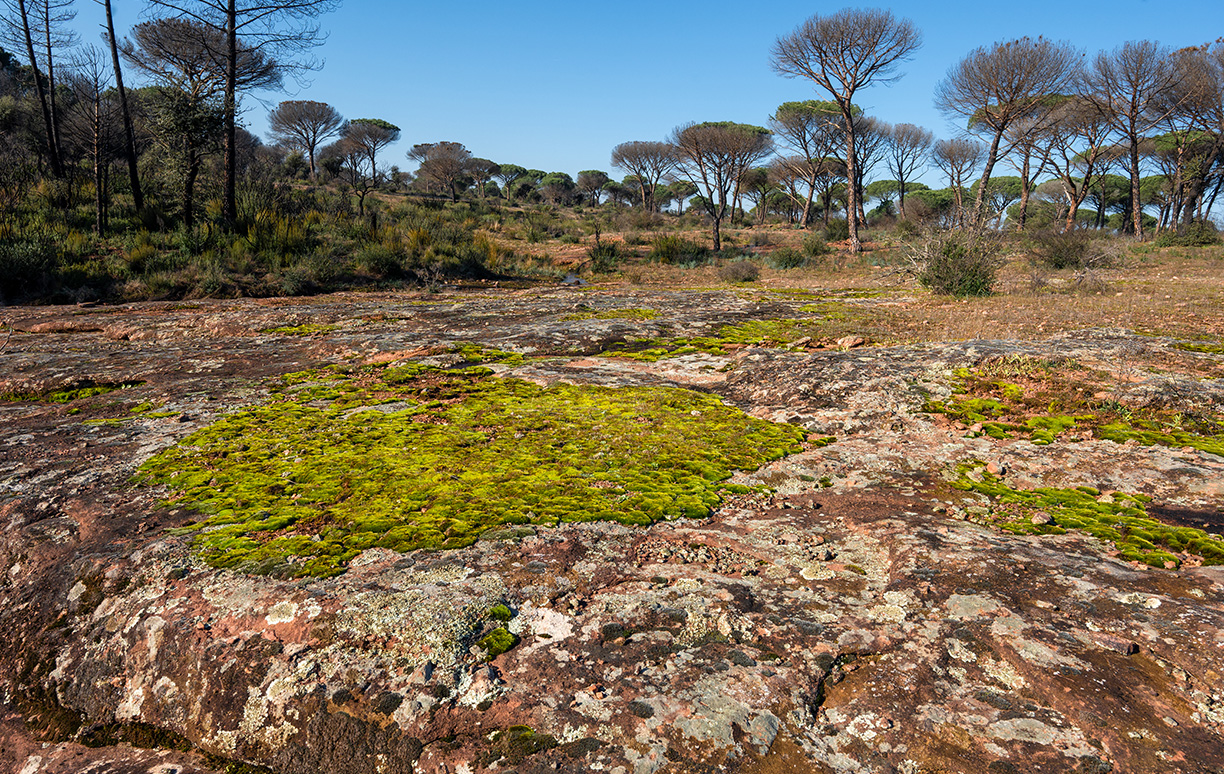
The pink slabs and boulders are decorated with lichens and mosses of pale to dark greens, white, oranges and yellow and look like they’ve been tagged by mother nature’s personal street artist or tattooist. These great chunks of sandstone provide nooks and crannies for lizards to both hide and sunbathe. Cold blooded creatures need to warm their blood and muscles before they can become fully active. Notable Reptiles: Moorish Gecko, Wall Lizard, Western Green Lizard, Slow worm, Western three-toed Skink . Smooth, Southern Smooth, Grass, Ladder, Viperine, Montpellier and Aesculapian snakes.
Why This Reserve Matters
The Plaine des Maures protects something increasingly rare:
a complete Mediterranean lowland system where woodland, heath, grassland and seasonal water still interact naturally.
Its importance lies in:
- safeguarding one of France’s key Hermann’s tortoise populations
- preserving species-rich siliceous heath and grassland habitats
- maintaining ecological continuity across a large lowland plain
- acting as a refuge within an increasingly urbanised and fragmented region
Without protection, landscapes like this quietly disappear through development, fire mismanagement or abandonment.
Get to know the wildlife
The Plain and surrounding forested mountains are the last remaining sanctuaries for Hermann’s Tortoise on mainland France. It is one of three iconic reptiles in drastic decline that are protected here. Learn about these threatened reptiles by having a look at their facts sheets below.
→ Hermann’s Tortoise
→ Pond Turtle
→ Ocellated Lizard
→ Owfly