


Verdon Regional Park
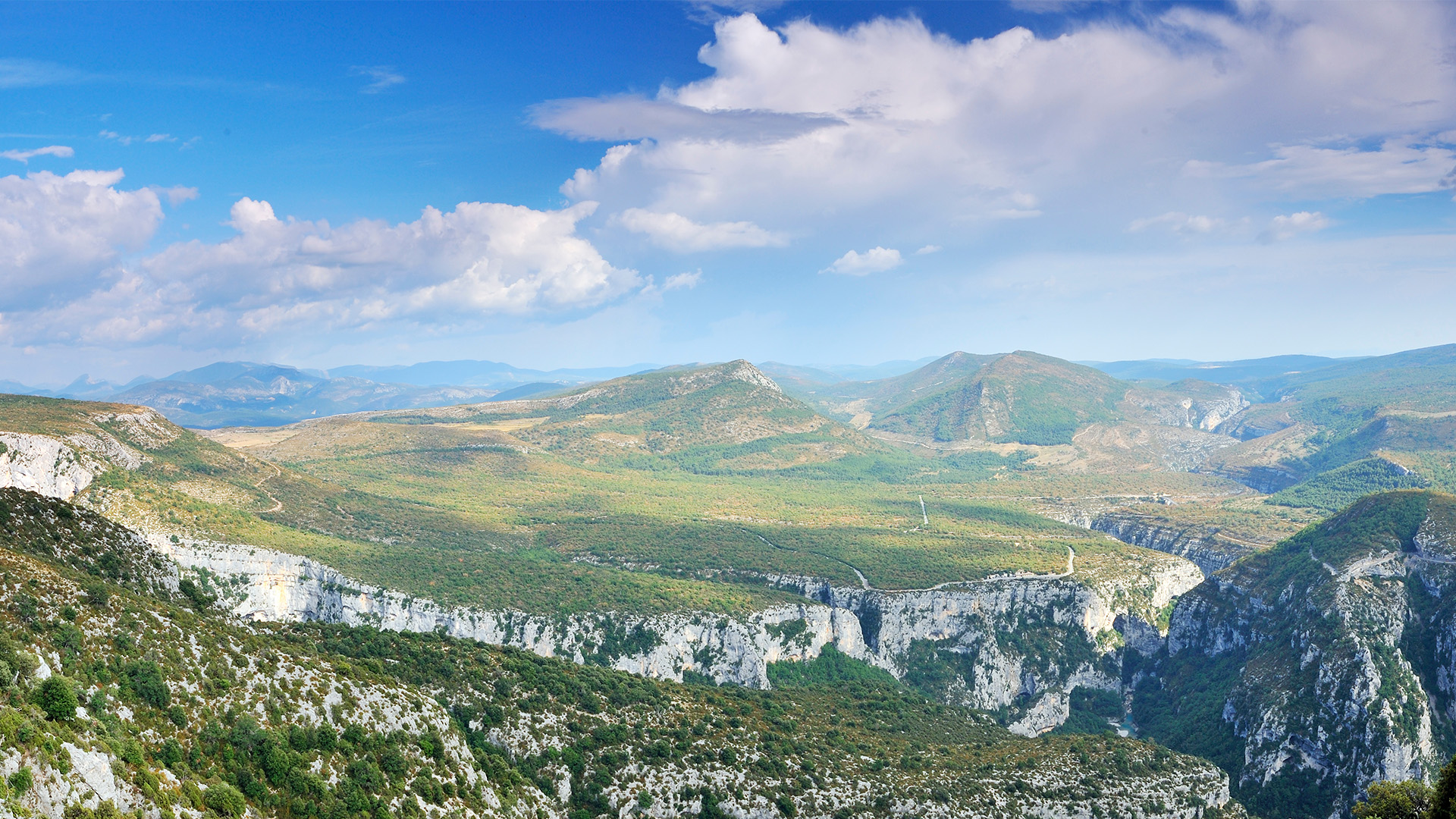
The Verdon Regional Nature Park protects a vast and varied limestone landscape in the heart of Haute-Provence, centred on the Verdon River and its dramatic gorge. While the canyon is internationally famous, the park extends far beyond it, encompassing upland plateaux, forested slopes, wetlands and traditional pastoral landscapes.
This is a park defined by water, rock and altitude, where Mediterranean and alpine influences overlap.
A river runs through it
A landscape shaped by extremes
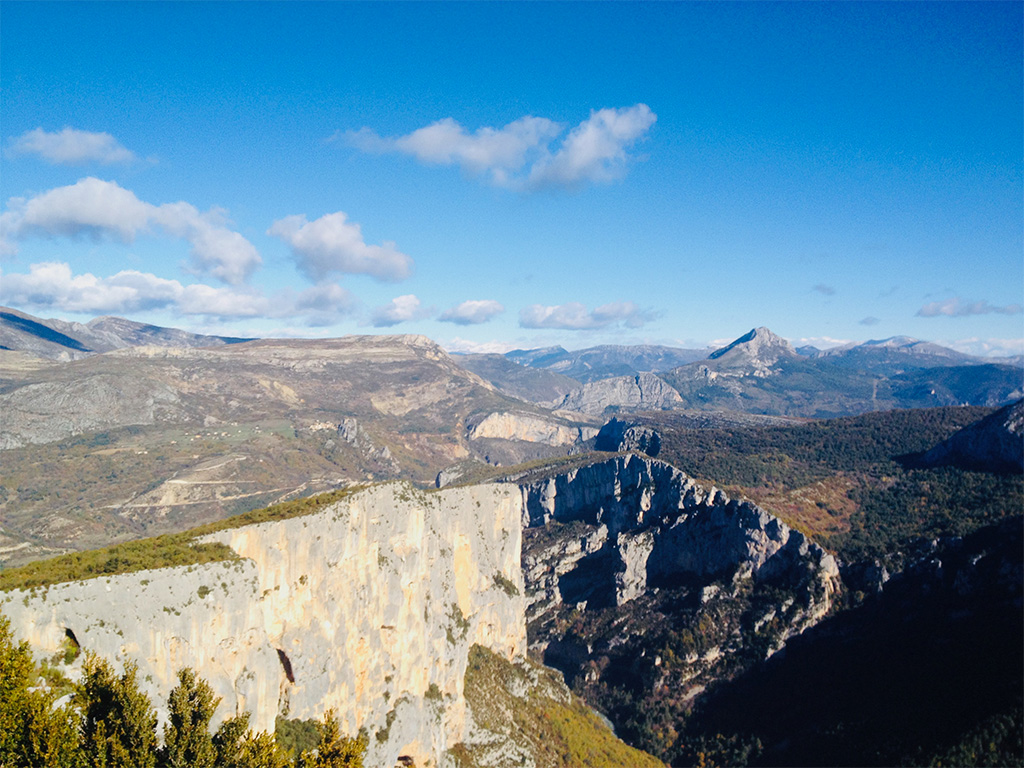
At its core lies the Verdon Gorge, a deep limestone canyon carved over millennia, with sheer cliffs plunging hundreds of metres to turquoise waters below. These vertical landscapes create cool, shaded microclimates alongside sun-baked rock faces, supporting a remarkable range of life.
Beyond the gorge, the park opens out into rolling plateaux, dry valleys, mountain pastures and wooded hills. Seasonal contrasts are strong: harsh winters at elevation, intense summer heat in exposed areas.
Wildlife of cliffs, plateaux and river corridors
The Verdon is one of the region’s most important areas for large birds, particularly cliff-nesting and soaring species that exploit thermals rising from the gorge walls. Open plateaux and grasslands support mammals such as wild ungulates, foxes and smaller carnivores, while forested areas provide cover and connectivity across the landscape.
River corridors and wetlands add another dimension, supporting amphibians, reptiles and a wealth of insects that depend on clean water and intact riparian habitats.
Botanical richness on limestone
Thin soils and limestone geology dominate much of the park, favouring plants adapted to drought, exposure and poor substrates. Alpine species persist on higher plateaux, while Mediterranean flora thrives on sunnier slopes.
The result is a mosaic of habitats where small changes in altitude, exposure or moisture can produce striking differences in vegetation.
Feathered Jet Fighters
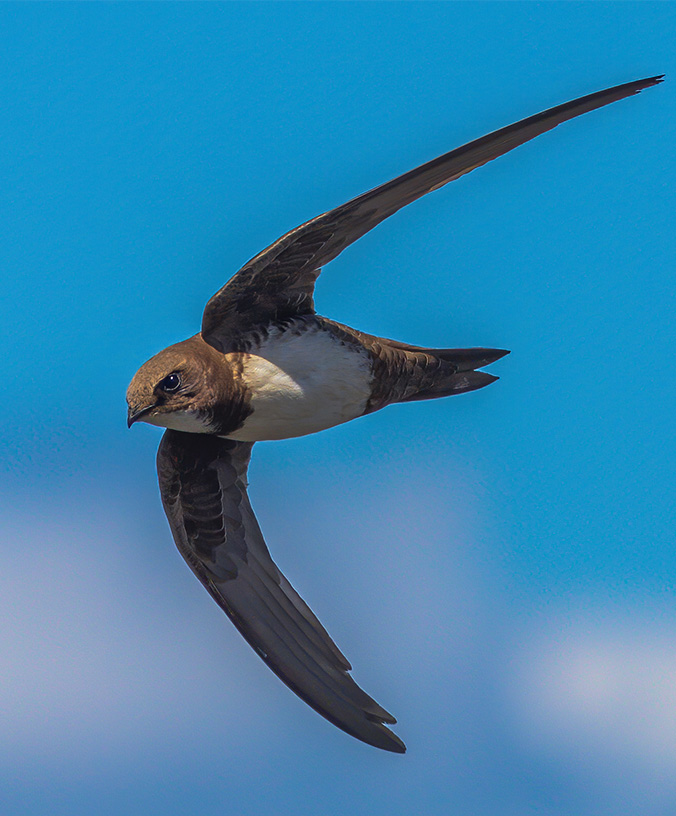
When you stop at any of the lookouts along the route des crètes and admire the way the verdon river has gauged out the deep chasm that snakes it way through the landscape before you. You could be forgiven for marvelling at the beauty of it and moving on. However if you linger longer and tune into the surroundings, you might be lucky to spot lizards basking on the rocks or stone walls. Watch out for the large, sickle-shaped, white bellied, alpine swifts. They can be seen alongside the smaller darker common swift, both these avian jet fighters will be involved in dramatic dogfights designed to bring down the airborne insect life. They will be joined by their smaller cousins, house and crag martins.
Nature’s bin men
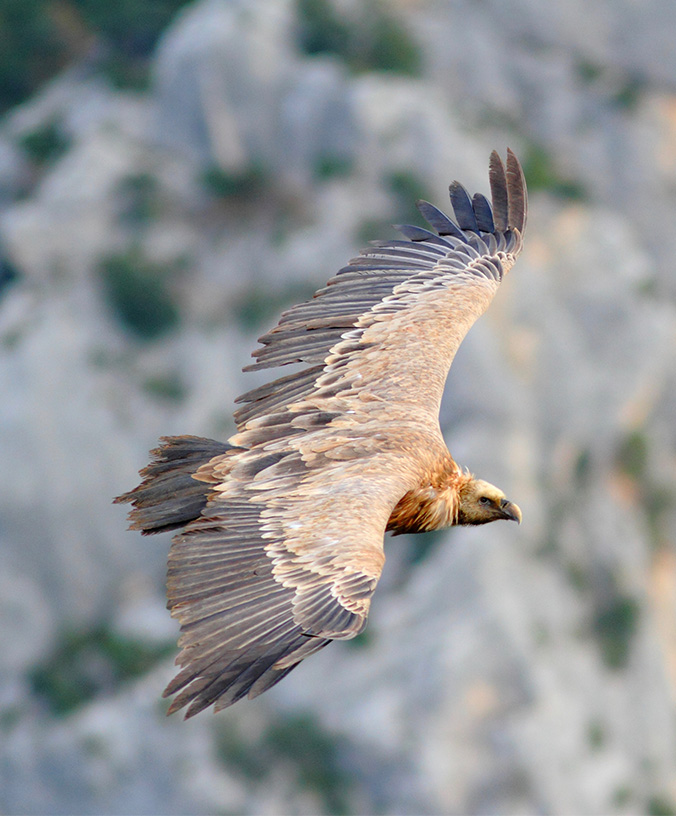
Now that your senses are getting honed you might get startled by a huge flash of feathers as it passed by the tip of your snout.
What on earth was that? Was it an eagle?
No, even better, you just got buzzed by a griffon vulture. When a bird with a wingspan close to 3 metres honours you with an eye to eye flyby, that is something to behold.
Other birds of prey around are Golden Eagles and Peregrine Falcons, they often are hassled by Ravens. Another member of the crow family the Red-billed Chough instantly has me scanning the sky whenever its jackdaw-like call is heard. Around the fringes of the orchards and cultivated areas, listen out for an array of buntings these include the Cirl, Ortolan and Rock varieties. The ant-munching Wryneck, a smaller and better camouflaged member of the woodpecker family can often be heard but not seen. You will need to be vigilant to spot it and others like Orphean and Bonelli’s warblers.
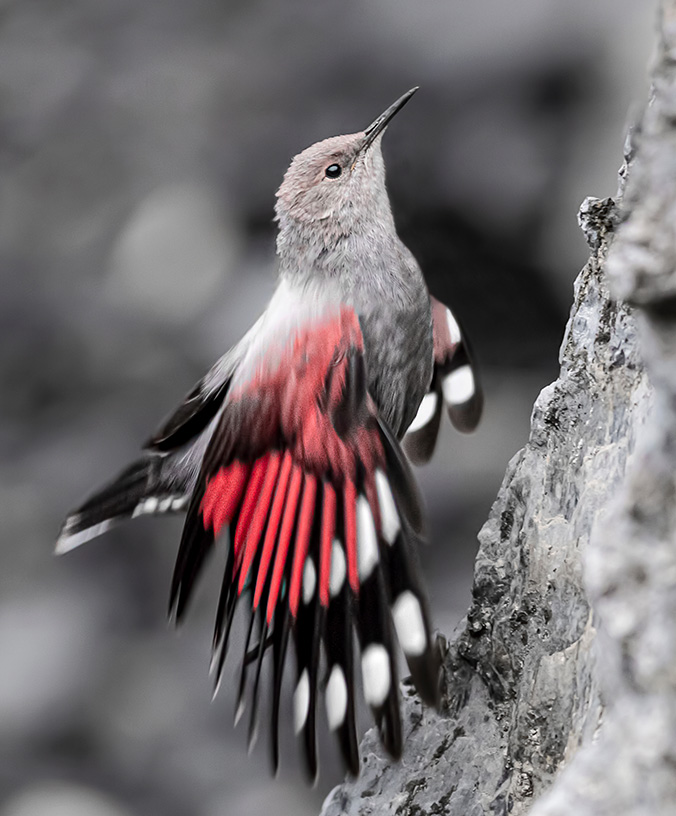
Avian tightrope walker
If you have the aid of some binoculars. You might see a flash of red as an otherwise grey little bird the Wallcreeper seems to defy gravity as it scales the cliff faces in search of food. Unmistakable, but difficult to spot on the rock faces. It is spectacular in flight, with broad black, red, and white-spotted wings resembling a giant butterfly. Usually found on rock faces in high mountainous regions, it also breeds in the gorge. Breeding males have a black throat; winter males and all females have white throats. Rarely-heard but its song is a steadily rising whistle.
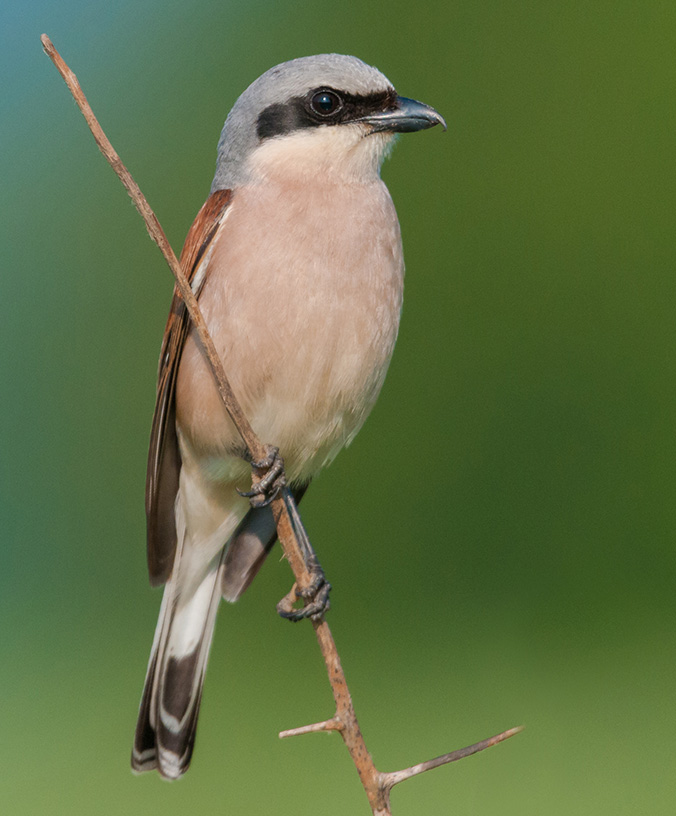
Stick his head on traitors’ gate
Check the tops of small trees and shrubs for Butcher Birds, better known as Red-backed Shrikes. They like to hunt from these prominent positions. They are feeding on large insects, small birds, frogs, rodents and lizards. These are impaled on thorns and left to tenderise in his larder. This is how it earned its nickname. This grisly practice reminds me of former historical figures in British history, hung, drawn and quartered and the added indignity of their heads then displayed around the approaches to the tower of London.
Other creatures of note that can be found are Aspic and Orsini’s meadow viper, you might not be the only one looking for these sunbathing reptiles, be sure to to check the sky for cruising Short-toed snake eagles (as their name implies) they are specialist snake hunters. Chamois can also be spotted if you’re paying attention, that can sometimes be out in the open on grassy areas. These quite often are more playful and carefree youngsters. They all have to have their wits about them as wolves are making a return due to the protection that the vast, nearby military base of Canjuers provides them.
A working landscape
Traditional pastoralism remains central to the Verdon’s ecology. Grazing helps maintain open grasslands, prevents scrub encroachment and supports plant and insect diversity.
Villages, terraced fields and historic routes are integral to the park, reminding visitors that this is a living landscape, shaped by long interaction between people and nature.
Conservation context
The Verdon Regional Nature Park plays a crucial role in protecting water quality, maintaining ecological corridors between alpine and Mediterranean zones, and safeguarding species dependent on open, traditionally managed landscapes.
It stands as a reminder that spectacular scenery and ecological value are inseparable and that conservation here depends as much on sustainable land use as on protection.

Where’s the wonder gone?
Europe’s grand canyon is much more than just a tag on social media
You’ll be amazed by the number of tourists who just stop briefly, take a selfie and disappear into the distance like marching ants. What has happend to our youthful wonder. Nowadays the destination becomes irrelevent and reduced to nothing but a sidenote in a tagged photo.
Official Links