


Pelagos-Marine Mammal Sanctuary
Pelagos-Marine Mammal Sanctuary
Beyond the islands and headlands of the Provençal coast, the continental shelf gives way to steep slopes, submarine canyons and deep offshore water. Currents and seasonal mixing support a productive food web capable of sustaining some of the Mediterranean’s largest marine predators.
The Pelagos Sanctuary covers about 87,500 km² between France, Monaco and Italy and was created specifically for the conservation of marine mammals and their habitats. Eight cetacean species occur regularly within its waters.
On the French side, Pelagos extends marine protection far beyond Port-Cros and the Îles d’Hyères into the deeper waters offshore.
Depth and Habitat
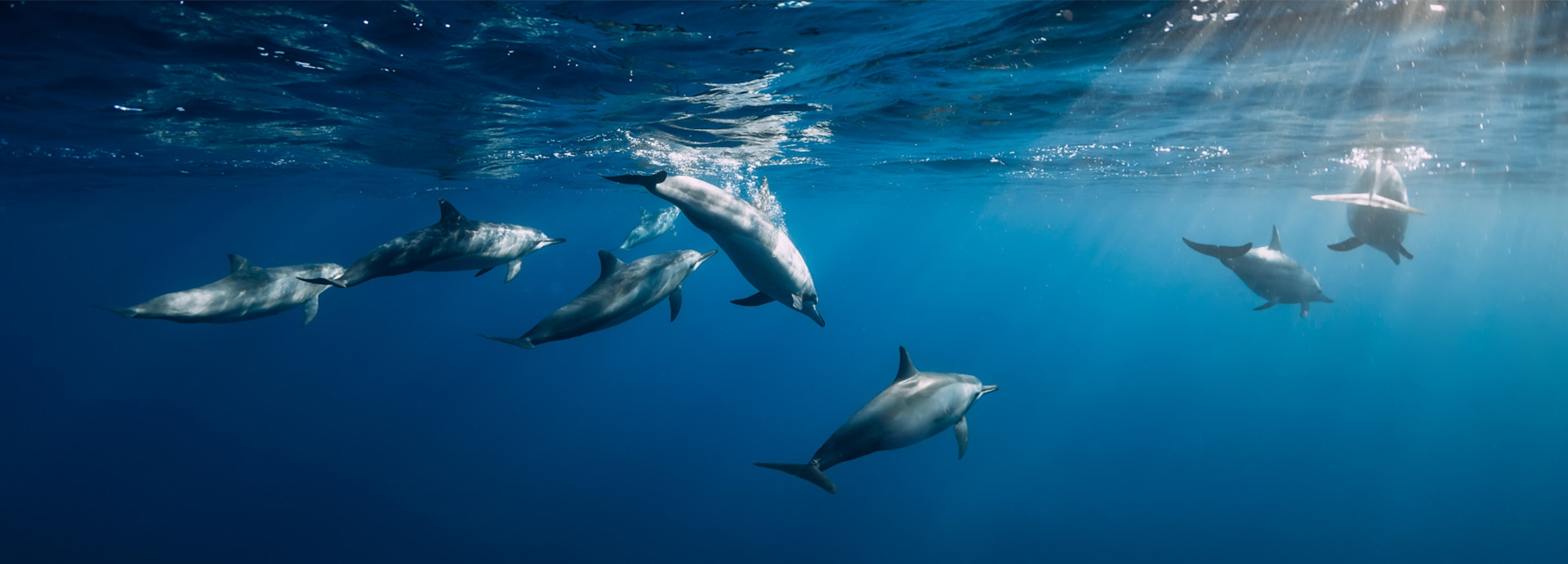
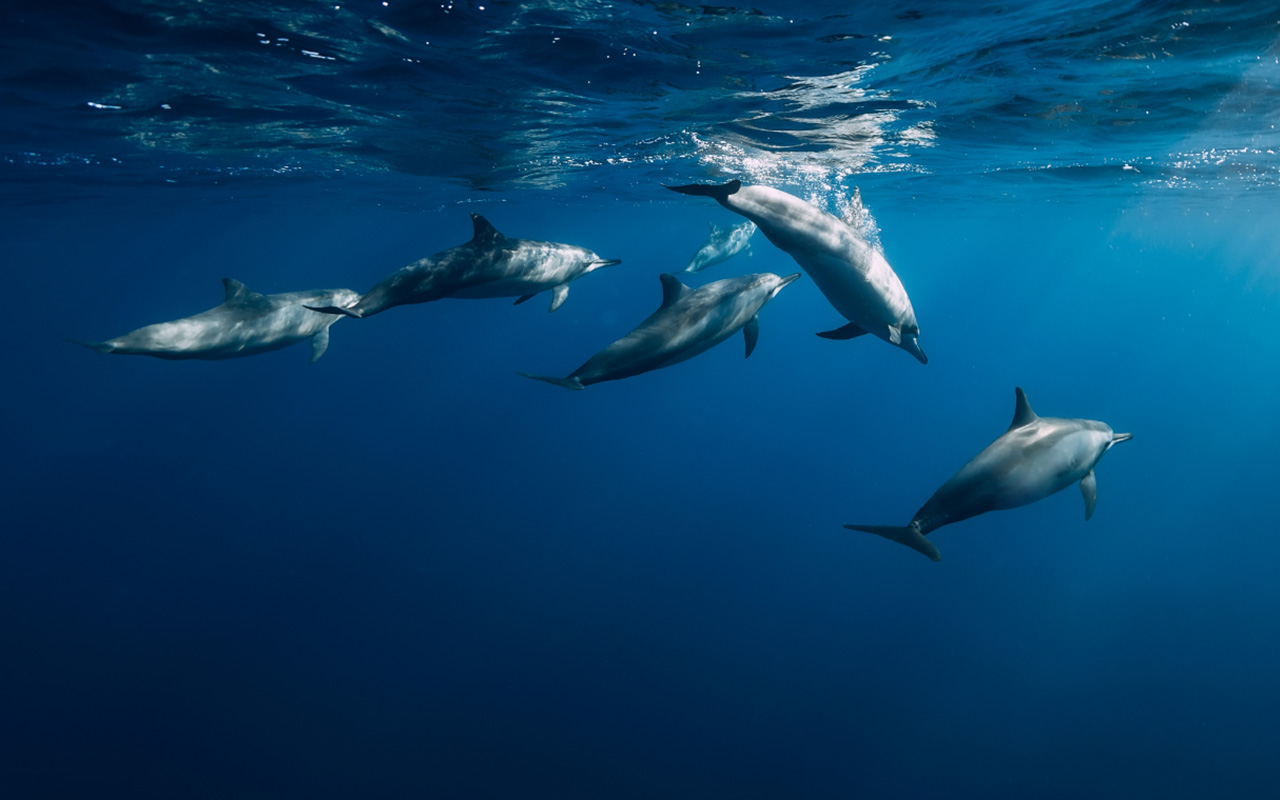
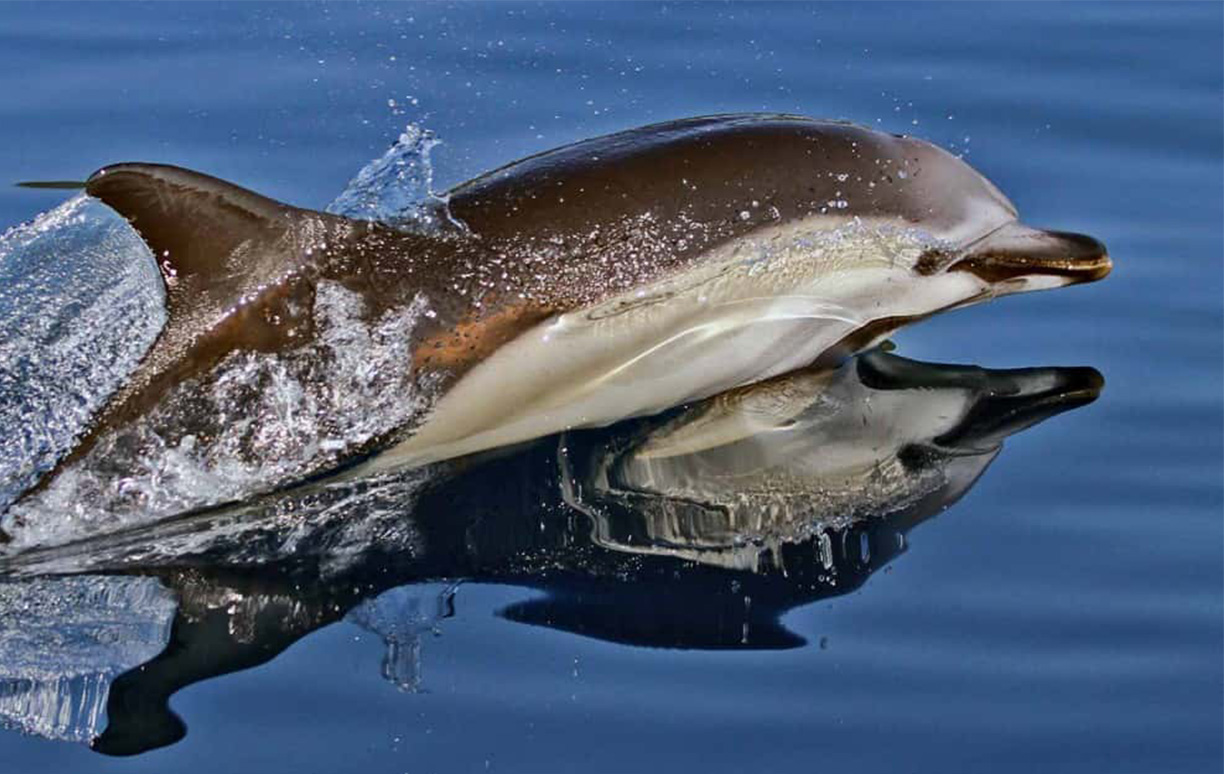
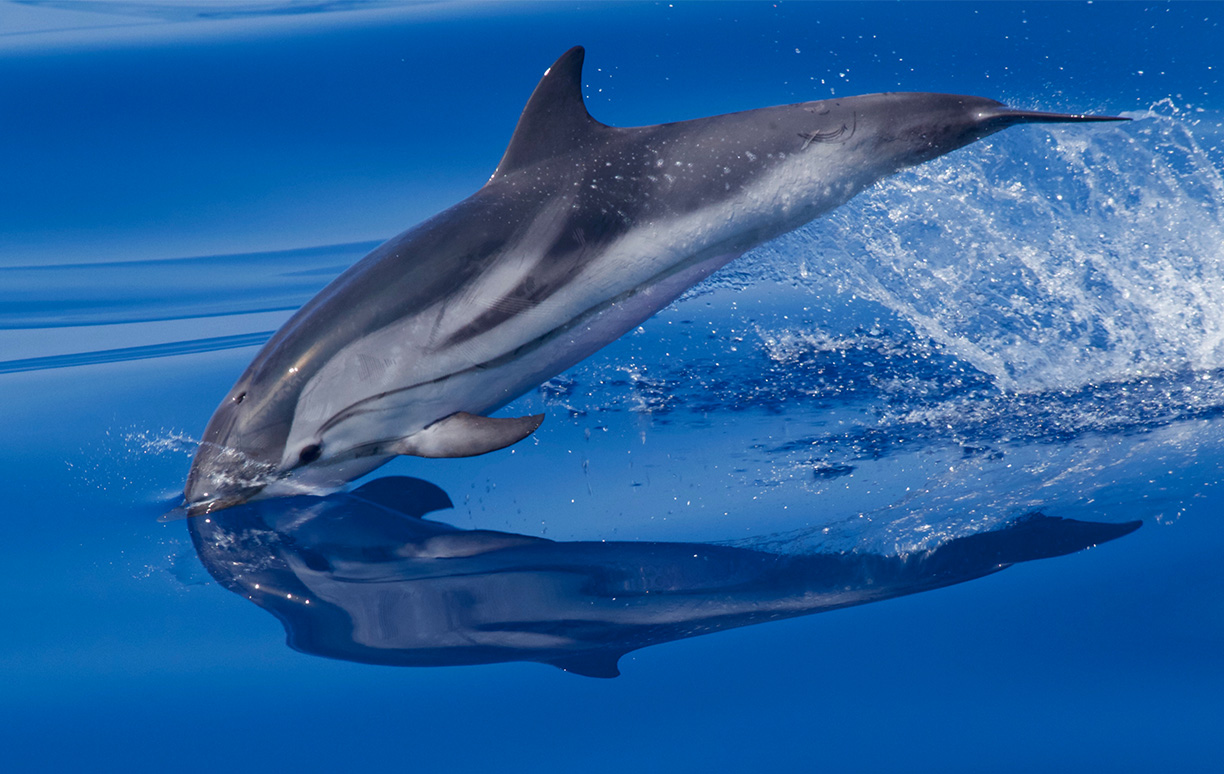
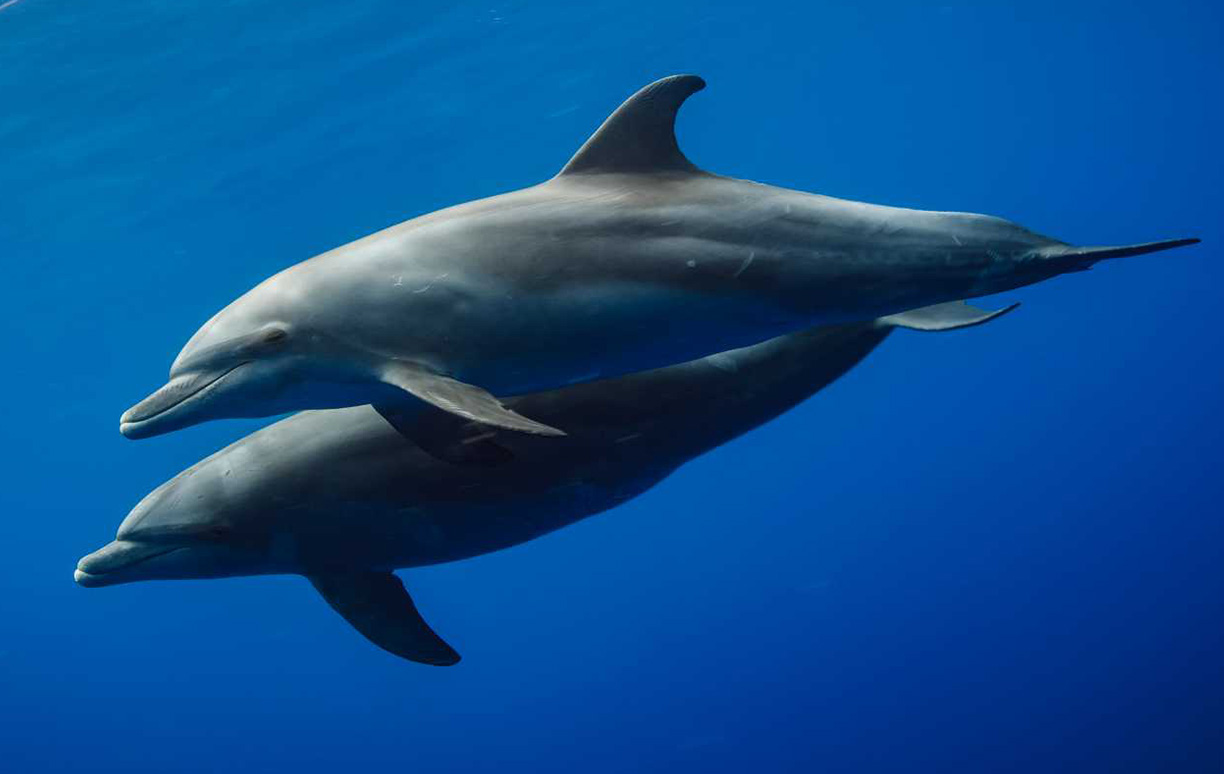
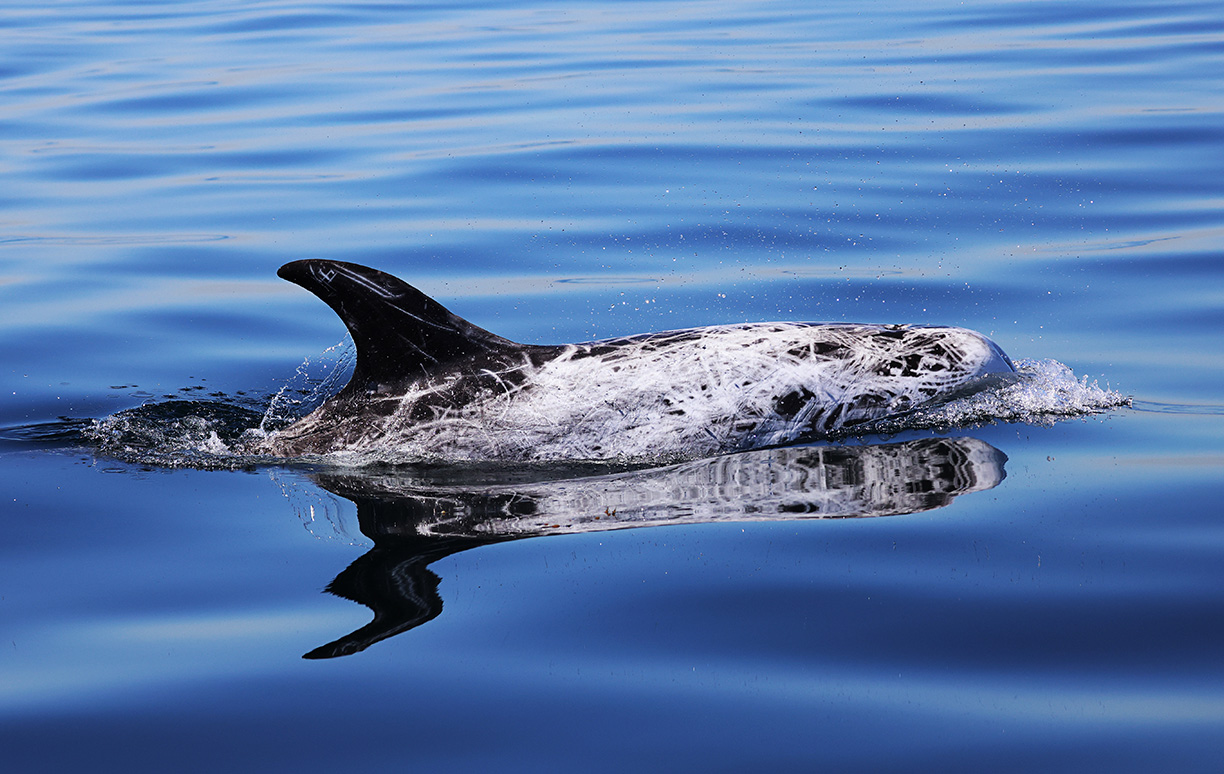
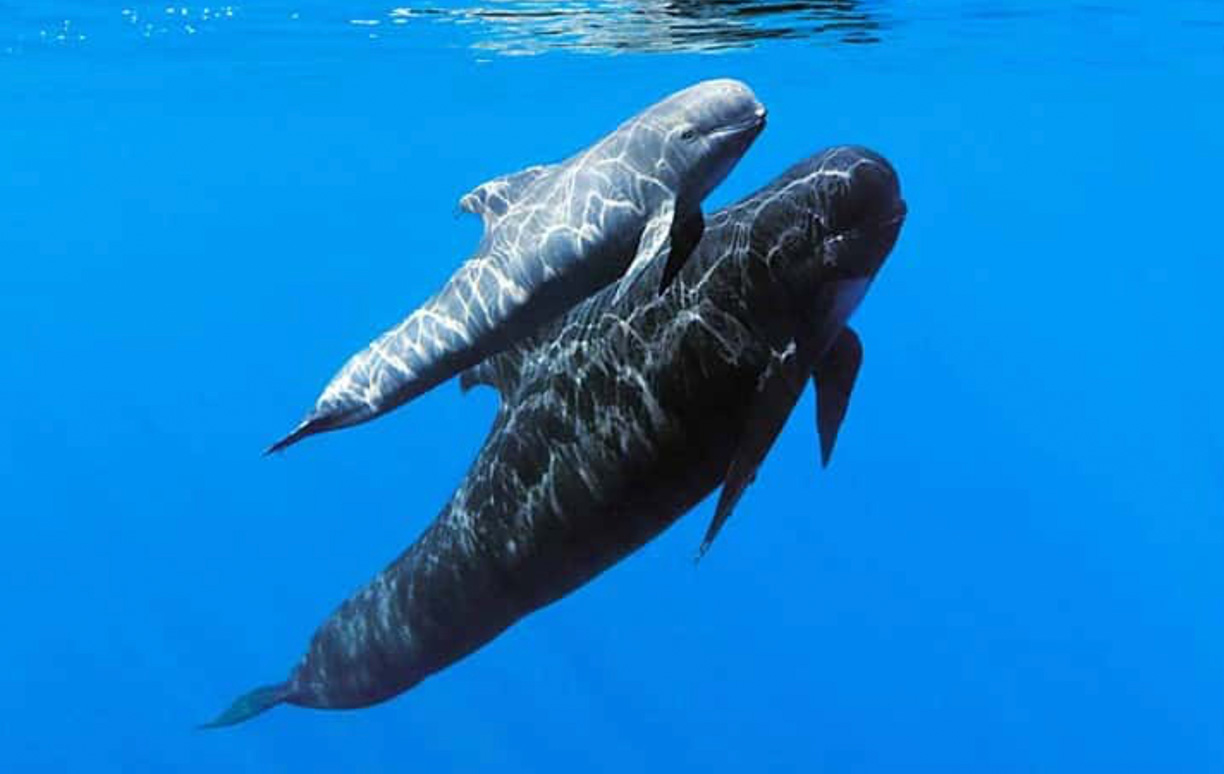
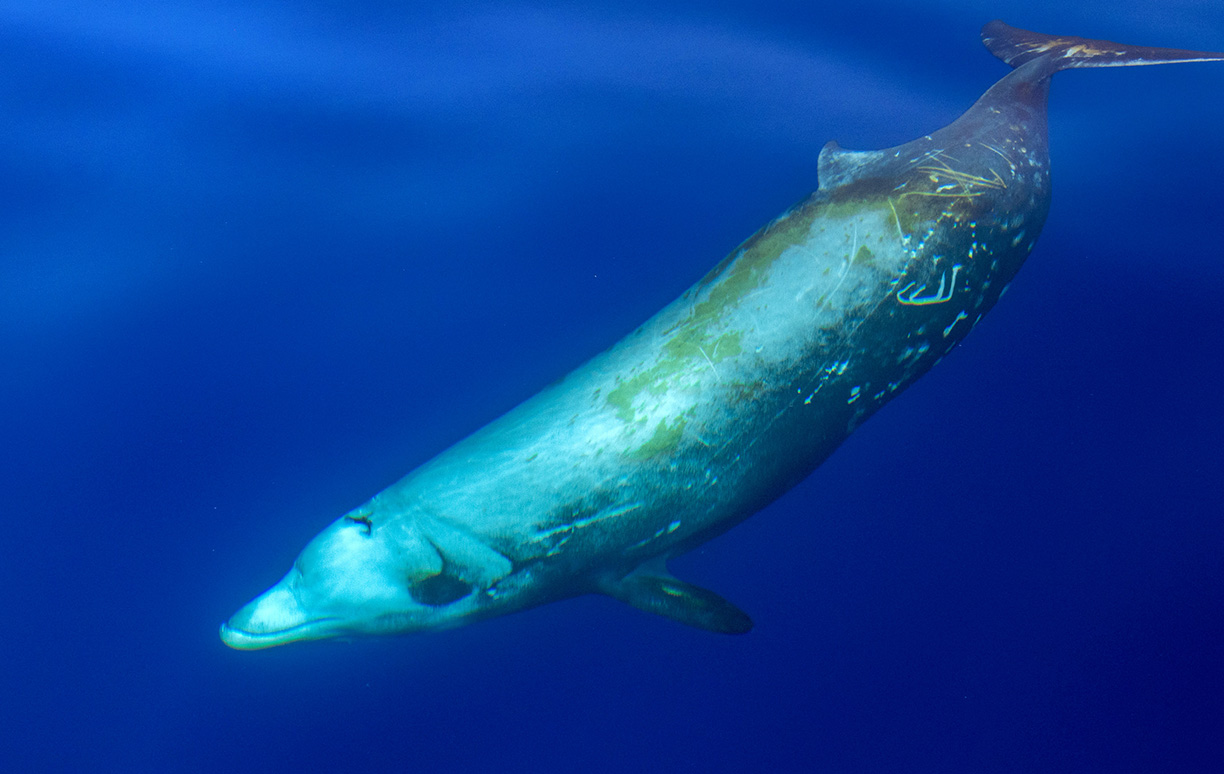
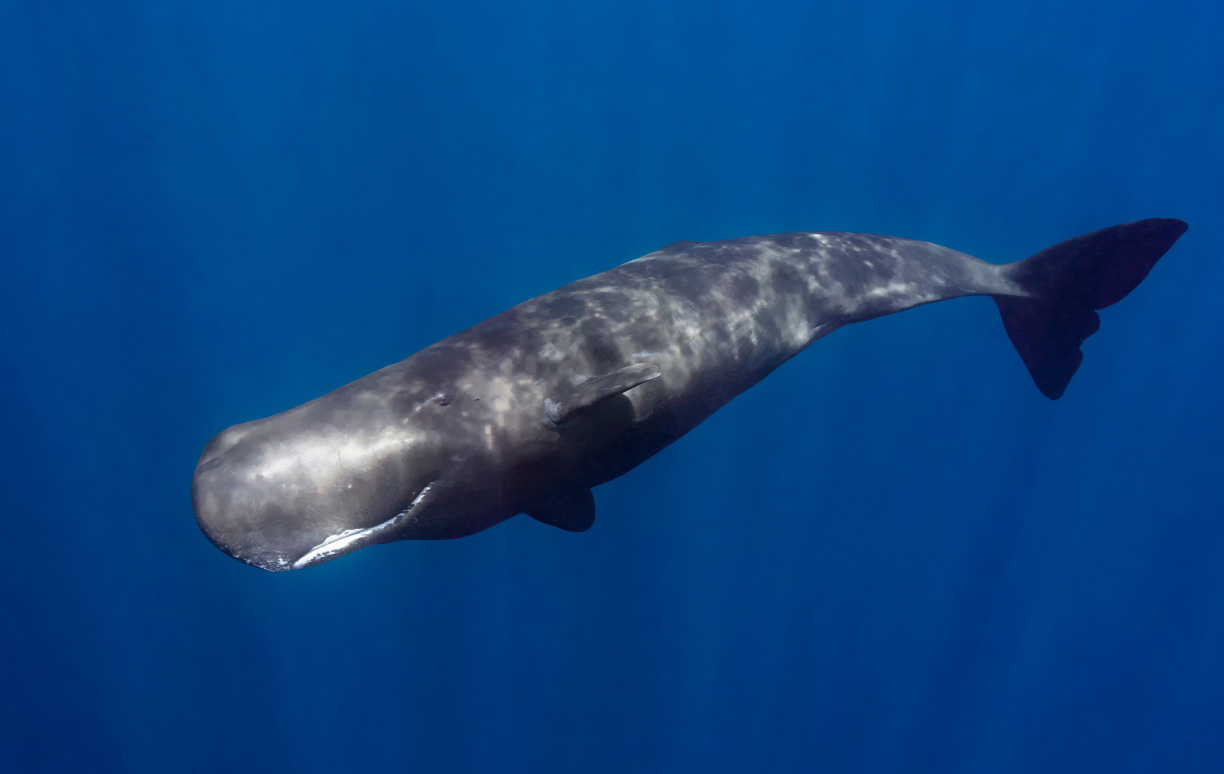
Depth is one of the strongest influences on the distribution of cetaceans within Pelagos. Bottlenose Dolphins are most closely associated with the continental shelf and relatively shallow coastal water. Striped Dolphins are characteristic of the open sea, while Risso’s Dolphins and Long-finned Pilot Whales favour deeper waters. Cuvier’s Beaked Whales and Sperm Whales are deep-diving predators strongly associated with the continental slope and offshore canyons.
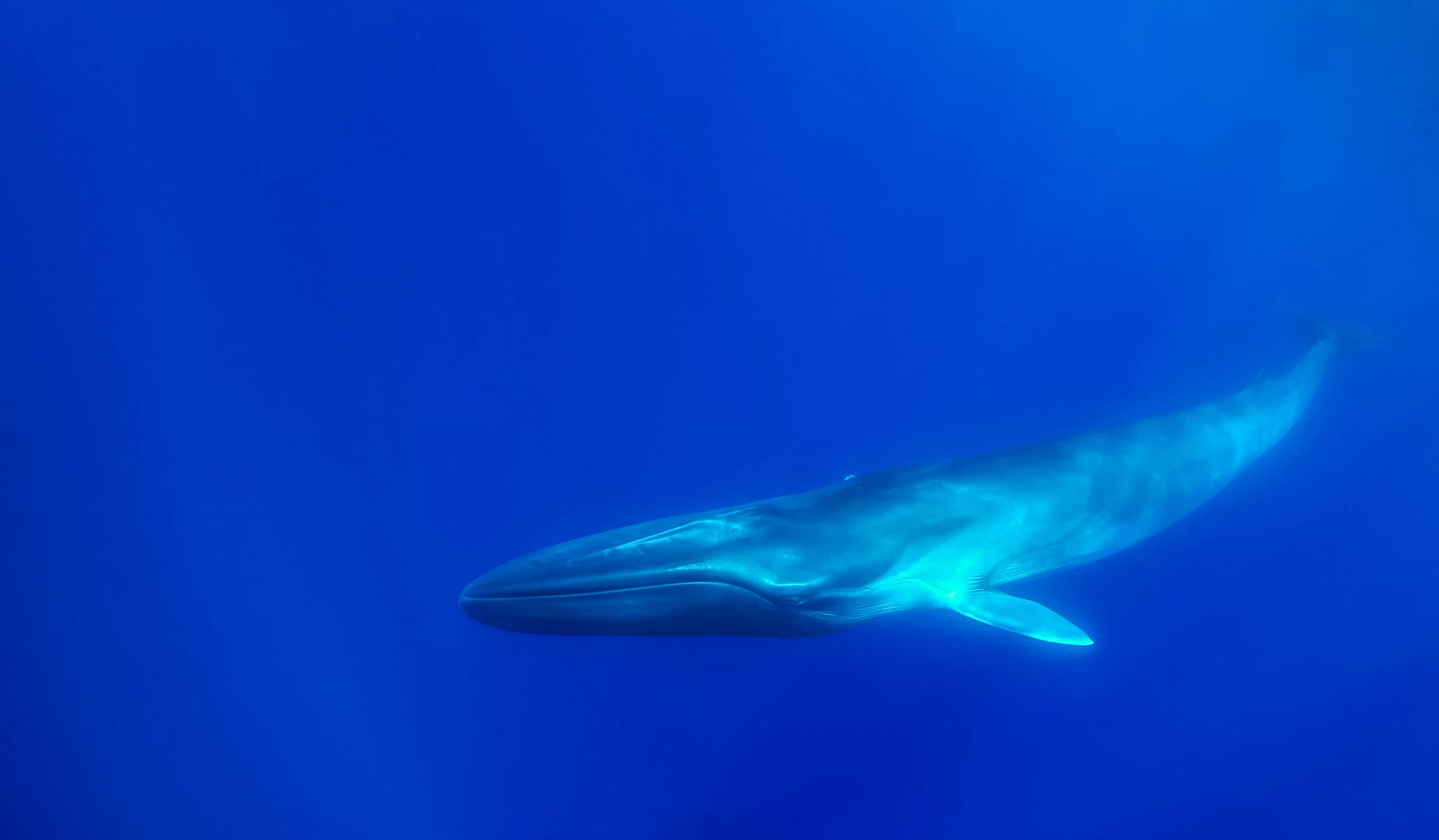
Fin Whales are different again. Rather than pursuing large prey at depth, they exploit concentrations of krill associated with productive offshore waters.
The Wider Pelagic Community
Pelagos was created for marine mammals, but its whales and dolphins depend upon a much broader offshore ecosystem. Small schooling fish, crustaceans and squid connect plankton productivity with tuna, seabirds, marine turtles and cetaceans.
Mediterranean Monk Seal
The Mediterranean Monk Seal is not one of Pelagos’s eight regular cetaceans, but it is the sanctuary’s other particularly significant marine mammal.
The principal surviving populations are concentrated much farther east in the Mediterranean. Individuals are nevertheless occasionally recorded within Pelagos and their presence has also been confirmed through non-invasive monitoring.
- Length: around 2.5 m
- Weight: around 300 kg
- Preferred habitat: coastal waters with secluded haul-out sites and caves
- Favoured prey: fish and cephalopods
- Pelagos status: occasional
Main pressures: disturbance, loss of suitable haul-out habitat and interactions with fisheries
Marine Turtles
Loggerhead Turtle is the marine turtle most likely to be encountered in these waters. Individuals range widely across the Mediterranean and may occasionally be found resting or swimming at the surface offshore, particularly in calm conditions.
Their movements extend far beyond Pelagos, linking feeding areas across the Mediterranean with breeding grounds elsewhere in the basin. Accidental capture in fishing gear, floating plastics and collisions with vessels remain important threats.
Ocean Sunfish
Ocean Sunfish are among the most distinctive animals that can appear at the surface. The enormous flattened body is unmistakable when seen well, although an upright dorsal fin cutting through the water can initially be surprisingly difficult to interpret.
Sunfish occur in open Mediterranean waters and feed extensively on gelatinous organisms and other marine invertebrates. Encounters are unpredictable, but they are regularly included among the wildlife recorded during naturalist excursions from the Var coast.
Tuna, Swordfish and Flying Fish
Atlantic Bluefin Tuna is one of the major predators of the Mediterranean pelagic system. Schools hunt sardines, anchovies and other fish and can sometimes push their prey close to the surface, where the activity attracts dolphins, shearwaters, gulls and terns.
Swordfish also range through these offshore waters, although encounters at the surface are much less predictable.
Flying Fish are another characteristic offshore encounter. When disturbed they can break clear of the water and travel surprising distances above the surface. I have watched them myself offshore from the Estérel, and they are also recorded during naturalist excursions farther west around the Îles d’Hyères.
Sharks and Rays
Sharks and rays are much less frequently encountered at the surface than dolphins, tuna or sunfish. Mediterranean Devil Ray (Mobula mobular), known locally as Diable de mer, is one of the most impressive, reaching around 3.5 m across and ranging through the upper layers of the open Mediterranean. Occasionally seen close to the surface, its wing-like movements can make a large animal remarkably conspicuous when conditions are calm.
Shortfin Mako is another occasional offshore encounter. One was seen during a Croix du Sud V excursion from Sanary-sur-Mer in 2026, although that sighting is better treated as a PACA offshore record than specifically as a Pelagos record.
Seabirds
The waters of Pelagos also support a characteristic Mediterranean seabird community.
Scopoli’s Shearwater and Yelkouan Shearwater are the two species most closely associated with the region’s offshore waters. Both nest on Mediterranean islands but spend much of their lives at sea, ranging widely in search of food. Yelkouan Shearwaters are particularly important around the Îles d’Hyères, while Scopoli’s Shearwaters range extensively across deeper water.
European Storm Petrel is much smaller and considerably easier to overlook. Gulls and terns also occur offshore, while migration can bring other seabirds through the area.
Feeding concentrations deserve attention. Tuna or dolphins pushing shoaling fish towards the surface can create opportunities for shearwaters, gulls and other seabirds, so apparently empty water can change very quickly when predators begin feeding.
Conservation Pressures
Protecting an area of open sea is very different from protecting a terrestrial reserve. Whales, dolphins, turtles, tuna and seabirds move through waters crossed constantly by commercial ships, ferries, fishing vessels and recreational boats.
Collisions are a particular concern for large whales. Underwater noise can interfere with cetacean communication and behaviour, while fishing activity brings the risks of accidental capture and entanglement. Marine litter, chemical pollution and disturbance add further pressure.
Recreational traffic matters as well. During a summer trip towards the Estérel, we encountered a Sperm Whale resting at the surface less than 2 km from the beach opposite Villepey, directly within heavily used coastal waters. We saw it in time, but the encounter showed how unexpectedly a large whale can appear among ordinary summer boat traffic.
For deep-diving species there is an additional problem: much of their lives takes place completely beyond human sight. Cuvier’s Beaked Whales and Sperm Whales may spend prolonged periods feeding at depths where disturbance cannot be seen from the surface.
Watching Cetaceans Responsibly
A wildlife encounter should never depend on pursuing or surrounding an animal. Boats need to approach slowly, maintain an appropriate distance and avoid repeatedly cutting across the direction of travel.
The distinction is particularly important when animals are feeding, resting or accompanied by young.
In France the High Quality Whale-Watching label identifies operators working to recognised standards for cetacean observation. For anyone choosing a commercial excursion, it is a useful starting point.
Experiencing Pelagos from PACA
Croix du Sud V – Sanary-sur-Mer – Whale and dolphin-watching excursions accompanied by the specialist naturalists of Découverte du Vivant. WoodPACA recommends these outings from first-hand experience, both for the cetaceans and for the knowledge of the wider offshore wildlife.
Vedettes Îles d’Or – Le Lavandou – Naturalist excursions from Le Lavandou into the waters of Pelagos, providing another PACA departure point for observing cetaceans and other marine wildlife.
Wildlife sightings can never be guaranteed and operators should never suggest otherwise.
Citizen Science just beyond PACA
For a more involved experience, the Tethys Research Institute – Cetacean Sanctuary Research offers opportunities to participate in cetacean research expeditions from Sanremo.
Sanremo lies just across the Italian border in Liguria and is included here deliberately as an out-of-region option. Participants join researchers aboard a working vessel and assist with fieldwork rather than travelling simply as whale-watching passengers.
Explore Further
Pelagos Sanctuary – Official information on the international marine-mammal sanctuary, its cetaceans, research and conservation programmes.
Port-Cros National Park – Pelagos Sanctuary – Information on the French part of Pelagos and the role of Port-Cros National Park in conservation, scientific work and public awareness.
High Quality Whale-Watching – Information on responsible cetacean observation and the High Quality Whale-Watching certification.