


Coussouls de la Crau
The Coussouls de la Crau National Nature Reserve protects one of the most unusual and irreplaceable landscapes in Europe. Situated between the Alpilles and the Rhône delta, the Crau is not grassland, scrub or farmland. It is the last surviving Mediterranean steppe in Western Europe, a landscape whose origins predate most modern ecosystems in France.
This is a place defined not by abundance, but by exposure, scale and continuity.
A Mediterranean steppe unlike any other in Western Europe
A Landscape Shaped by an Ancient River
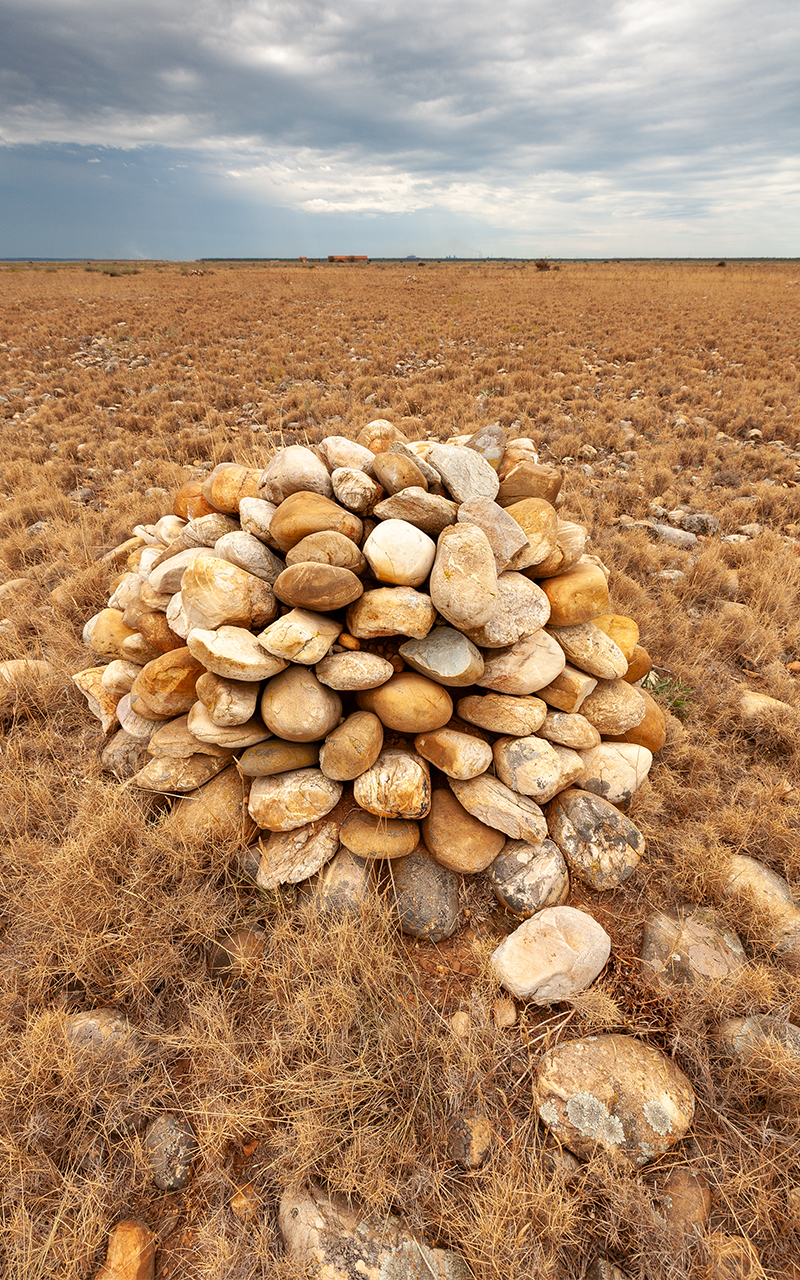
The Crau plain was formed tens of thousands of years ago when the ancient Durance River deposited vast quantities of rounded stones across the lowlands before changing course. What remains today is a stony expanse with extremely shallow soils where trees never re-established.
Key defining features include:
- extensive carpets of rounded stones known as coussouls
- nutrient-poor soils only a few centimetres deep
- intense exposure to wind, heat and summer drought
- uninterrupted open horizons with minimal vertical structure
This geological history underpins everything that lives here. The Crau is governed by constraint: little shade, little water and little margin for error.
A True Steppe Ecosystem
Ecologically, the Crau functions as a steppe, comparable to Eurasian plains rather than Mediterranean grassland. Productivity is low and seasonal and life is adapted to open ground and long sightlines.
Species here rely on:
- visibility rather than cover
- ground-level nesting
- early detection of predators
- synchronisation with short seasonal peaks
This combination of conditions is now exceptionally rare in Europe, making the Crau impossible to replace or recreate elsewhere.
Birds of the Open Plain
Birds are the primary reason for the Crau’s national protection. The reserve supports some of the most important populations of steppe-associated species in France.
Key species include:
- Little Bustard (Tetrax tetrax) – the Crau holds one of the species’ last strongholds in the country
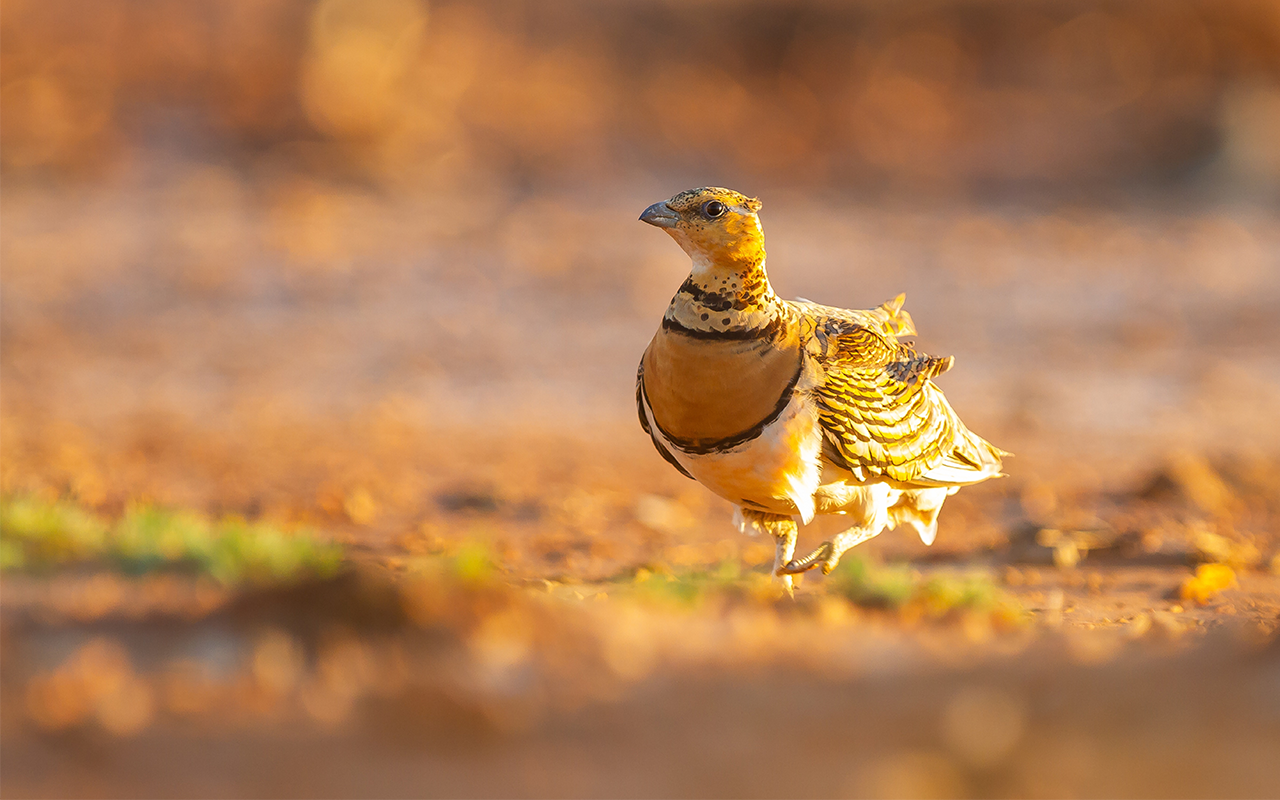
- Pin-tailed Sandgrouse (Pterocles alchata) – nomadic and emblematic of open steppe
- Stone-curlew (Burhinus oedicnemus) – perfectly adapted to stony ground and nocturnal activity
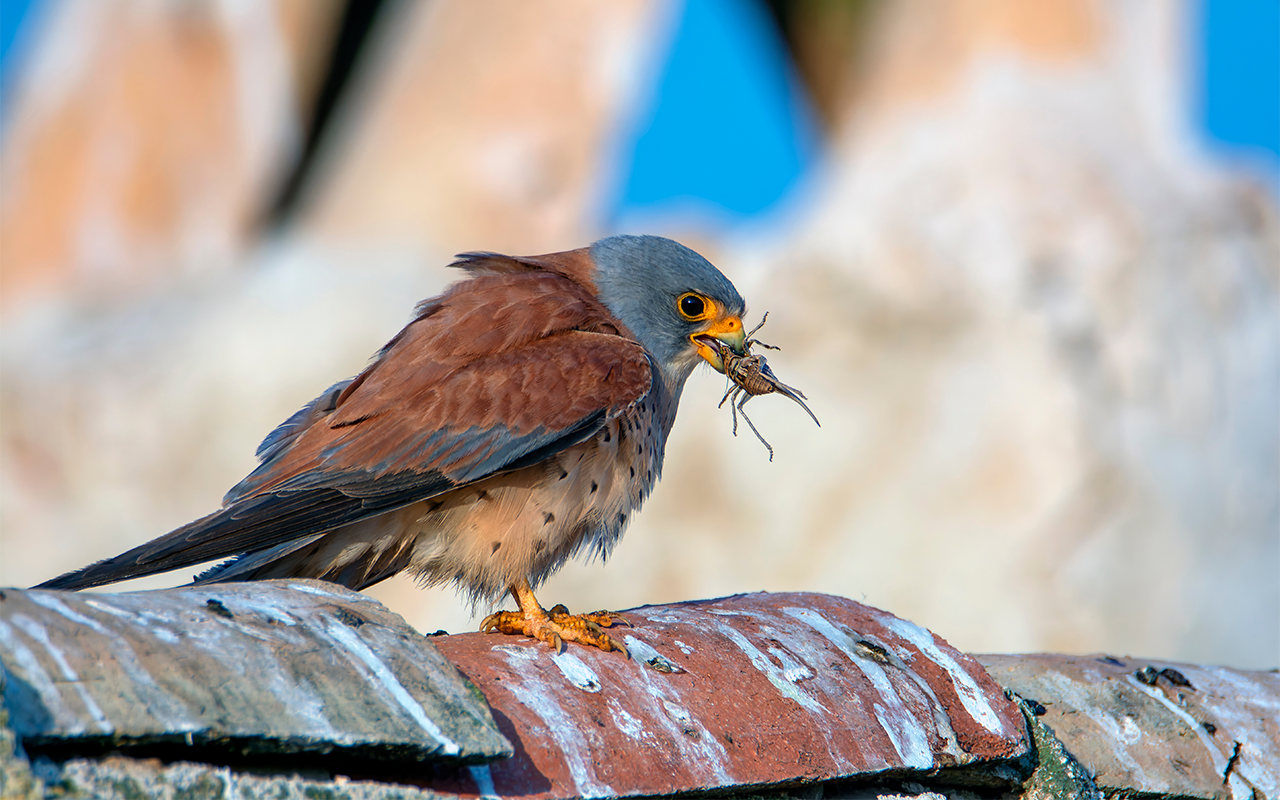
- Lesser Kestrel (Falco naumanni) – breeding nearby and foraging extensively over the plain
These birds require scale, continuity and absence of fragmentation. Small reserves or isolated fields cannot support them.
Invertebrates: The Foundation of the System
Beneath the stones lies one of the most specialised invertebrate communities in Europe. These organisms drive the ecological functioning of the steppe.
Notable features include:
- heat-adapted beetles, ants and orthopterans
- species with extremely restricted distributions
- endemics such as the Crau Cricket (Eugryllodes pipiens crauensis), found nowhere else on Earth
These invertebrates regulate nutrient cycling and form the base of the food web that supports birds and reptiles.
Reptiles and Open-Ground Specialists
The Crau also supports reptiles adapted to exposed conditions where stones provide warmth and sparse vegetation allows efficient hunting.
These species depend on:
- sun-warmed substrates for thermoregulation
- open ground for movement and foraging
- undisturbed soils for shelter and egg-laying
Such specialists cannot persist in wooded, irrigated or intensively farmed landscapes.
A Human Landscape That Sustains Nature
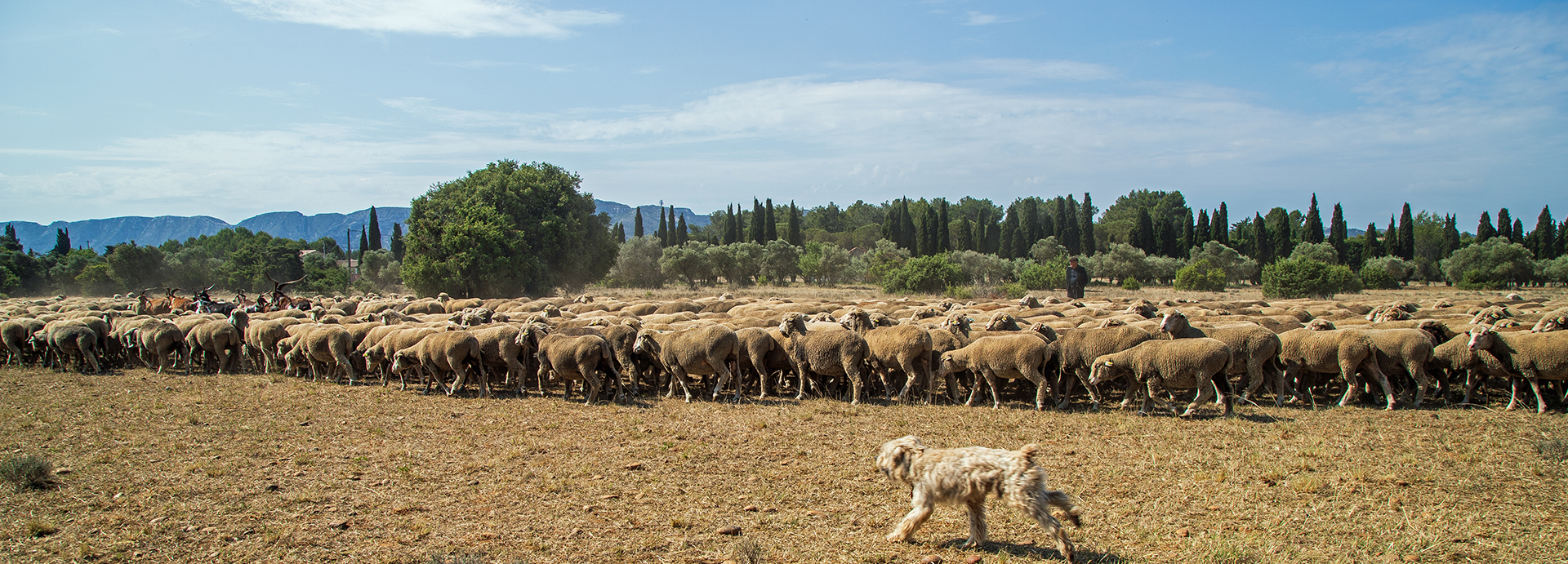
Unusually, the long-term survival of the Crau depends on traditional low-intensity sheep grazing. Seasonal transhumance has shaped the steppe for centuries and continues to play a critical ecological role.
Grazing:
- prevents shrub and tree encroachment
- maintains the open structure of the steppe
- preserves conditions that have existed for millennia
Without grazing, the ecosystem rapidly degrades. The Crau is one of Europe’s clearest examples of a co-evolved human and natural system.
Why National Protection Is Essential
The Coussouls de la Crau is protected because:
- the habitat is globally rare
- its species assemblage cannot relocate
- fragmentation would cause rapid ecological collapse
- restoration after loss is effectively impossible
This is not a landscape that can be recreated through rewilding or management once destroyed.
Visiting With Understanding
To the untrained eye, the Crau can appear empty. In reality, it is one of the most highly specialised ecosystems in France.
Restricted access and observation points are not about exclusion. They exist to protect a system that depends on space, quiet and continuity.
For those willing to observe carefully, the Crau reveals a different rhythm of nature: subtle, seasonal and shaped by deep time rather than abundance.