


An Intact Alpine Valley System
The Vallée de la Séveraisse National Nature Reserve protects one of the most complete glacial valley systems on the western edge of the Écrins massif. Here, altitude, geology and water still govern the landscape with minimal human modification, creating a functioning high-mountain ecosystem that has become increasingly rare across the Alps.
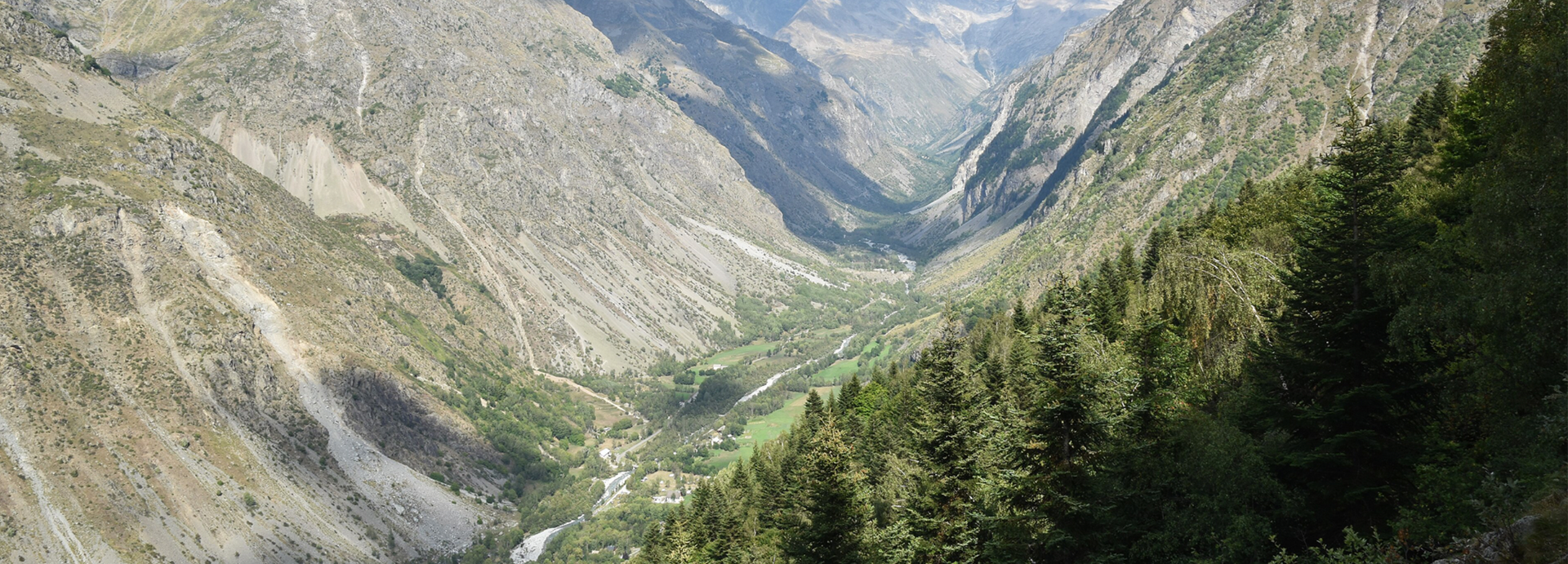
The reserve encompasses a classic U-shaped glacial valley carved into hard crystalline rock, where torrents, scree slopes, alpine meadows and subalpine woodland remain connected as a single ecological system. Rather than focusing on a single habitat or species, protection here preserves the continuity of natural alpine processes across the entire valley.
U-shaped glacial valley
A Valley Shaped by Ice, Rock and Water
The Séveraisse valley owes its structure to glaciation and ongoing erosion. Its defining elements include:
- Snowmelt and glacier-fed torrents running through the valley floor
- Moraines, scree slopes and avalanche corridors
- Alpine pastures rising towards high cirques and ridgelines
- Subalpine woodland at lower elevations
- Sheer rock faces and unstable slopes left largely unmanaged
Rockfall, seasonal flooding and snow movement continue to shape the terrain. In contrast to many Alpine valleys modified by dams, roads or ski infrastructure, natural processes here are largely allowed to operate freely.
Ecological Importance
The reserve functions as a high-altitude ecological corridor linking multiple alpine habitats from valley floor to upper slopes. Strong altitudinal gradients over short distances create a wide range of microclimates, supporting species adapted to cold conditions, short growing seasons and clean, fast-flowing water.
Because such intact valley systems are now uncommon, the Séveraisse serves as an important reference landscape for understanding long-term ecological change in the Alps.
Birds of Cliffs and High Slopes
The cliffs, scree and open alpine terrain support characteristic mountain birdlife. Regularly recorded species include:
- Golden eagle hunting across the valley
- Bearded vulture ranging along high ridges and rock faces
- Wallcreeper associated with steep cliffs
- Alpine accentor in high rocky environments
These species depend on expansive, undisturbed mountain terrain and stable nesting sites.
Mammals of the Alpine Mosaic
The valley supports a typical assemblage of high-mountain mammals:
- Chamois and alpine ibex on steep rocky slopes
- Alpine marmot in high pastures and meadow systems
- Mobile predators using the valley as a movement corridor
Seasonal movement between elevations remains possible due to the absence of major fragmentation.
Water as the Ecological Spine
The Séveraisse torrent and its tributaries form the ecological backbone of the reserve. Cold, well-oxygenated waters support aquatic invertebrates and amphibians sensitive to pollution and temperature change. Alpine rivers of this quality have declined elsewhere due to damming and water abstraction, making intact systems such as this increasingly significant.
A Landscape of Natural Continuity
What distinguishes the Vallée de la Séveraisse is the continuity between its habitats. Glacial headwaters, torrents, slopes, woodland and meadows remain ecologically linked rather than isolated. This allows natural seasonal cycles and species movement to continue with minimal interference.
Protection at national level ensures that infrastructure expansion, water modification and habitat fragmentation remain limited, safeguarding one of the most coherent alpine valley systems in the region.
A Living Alpine Reference Landscape
The Vallée de la Séveraisse stands as one of the clearest examples of an intact western Alpine valley, where snow, rock and water still shape both land and life. Its value lies not in spectacle but in ecological continuity — a functioning mountain system preserved largely on its own terms.
Visiting with Awareness
The reserve rewards quiet, observant exploration. Wildlife is often distant and adapted to harsh conditions rather than abundance. Weather and access can change quickly with altitude and season.
Remaining on paths and respecting the scale and sensitivity of the landscape helps maintain the ecological balance that defines this valley.