


Wetland Systems Around Hyères
The coastal plain around Hyères contains an extraordinary concentration of wetlands, but they are far from one continuous ecosystem. Former saltworks at Pesquiers and the Vieux Salins lie surprisingly close to freshwater marshes, temporary pools, reedbeds, flooded meadows, coastal dunes and the Mediterranean shore.
For naturalists, that contrast is the attraction. Flamingos, avocets and terns dominate the open salins, while the surviving freshwater wetlands bring crakes, bitterns, Penduline Tits, amphibians, dragonflies and a completely different flora. Access varies considerably: some sites have public paths and visitor facilities, while others are sensitive wetlands best viewed from their margins or during organised visits.
A Coastal Wetland Network of Exceptional Biodiversity
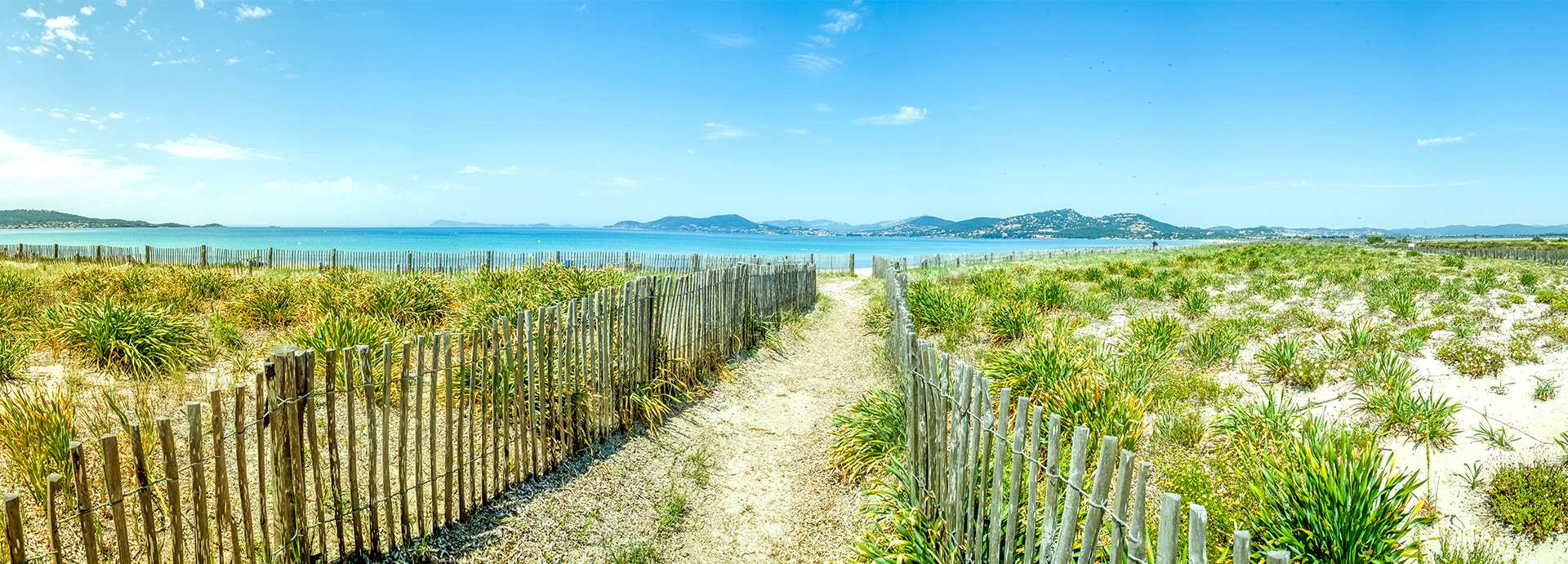
Landscape & Habitats
Explore the distinct wetland landscapes around Hyères, from historic salt pans and freshwater marshes to seasonal pools, reedbeds and the Mediterranean shore.
Birding the Hyères Wetlands
Birding changes dramatically between the open saltpans and the surviving freshwater marshes. At Pesquiers and the Vieux Salins, breeding birds include Pied Avocet, Black-winged Stilt, Kentish Plover, Black-headed Gull, Slender-billed Gull, Little Tern, Common Tern and Common Shelduck. Greater Flamingo is the most conspicuous presence, but the shallow basins attract a much broader assemblage of waders, ducks, gulls and terns as water levels and seasons change.
Freshwater Hyères has a completely different character. Around Roubaud and La Lieurette, reedbeds and flooded ground bring Water Rail, Little Bittern, Great Reed Warbler, Penduline Tit, Bearded Reedling, Eurasian Teal, Red-crested Pochard and Common Kingfisher into play. Grey Heron and Little Egret are regular, while Purple Heron and Squacco Heron add seasonal interest.
The crakes deserve particular attention. Spotted Crake and Little Crake use the Roubaud system during migration and can disappear into surprisingly small patches of cover. Finding one is usually a matter of patience around shallow margins rather than covering large distances.
Estagnets provides the migration wildcard. Its reeds, Tamarisk and scrub concentrate familiar Mediterranean migrants in considerable numbers, but the site has also produced eastern visitors including Yellow-browed Warbler, Little Bunting and Rustic Bunting, the latter providing the first record for Var.
The smaller wetlands can be every bit as rewarding at the right moment. Jack Snipe and Penduline Tit have used Pousset, while Bergerie has held Water Pipit and Tree Sparrow during seasonal monitoring. Sauvebonne’s restored freshwater mosaic continues to accumulate waterbirds and woodland-edge species as its habitats recover.
Reptiles & Amphibians
Freshwater pools, ditches, reedbeds, wet meadows and quiet banks provide reptile and amphibian habitat throughout the Hyères wetland system. European Pond Turtle is particularly important around Roubaud and La Lieurette, linking permanent water with surrounding terrestrial habitat.
La Lieurette and the wider Roubaud system support documented reptile and amphibian communities, while Sauvebonne provides another substantial block of freshwater habitat. Temporary pools are especially valuable because they offer breeding water even where the same ground may become completely dry later in the year.
Butterflies, Dragonflies & Other Invertebrates
The freshwater sites are particularly strong for insects. Diane is one of La Lieurette’s important protected butterflies, while Southern Migrant Hawker adds a substantial dragonfly to the local wetland fauna.
Sauvebonne has developed into an important invertebrate site across ponds, meadow and woodland. The salins support a different community adapted to saline water, saltmarsh vegetation and exposed mud, while Estagnets adds insects associated with dunes, Tamarisk, temporary water and coastal scrub.
Botanical Highlights
The salins support plants capable of tolerating salt, repeated inundation and intense summer drying. More than 300 plant taxa have been recorded at the Vieux Salins, including Hyères Serapias, Small Moly, Sea Daffodil and Sea Holly.
Freshwater Roubaud and La Lieurette carry a different flora. Panicled Garlic is one of the standout plants, occurring within a wetland system whose botanical interest extends through wet meadow, sedge beds, freshwater margins and periodically flooded ground.
At Estagnets, temporary freshwater meets dunes, Tamarisk, Pistacia scrub and more saline ground. Its vegetation responds not only to season but also to coastal erosion, marine intrusion and changes in the movement of freshwater across the tombolo.
Wetlands Under Pressure
The surviving freshwater sites are remnants of wetlands that once occupied a much larger part of the Hyères plain. Roads, drainage, agriculture, airport infrastructure and urban development have progressively reduced and fragmented that system, leaving Roubaud, Lieurette, Sauvebonne and the smaller marshes increasingly important as refuges and corridors.
The coastal wetlands face a different set of pressures. At the Vieux Salins, shoreline management increasingly allows parts of the coast to respond naturally to erosion rather than attempting to defend every metre of former salt-working land. Estagnets has experienced marine intrusion and changes to the drainage system surrounding the marsh.
Explore Further
- Métropole Toulon Provence Méditerranée – Les Salins d’Hyères – official information on Pesquiers, the Vieux Salins, public access, guided visits, opening arrangements and wetland management.
- Conservatoire du littoral – Le Salin des Pesquiers
Official information on the protected salt-pans, their history, habitats and wildlife. - Conservatoire du littoral – Les Vieux Salins
Official guide to the eastern section of the Hyères salt-pans and its important wetland habitats. - LPO PACA – Les Salins d’Hyères – visitor information, opening arrangements, guided visits and the LPO’s work monitoring birds across the two salins.
- LPO PACA – Espaces naturels d’Hyères – the main gateway to LPO information on the Salins, Lieurette, Estagnets, Pousset, Bergerie and Sauvebonne.
- LPO PACA – La Lieurette – detailed information on the freshwater wetland, its biodiversity, protected species and conservation.
- LPO PACA – Marais des Estagnets – information on Estagnets, its habitats, migration monitoring and ringing programme.
- LPO PACA – Étangs de Sauvebonne – information on the restored freshwater ponds, their biodiversity and organised public visits.
- Faune-PACA Publication No. 17 – Wildlife of the Roubaud Wetland – the detailed Roubaud survey by Sophie Meriotte and Pierre Rigaux, covering birds, mammals, reptiles, amphibians, butterflies and dragonflies.
- Faune-PACA Publication No. 85 – Migration at Marais des Estagnets – the detailed report from the Estagnets ringing programme.
- Faune-PACA – LPO PACA’s collaborative wildlife observation portal for checking recent records around Hyères.
- WoodPACA Wildlife in Focus: Slender-billed Gull – WoodPACA’s illustrated guide to one of the characteristic breeding gulls of the Salins d’Hyères.