


Plan de la Garde
Between La Garde and Le Pradet lies one of the most quietly important restored wetland landscapes in the Var. The Plan de la Garde is not a wilderness in the traditional sense. It is something rarer in this part of the Mediterranean, a functioning lowland wetland system rebuilt within an urbanised coastal plain and now managed as a long-term refuge for biodiversity.
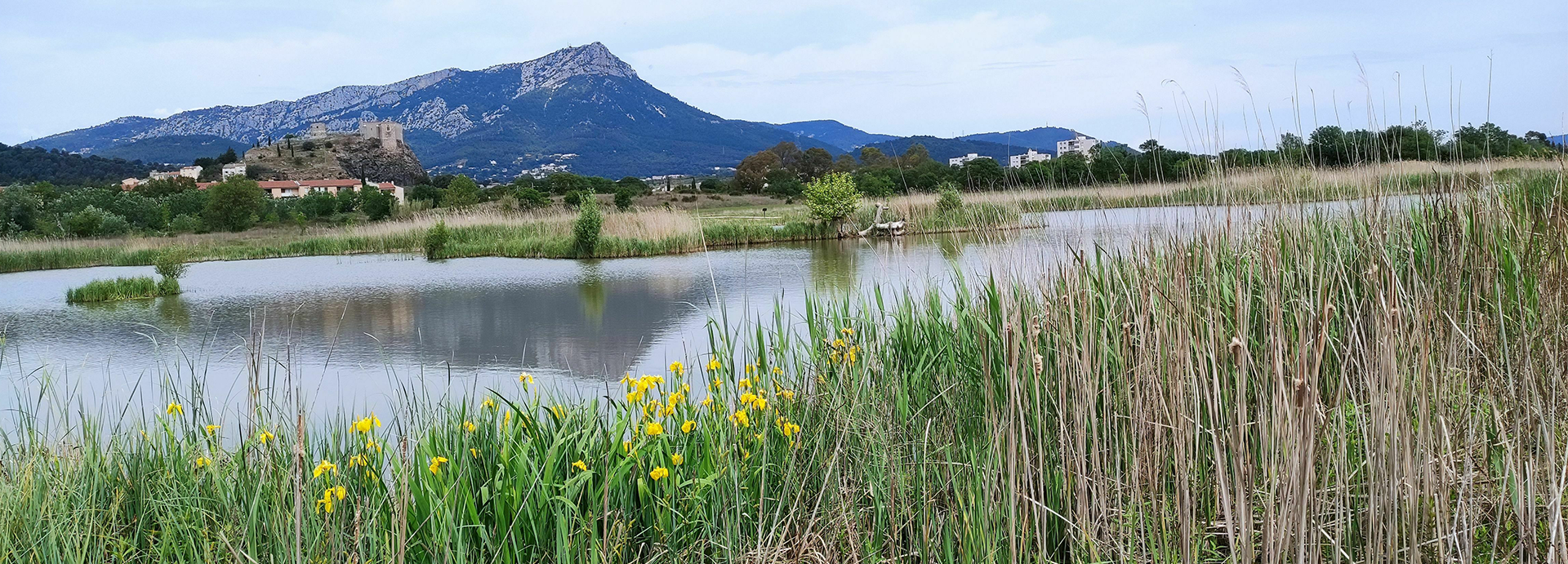
Covering around 130 hectares, the site forms a mosaic of open water, reedbeds, wet meadows, riparian woodland and grassland. What was once shaped primarily by agriculture and drainage has been carefully rebalanced to support wildlife while remaining accessible for observation and education.
This is a landscape defined by water management and ecological intent rather than scenery.
A functioning lowland wetland system
A Restored Wetland System
The strength of Plan de la Garde lies in structure and variation. Shallow basins, vegetated margins and seasonally flooded areas create a sequence of habitats that shift subtly through the year. Water levels are managed to maintain ecological function while allowing natural seasonal change.
Key habitat elements include:
- Shallow freshwater lagoons and open basins
- Reedbeds and sedge margins
- Wet meadows and seasonally flooded grassland
- Riparian woodland and hedgerows
Together these form a compact but highly productive wetland network — increasingly rare along the developed Mediterranean coast.
Birdlife Through the Seasons
Plan de la Garde supports a consistently rich bird assemblage, functioning as breeding site, winter refuge and migratory stopover within a dense coastal corridor.
Spring and autumn bring the greatest movement. Hirundines and swifts feed low over the water and meadows, while warblers and other passerines use the reedbeds and hedges during migration. Waders such as Common Sandpiper and Little Ringed Plover appear around exposed margins when conditions allow. It too is good for passage crakes including Spotted and Baillon’s.
Breeding season centres on the quieter wetland zones. Little Grebe, Moorhen and Coot nest within vegetated water, while Reed Warbler and Cetti’s Warbler hold territories in dense reedbeds and scrub.
Winter shifts the atmosphere. Grey Heron and Little Egret hunt the shallows, cormorants use open water and small passerines move through surrounding grassland and hedgerows. Periodic visits by species such as White Stork underline the site’s role within wider regional movements.
Monitoring by LPO Provence-Alpes-Côte d’Azur has recorded well over one hundred bird species, confirming the site’s importance as a year-round refuge within the Var coastal plain.
Observation and Access
Unlike many sensitive wetlands, Plan de la Garde is structured to allow careful public access without compromising core habitats. Walking and cycling paths follow the edges of key zones, guiding movement while maintaining quiet interior areas for wildlife.
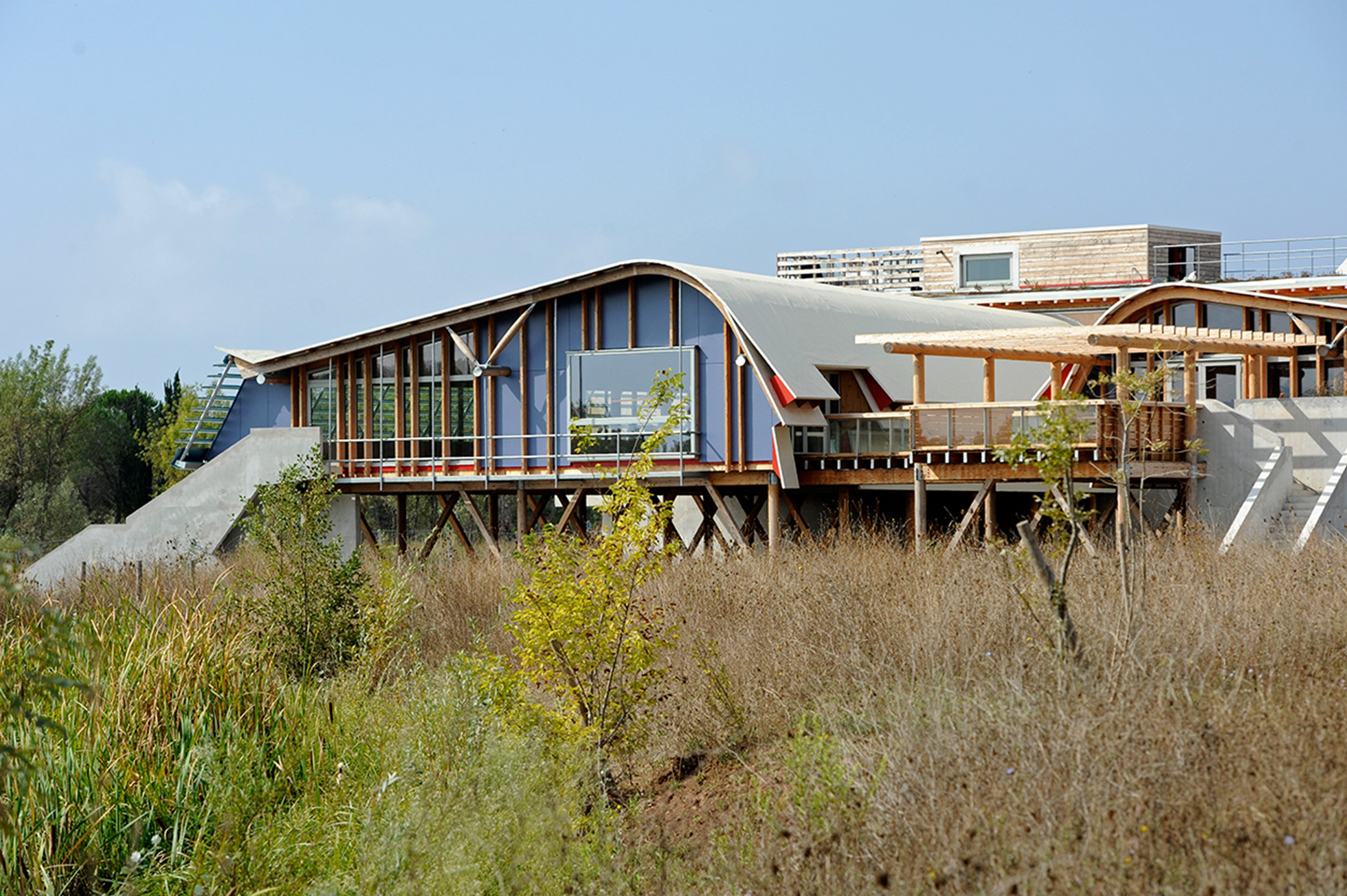
At the centre of the site, the Maison Départementale de la Nature overlooks the wetlands from an elevated position. This observation and interpretation space provides a clear view across open water and reedbeds and offers context for what can otherwise be a subtle landscape. Seasonal displays, information panels and guided activities support both casual visitors and experienced naturalists.
Education and Restoration in Practice
Plan de la Garde is also a demonstration site for wetland restoration and environmental education. Activities throughout the year introduce visitors to migration, water management and the role of wetlands in supporting biodiversity within developed regions.
Its importance lies not only in the species present but in what the site represents, proof that functioning wetlands can be restored and maintained even within heavily modified coastal environments.
A Quiet but Essential Refuge
Plan de la Garde does not rely on spectacle. Its value lies in continuity, accessibility and ecological function. Within one of the most urbanised stretches of the Var coast, it provides a stable refuge for wildlife and a place where seasonal change remains visible.
For observers, it offers consistency and close engagement.
For wildlife, it offers something increasingly scarce along the Mediterranean shore: space, water and time.