


Mercantour National Park
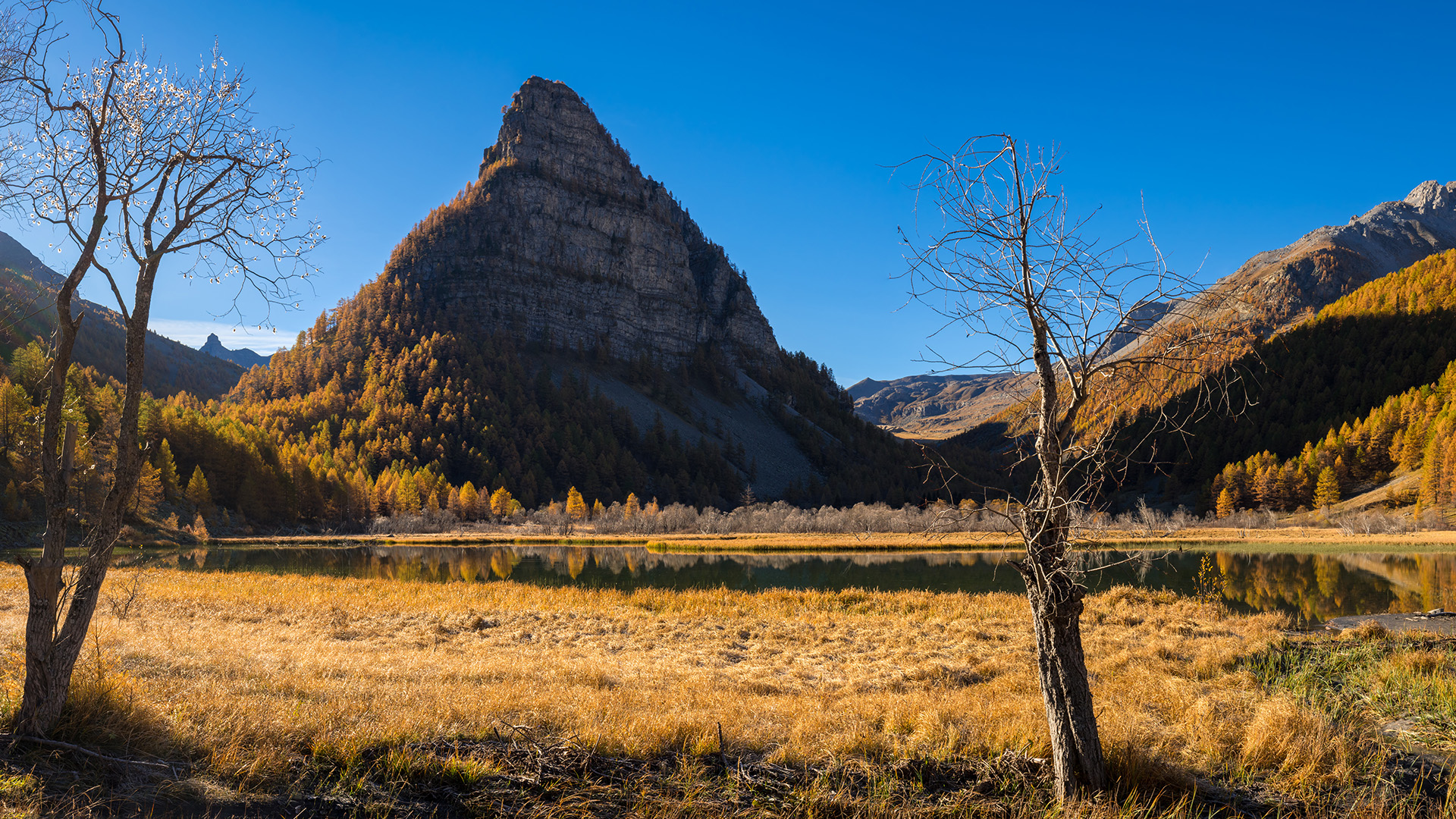
The Mercantour National Park is one of France’s most remarkable natural landscapes, a place where the high Alps meet Mediterranean influences and where biodiversity thrives in extraordinary richness and complexity. Established in 1979, the park spans rugged mountain massifs, deep valleys, alpine lakes and ancient forests, forming a mosaic of habitats seldom found in a single protected area
Within its 1 801 km² of protected terrain, 679 km² under strict core protection. The Mercantour is recognised as a refuge for wildlife and plants at the crossroads of Europe’s major biogeographical zones. Its diverse geology, steep elevation gradients and microclimates have created one of the highest concentrations of species in metropolitan France
A Living Mosaic of Alpine and Mediterranean Nature
Exceptional Biodiversity
Though the park covers less than 0.4 % of France’s land area, it is home to an extraordinary proportion of the nation’s biodiversity:
- More than 2 000 plant species, representing roughly 42 % of France’s indigenous flora and including numerous restricted-range and endemic taxa.
- A rich fauna with nearly 9 000 animal taxa recorded and new species discovered through ongoing biological inventories
Especially notable are the park’s bat diversity, 30 of the 35 species found in France and its wild bees, nearly half of all French species. These figures underscore Mercantour’s global ecological significance: it harbours species that are rare or absent elsewhere and many that are found nowhere else on Earth.
Iconic and Endemic Wildlife
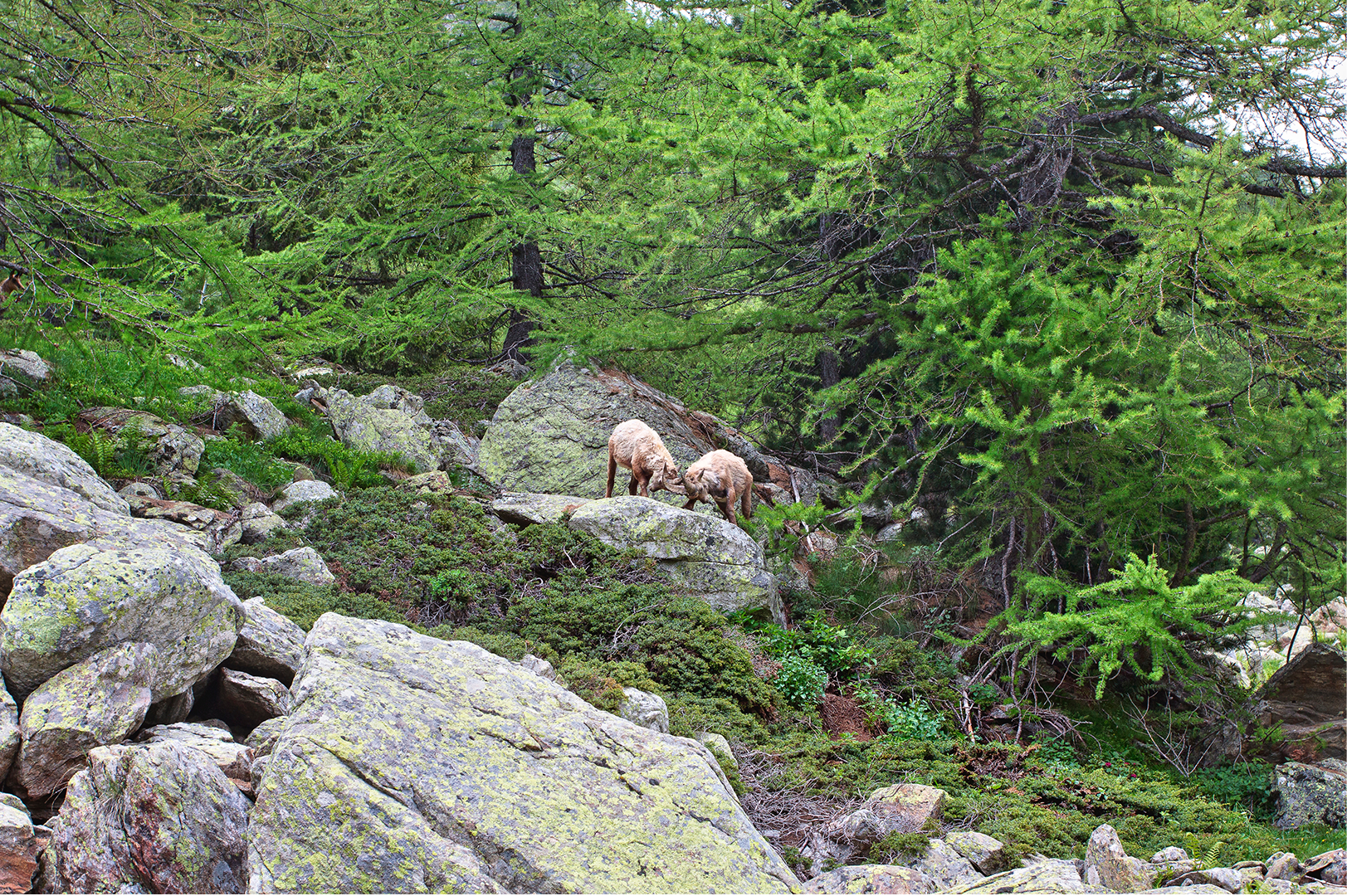
Mercantour is equally celebrated for its emblematic mountain fauna. Populations of chamois and ibex have rebounded spectacularly through conservation efforts. The reintroduction of the bearded vulture has strengthened the park’s role in safeguarding threatened species. Wolves naturally recolonised the area in the early 1990s and now form established packs, a testament to the resilience of wild systems when protected
The park’s fauna also includes a wealth of birds of prey, rare alpine mammals and a surprising array of reptiles, amphibians and invertebrates adapted to its varied environments.
A Refuge Through Time
Mercantour’s ecological complexity is rooted in its geological history. During the last glaciations, the region served as a refuge for many species, preserving lineages that have since disappeared elsewhere. This legacy contributes to the high levels of endemism and biogeographical overlap that make the park a living symbol of evolutionary persistence and resilience.
Collaborative Conservation
Mercantour also exemplifies cross-border conservation. Along its eastern edge, it adjoins Italy’s Parco Naturale Alpi Marittime, together forming one of Europe’s most significant contiguous protected mountain areas. This “mountains without borders” partnership enhances ecological connectivity and scientific cooperation across national boundaries.
Moving Through the Park
Mercantour is best experienced on foot and over time. Wildlife encounters are often subtle: a movement on a slope, a call from woodland, tracks in soft ground. The park rewards those who slow down, look carefully and return at different times of day or year.
Early mornings and evenings are often the most productive. Weather, light and season all shape what is visible, making each visit distinct.
Valleys, Rivers and Forests
Lower valleys and shaded slopes are characterised by mixed forests, river corridors and hay meadows. These areas are often the most accessible and rewarding for slow exploration.
Clear streams support amphibians and invertebrates, while forest edges hold birds, small mammals and a rich insect fauna. Old trees, dead wood and traditional land use create structural complexity that modern landscapes often lack.
These zones are particularly alive in spring and early summer, when breeding activity and insect emergence peak.
Open Slopes and Alpine Meadows
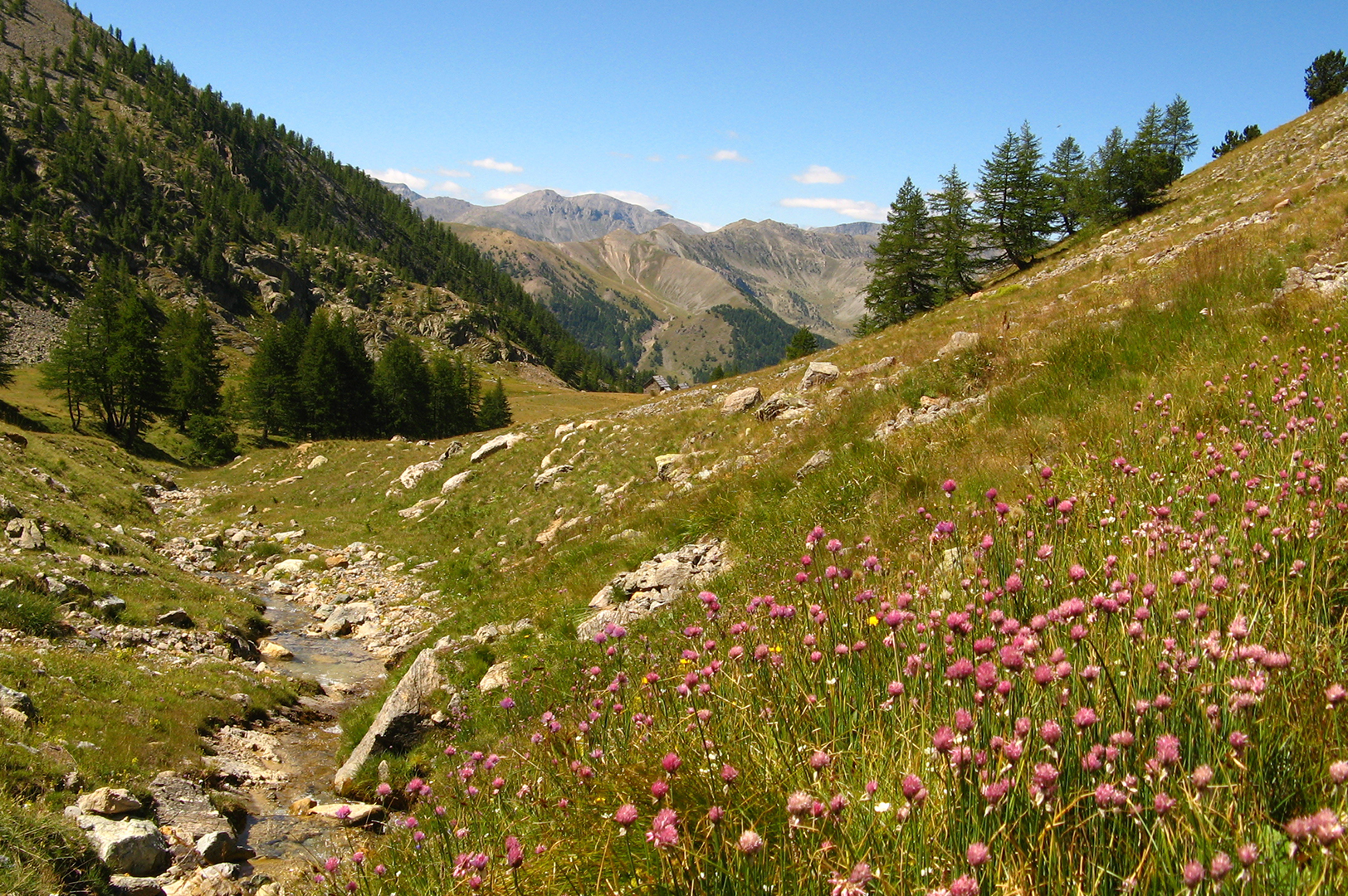
As elevation increases, forests give way to open slopes and alpine grasslands. These habitats are shaped by grazing, snow cover and wind, and support species adapted to short growing seasons and extreme conditions.
Alpine meadows burst into colour during the brief summer, attracting pollinators and supporting specialised plants found nowhere else. These open areas also offer some of the best opportunities to observe mountain mammals and birds at a distance.
Quiet, patient observation is rewarded here; wildlife is often present but easily overlooked.
Lakes, Wetlands and Hidden Water
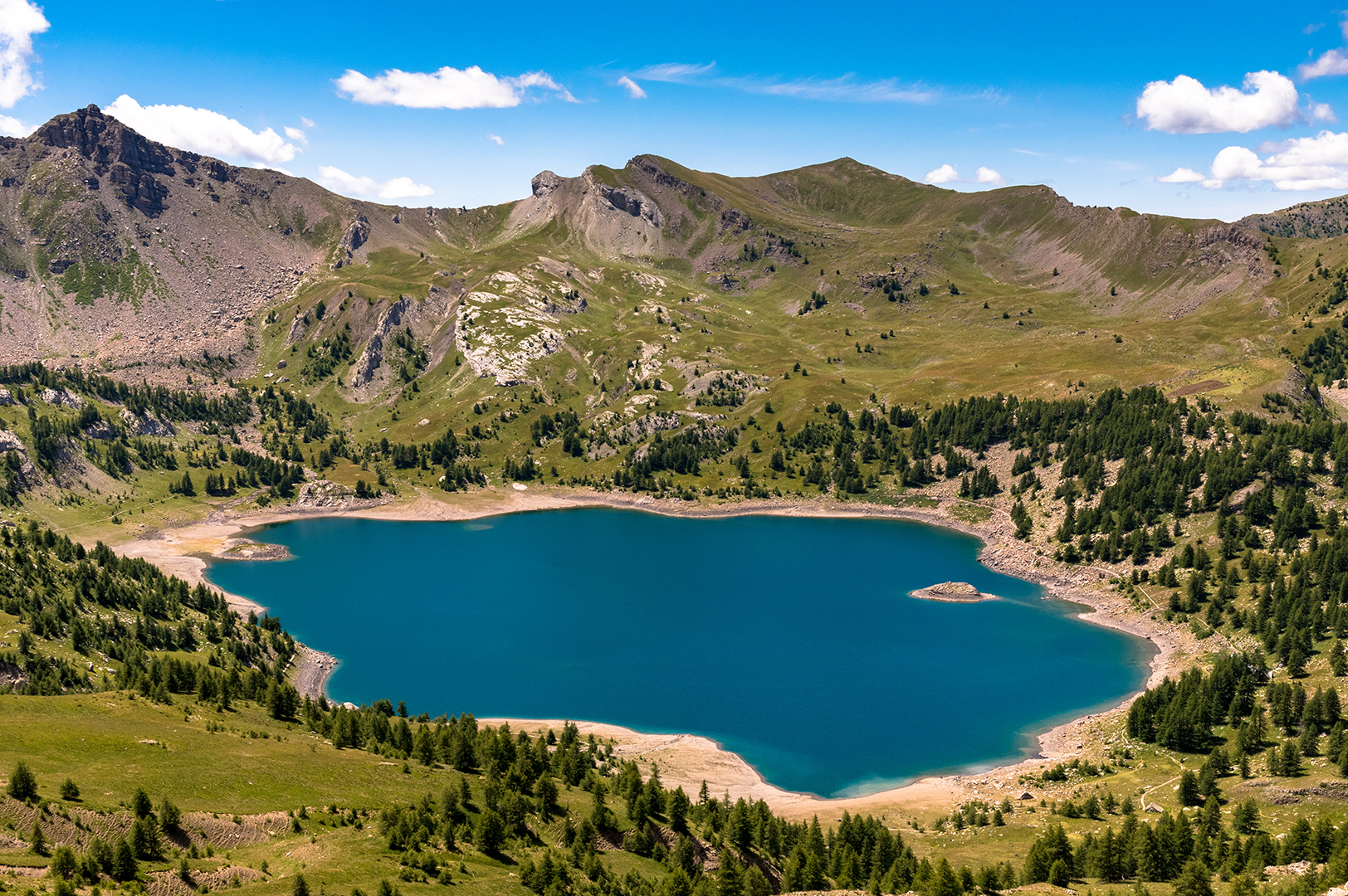
Scattered throughout the park are alpine lakes, peatlands and wet hollows that act as biodiversity hotspots. Though small in area, they support a disproportionate number of species.
These sites are particularly sensitive to disturbance but offer exceptional opportunities for observation, especially for invertebrates, amphibians and birds tied to water.
They also provide moments of stillness and reflection, places where the pace of exploration naturally slows, (Nothing feels quite like the placement of your tired aching feet into a tadplole ladden mountain pool and the subsequent amphibian pedicure you receive).
Rock, Scree and High Ground
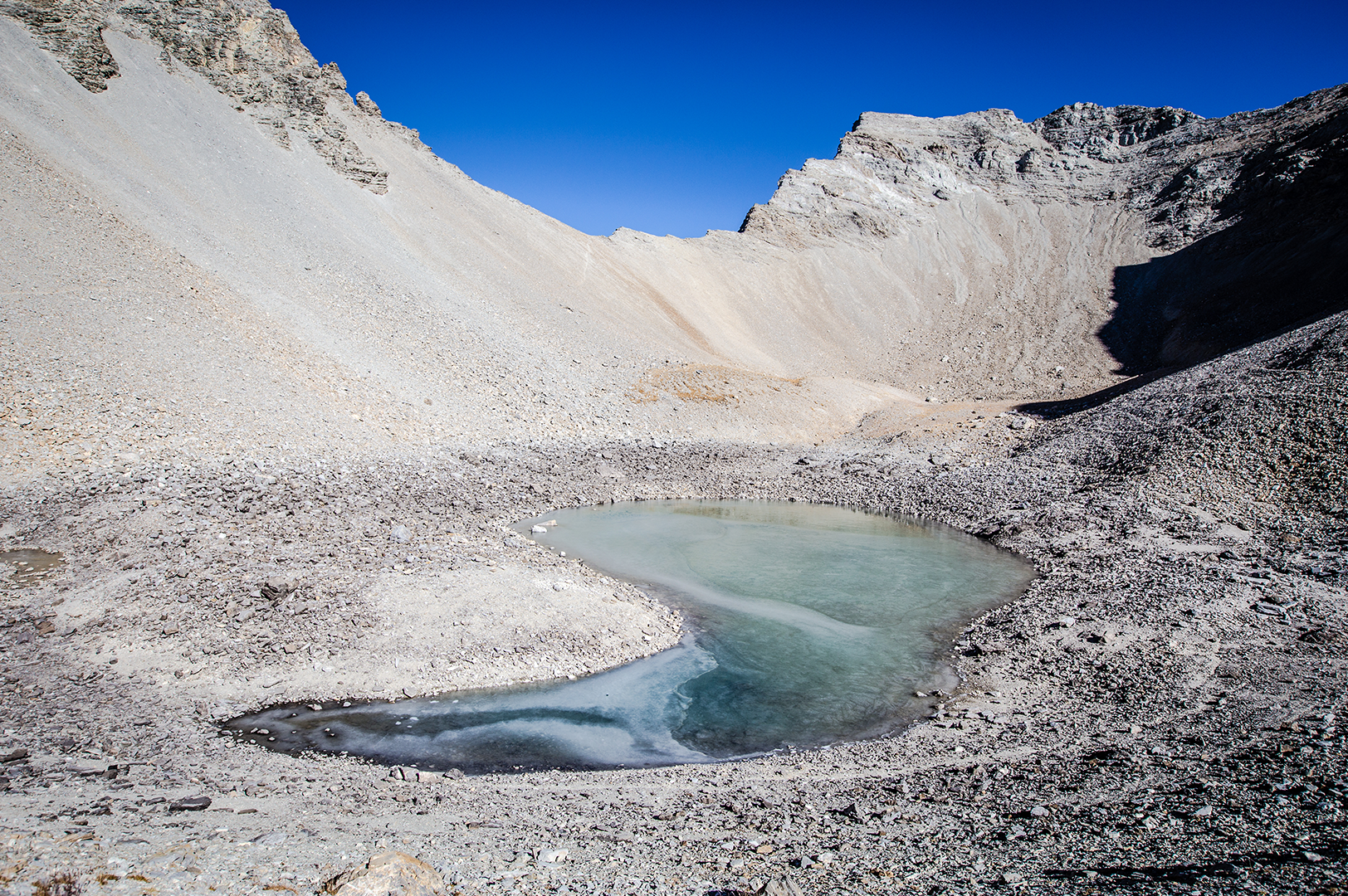
The upper reaches of Mercantour are dominated by rock, scree, cliffs and high passes. These harsh environments are home to some of the park’s most emblematic species, those adapted to cold, exposure and isolation.
Cliffs and rocky slopes provide nesting and refuge sites, while high ridges act as movement corridors. Even in apparently barren areas, life persists in crevices, ledges and sheltered hollows.
These landscapes are at their most accessible in mid to late summer, once snow has retreated.
A Living, Working Landscape
Mercantour is not a wilderness untouched by people. Pastoralism, forestry and seasonal human presence have shaped many of its habitats over centuries. These practices, when balanced and traditional, have contributed to the diversity visitors see today. Understanding this relationship between people and nature is part of understanding the park itself.
Mercantour is not just a place to visit, it’s a place to engage with thoughtfully.
Learn about
Useful links