


Port-Cros National Park
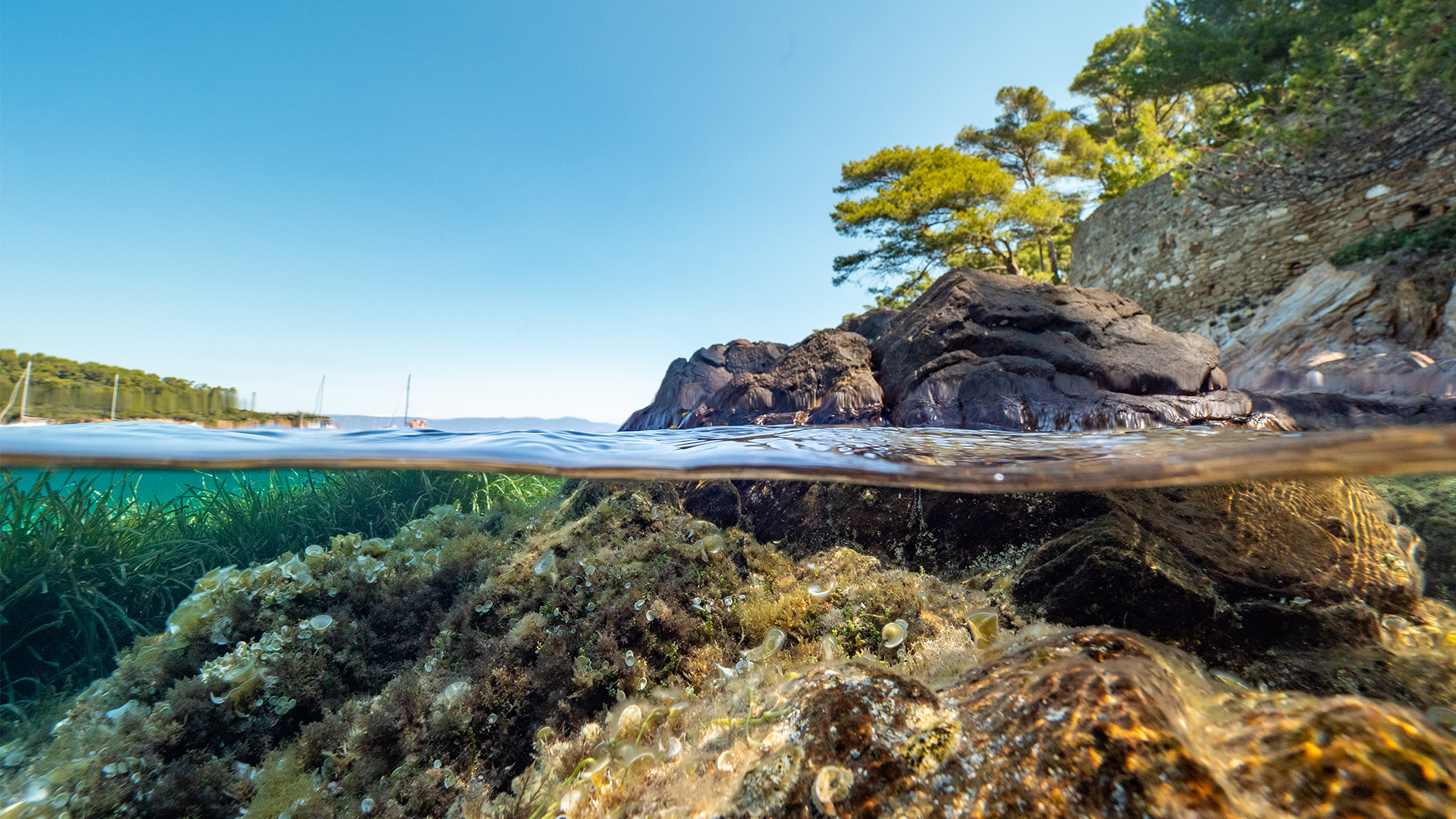
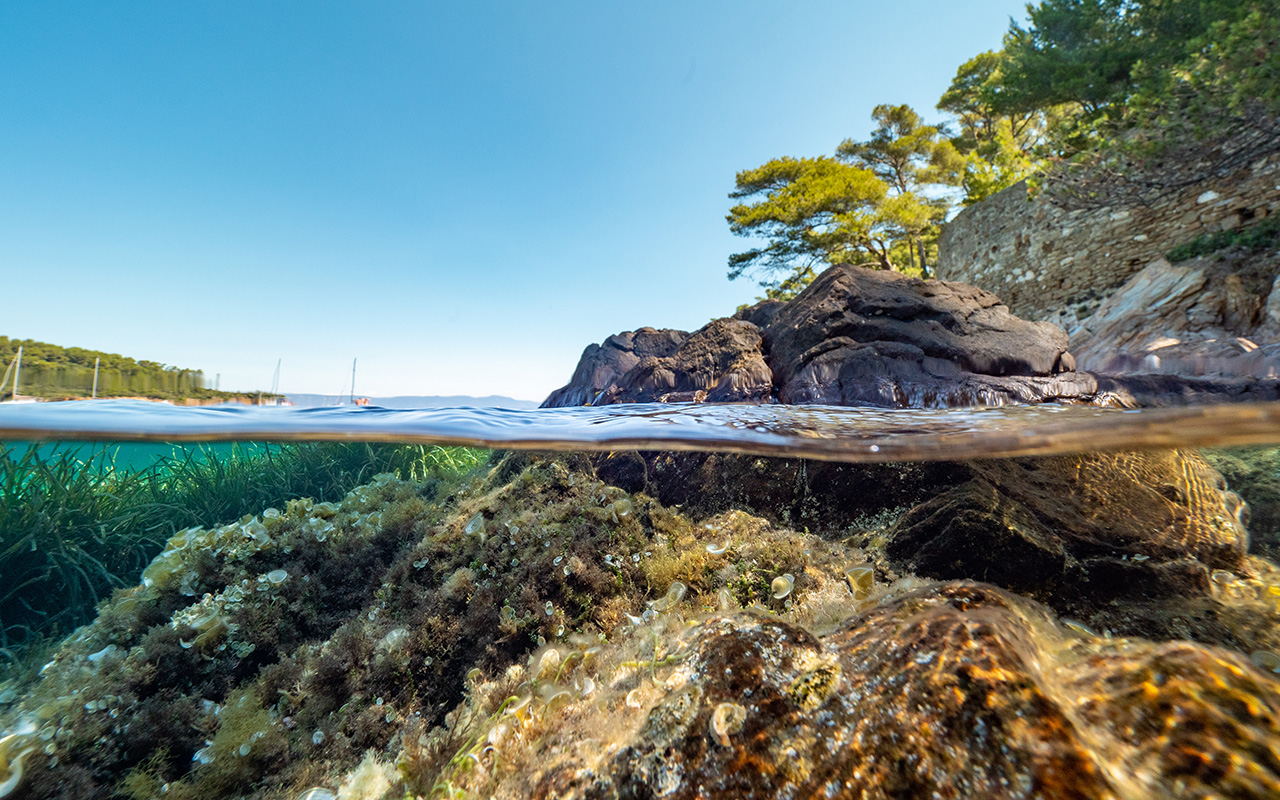
Parc national de Port-Cros is one of the Mediterranean’s most important protected areas. A place where land and sea are safeguarded as a single, interconnected system. Established in 1963, it was France’s first marine national park, created to protect both the wild island landscapes of Port-Cros and Porquerolles and the exceptionally rich waters that surround them.
A Mediterranean Sanctuary Above and Below Water
1st Marine Park
What might you see when you get there
Terrestrial species:
Mammals: 12 species including 7 bats
Birds: 177 species including 26 breeders
Reptiles: 6 species
Amphibians: 2 species
Invertebrates: Coleoptera 248 species
Orthoptera 34 species
Hymenoptera 25 species
Lepidoptera 248 species
Odonata 17 species
Arachnids 232 species
Molluscs 17 species
Marine species:
Fish: 180 species
Shellfish: 265
Sponges: 92 species
Echinoderms: 53 species
Molluscs: 173 species
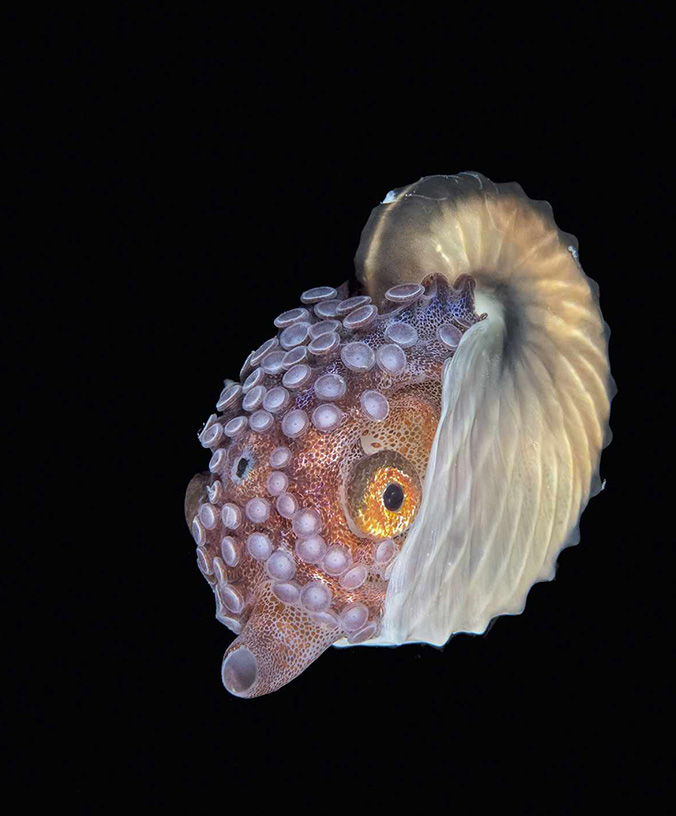
Argonaut
Islands, Coastline and Terrestrial Habitats
Although best known for its marine protection, Port-Cros is equally defined by its islands and coastline, where steep slopes, cliffs and forests descend directly into the sea.
The island of Port-Cros is largely free from development. Evergreen oak woodland, Aleppo pine and Mediterranean scrub dominate the land surface, shaped by salt spray, wind and thin soils. This relative isolation has allowed natural vegetation structure to persist, providing shelter and breeding habitat for a range of species.
Rocky headlands and coastal cliffs support seabirds, reptiles and specialised plants adapted to exposure and drought. In quieter inland areas, forest and scrub host invertebrates, breeding birds and small mammals typical of Mediterranean island ecosystems.
Porquerolles, while more accessible, also contains protected natural zones where coastal woodland, wetlands and dune systems add further habitat diversity to the park’s terrestrial network.
Crucially, what happens on land directly affects the sea. Soil stability, vegetation cover and human activity influence water quality, sedimentation and nutrient flow. The health of Port-Cros’ marine ecosystems depends on the integrity of its islands and coastline.
Why this matters
Port-Cros isn’t two parks side by side because both the land and sea form one ecological system. Protecting coastal habitats is inseparable from protecting seagrass meadows, reefs and fish populations offshore.
A Marine Reserve First and Foremost
The heart of Port-Cros lies underwater. Its marine habitats are among the best preserved in the north-western Mediterranean.
Extensive Posidonia seagrass meadows surround the islands, stabilising sediments, producing oxygen and supporting complex food webs. Rocky reefs and underwater drop-offs host sponges, corals, gorgonians and a diverse fish community.
Protection has allowed many species to reach sizes and densities rarely seen elsewhere, offering a glimpse of what Mediterranean ecosystems can look like when given space and time to recover.
Species Highlights, A Protected Mediterranean
Port-Cros is a refuge for species that have declined sharply elsewhere, particularly those vulnerable to fishing pressure, anchoring damage and habitat loss.
- Mediterranean fan mussel (Pinna nobilis)
The largest bivalve mollusc in the Mediterranean, once widespread in seagrass meadows. Now critically endangered due to disease and habitat degradation. Port-Cros remains one of the few areas where remnant populations have persisted under strict protection. - Mediterranean slipper lobster / Mediterranean crayfish (Scyllarides latus)
Known locally as cigale de mer, this nocturnal crustacean inhabits rocky reefs and caves. Rarely seen in exploited waters, it has become an emblematic species of long-protected Mediterranean reserves. - Brown meagre (Sciaena umbra)
A shy, slow-growing coastal fish closely associated with rocky reefs and seagrass edges. Highly sensitive to disturbance and overfishing, its presence in Port-Cros reflects decades of effective protection. - Groupers
Long-lived apex reef fish that have returned in both size and abundance. Their recovery illustrates the benefits of sustained no-take zones. - Sea breams, wrasse and pelagic hunters
Schools of sea breams patrol reefs, while wrasse occupy shallower zones and species such as barracuda move through open water. - Posidonia seagrass (Posidonia oceanica)
The ecological foundation of the park’s shallow waters, supporting fish nurseries, stabilising sediments and storing carbon over millennia.
Why this matters
These species are not highlighted for rarity alone, but because they signal ecosystem health. Their presence is a direct consequence of limited access, long-term protection and visitor compliance. The islands are also an important breeding location for Yelkouan and Scapoli’s Shearwaters.
Seeing Without Touching
Port-Cros is a place where observation replaces interaction. The ecosystems here are resilient only because they are left largely intact.
Visitors are encouraged to:
- Snorkel and dive without contact with the seabed or marine life
- Never anchor on seagrass and use designated moorings
- Take all waste back to the mainland
- Avoid noise and disturbance, both above and below water
Small actions matter disproportionately in island systems.
A Benchmark for Conservation
Port-Cros stands as a benchmark for marine conservation in France and beyond. Its long history of protection demonstrates what sustained commitment can achieve, healthier habitats, richer biodiversity and ecosystems capable of recovery.
It also serves as a reminder that protection is not passive. It depends on informed visitors, clear boundaries and respect for limits.
A Living Reference for the Mediterranean
More than a destination, Port-Cros is a reference point, a glimpse of the Mediterranean as it once was and as it could be again.
Exploring this park is an opportunity to understand why protection matters.
Get to know
Useful links