


Regional Amphibians
Amphibians are among the most discreet yet ecologically revealing components of wildlife in Provence–Alpes–Côte d’Azur. Although rarely encountered casually, the region supports 22 native amphibian species, making it one of the most diverse areas in metropolitan France for this group.
Their distribution reflects the intersection of Mediterranean lowlands, river systems, forested uplands and alpine environments. Many species are highly seasonal, active mainly at night, or dependent on small and often overlooked water bodies. As a result, amphibians are frequently under-recorded despite being widespread or locally abundant.
Because of their sensitivity to water quality, hydrology and land-use change, amphibians provide valuable insight into the ecological condition of landscapes across the region.

Why Amphibians Matter in PACA
Amphibians occupy a unique ecological position, linking aquatic and terrestrial environments. In PACA, where climatic gradients are pronounced, they are among the first vertebrates to respond to environmental pressure.
They play an important role as:
- Regulators of insect and invertebrate populations
- Prey for birds, reptiles and mammals
- Indicators of water quality and habitat continuity
Many key habitats, temporary ponds, forest pools, irrigation channels and mountain springs, lie outside formal protected areas, making amphibians particularly vulnerable to landscape change.
Species by Habitat
The following overview groups amphibians by their primary breeding habitats. Most species use multiple habitats over the course of the year, and absence of observation does not imply absence of populations.
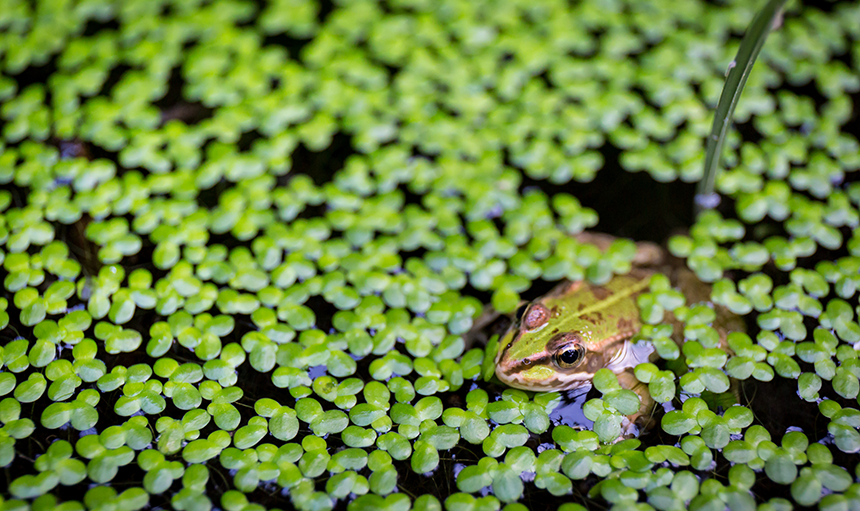
Temporary Ponds & Seasonal Mediterranean Pools
Small water bodies that fill during winter and spring and dry out in summer. These habitats are among the most important and most threatened in the region.
Associated species:
- Western Spadefoot
- Common Parsley Frog
- Mediterranean Tree Frog
- Common Midwife Toad
- Natterjack Toad
These species rely on precise hydrological conditions and are highly sensitive to pond loss and prolonged drought.
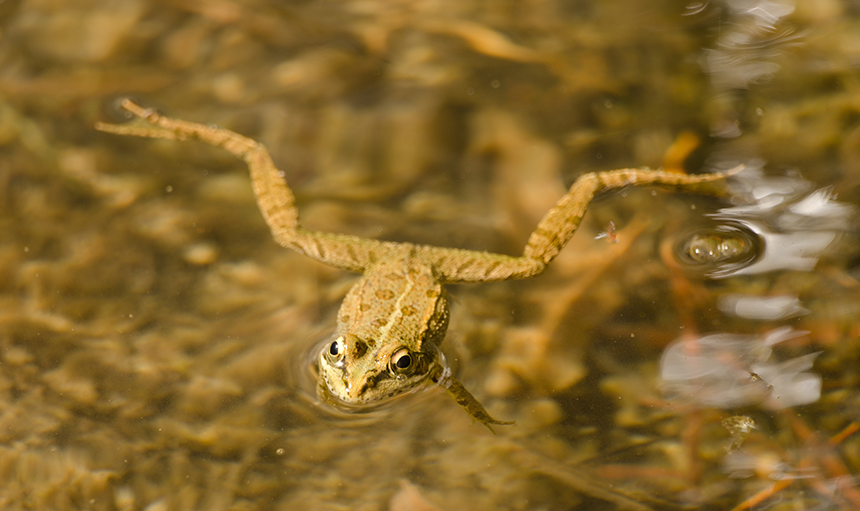
Permanent Wetlands, Marshes & Floodplains
Lowland wetlands, lagoons, reedbeds, irrigation systems and managed water bodies.
Associated species:
- Marsh Frog
- Perez’s Frog
- Pool Frog
- European Tree Frog
- Spiny Toad
These habitats support high amphibian biomass and are important feeding areas for a wide range of wildlife.
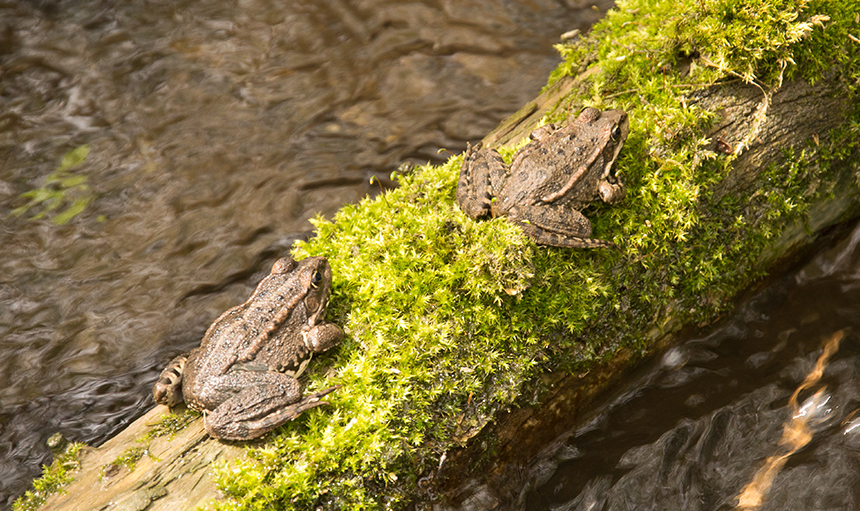
Forests, Woodlands & Humid Slopes
Breeding often occurs in pools or springs, while adults spend much of the year on land under cover.
Associated species:
- Fire Salamander
- Smooth Newt
- Palmate Newt
- Common Toad
Seasonal movements between breeding and terrestrial habitats make these species particularly vulnerable to road mortality.
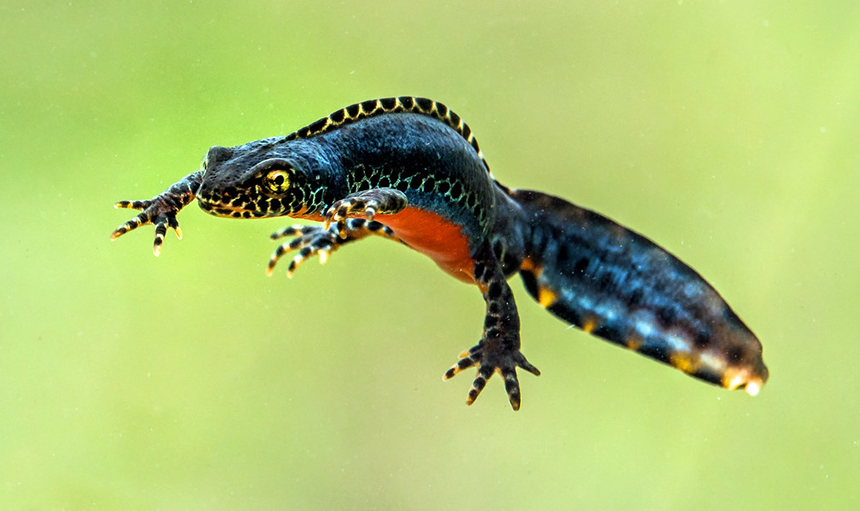
Streams, Springs & Clear Running Water
Cold, oxygen-rich waters with stable flow, often shaded and at altitude.
Associated species:
- Alpine Salamander
- Southern Marbled Newt
- Alpine Newt
These species are strong indicators of water quality and long-term habitat continuity.
.
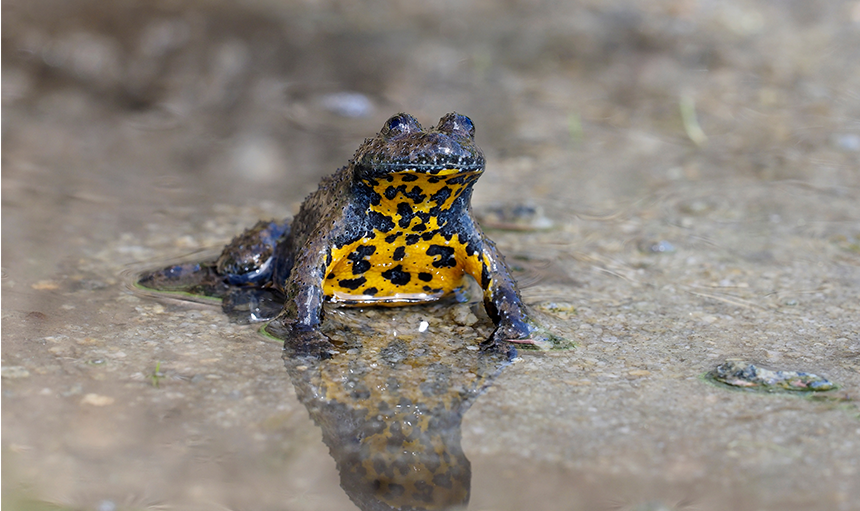
Mountain Valleys & Alpine Zones
High-altitude environments with short breeding seasons linked to snowmelt.
Associated species:
- Alpine Newt
- Common Frog
- Italian Agile Frog
- Yellow-bellied Toad
Populations are often isolated and sensitive to climate-driven changes in snow cover and water availability.
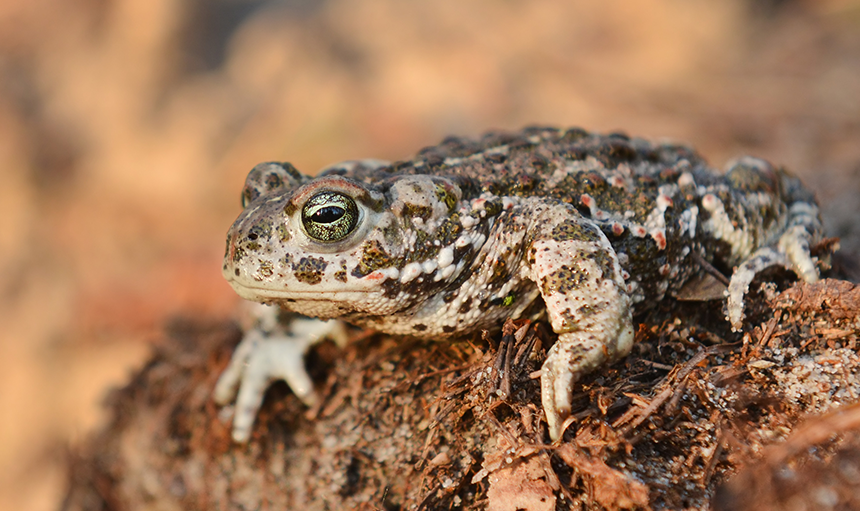
Mediterranean Scrub, Dry Slopes & Rocky Landscapes
Dry landscapes where breeding occurs opportunistically following rainfall.
Associated species:
- Western Green Toad
- Natterjack Toad
- Painted Frog
These species show strong adaptation to arid conditions but depend on unpredictable breeding opportunities.
Conservation Context
Several amphibian species in PACA are localised, declining or under-recorded. Key pressures include:
- Loss of temporary ponds
- Water abstraction and pollution
- Road mortality during seasonal movements
- Increasing drought frequency
Because many species are active only briefly and often at night, careful observation and habitat protection are more important than direct intervention.
Amphibians in the Wider Landscape
Amphibians form a quiet but essential layer of PACA’s biodiversity. Their presence helps explain why seemingly ordinary features, small ponds, forest edges, irrigation channels and mountain springs are often of high ecological value.
Understanding amphibians is key to understanding how the region’s landscapes function as living systems.