


Parc Départemental de Vaugrenier
Situated between Antibes, Villeneuve-Loubet and the Mediterranean coast, Parc Départemental de Vaugrenier is one of the largest and most ecologically diverse natural parks on the Côte d’Azur. Covering approximately 100 hectares, the park protects a rich mosaic of Mediterranean habitats within an otherwise highly urbanised coastal environment.
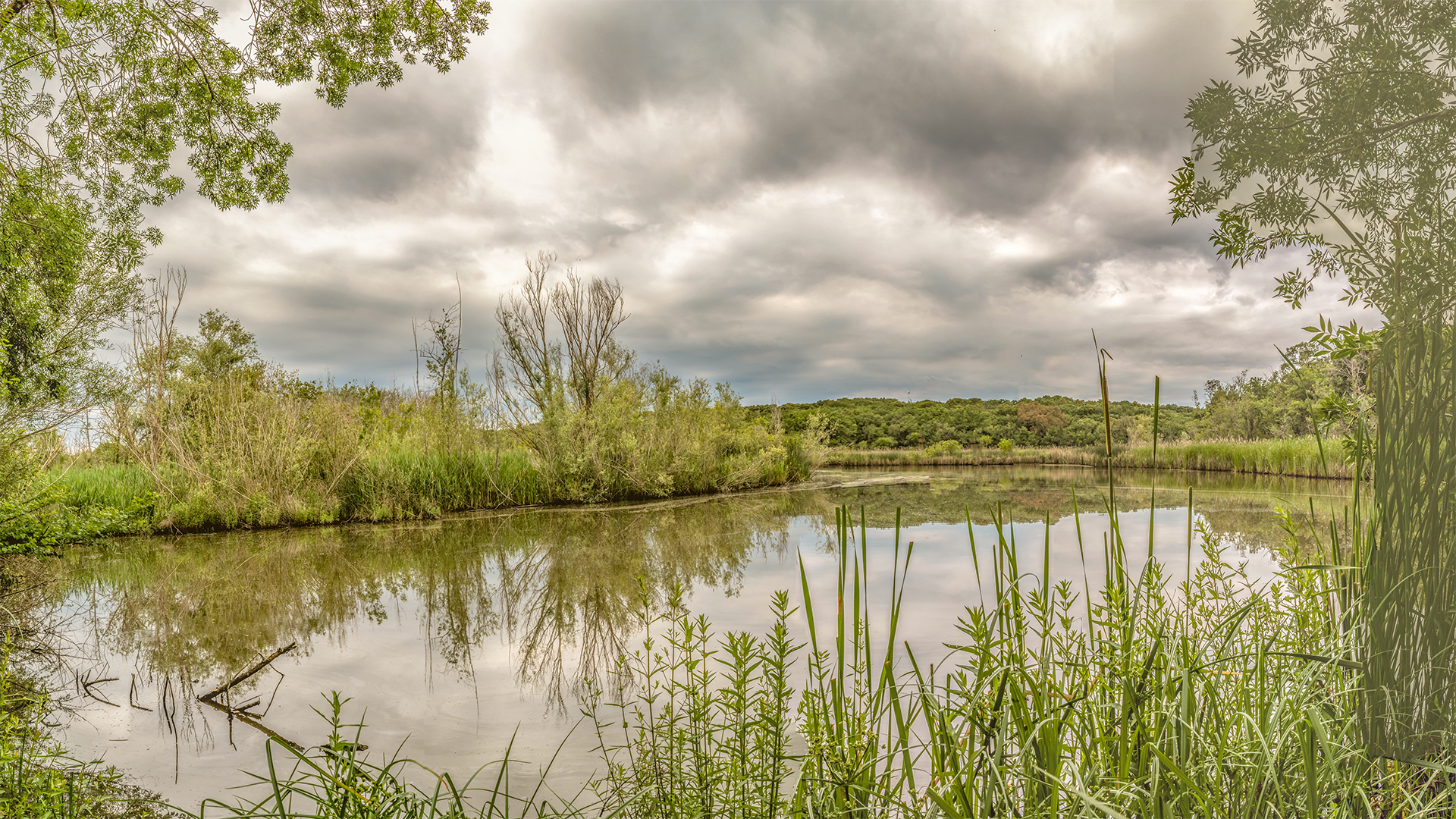
Vaugrenier combines pine woodland, open grassland, freshwater wetlands, scrubland and a central lake system, creating a landscape shaped by both natural processes and long-term management. Easily accessible yet biologically significant, the park offers a rare opportunity to experience Mediterranean biodiversity at close range. Across the seasons, more than 150 species have been recorded within the park.
A Mediterranean landscape of woodland, wetland and wildlife
A Refuge for Wildlife and Biodiversity
Parc de Vaugrenier supports a wide range of species throughout the year, benefiting from the close proximity of multiple habitats within a compact area. Woodland edges, open meadows and wetland zones provide shelter, feeding opportunities and breeding sites for birds, reptiles, amphibians and mammals.
The central lake and surrounding marshy margins are of particular importance. As one of the few reliable freshwater wetlands along this stretch of coast, the site functions as a critical refuge for resident species and a stopover for migrants moving along the Mediterranean flyway.
Key Habitats and What to Look For
Reedbeds and Marshy Margins
The heart of Vaugrenier is its network of ponds fringed with dense reeds and emergent vegetation. These areas provide cover, food and calm—exactly what many secretive wetland birds require.
Notable bird species
- Baillon’s Crake (Zapornia pusilla)
- Little Crake (Zapornia parva)
- Spotted Crake (Porzana porzana)
These crake species are irregular but well-established migrants at Vaugrenier, making the park a known target site for birders during passage periods. Sightings are often brief and depend on patience, quiet observation and a little luck.
Other reedbed associates include:
- Water Rail (Rallus aquaticus)
- Reed Warbler (Acrocephalus scirpaceus)
- Sedge Warbler (Acrocephalus schoenobaenus)
Open Water and Pond Edges
The ponds themselves support a range of waterbirds throughout the year, with numbers swelling during migration.
Notable species
- Little Grebe (Tachybaptus ruficollis)
- Common Moorhen (Gallinula chloropus)
- Grey Heron (Ardea cinerea)
- Little Egret (Egretta garzetta)
Dragonflies and damselflies are also prominent in warmer months, adding to the park’s appeal for broader wildlife recording.
Wet Grassland, Woodland and Scrub
Surrounding habitats add depth and resilience to the site, supporting passerines, insects, reptiles and small mammals.
Notable species
- Cetti’s Warbler (Cettia cetti)
- Sardinian Warbler (Sylvia melanocephala)
- European Green Lizard (Lacerta bilineata)
These transitional zones are often where migrants appear unexpectedly, particularly after overnight movements.
Why Vaugrenier Matters
Vaugrenier is not a wilderness and it does not need to be. Its value lies in what it represents:
- a safe freshwater refuge on a heavily developed coastline
- a migration stopover for scarce and secretive species
- proof that well-managed, relatively small sites can have disproportionate ecological importance
For crake species in particular, sites like this are critical. Without them, migration routes fragment and opportunities to rest and feed disappear.
Education, Conservation and Public Use
The park plays an active role in environmental education and conservation awareness, hosting guided walks, educational activities and seasonal events. These initiatives introduce visitors to Mediterranean ecosystems, species identification and the importance of protected green spaces in urbanised regions.
Vaugrenier also functions as a valued recreational space, welcoming walkers, families and nature enthusiasts seeking a calm natural setting close to the coast.
A Mediterranean Park at the Urban Edge
Parc Départemental de Vaugrenier stands as a strong example of integrated landscape management, where conservation, education and public enjoyment coexist. Its mix of woodland, water and open space supports wildlife throughout the year while offering visitors an accessible and rewarding natural experience.
Whether visited for birdwatching, walking or quiet observation, Vaugrenier reveals the resilience and richness of Mediterranean nature at the edge of the city