


Coussouls de la Crau
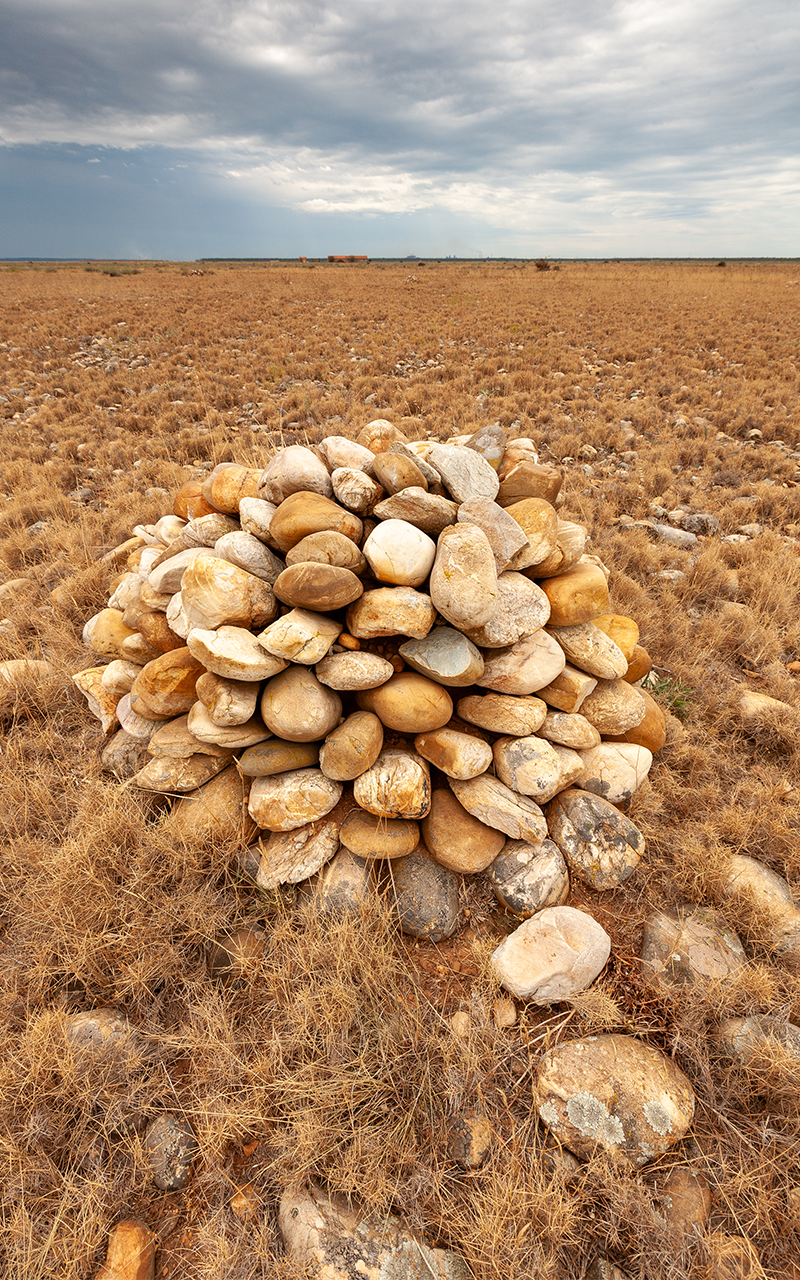
The Coussouls de Crau protect the surviving heart of a landscape found nowhere else in France. Between the Alpilles and the Mediterranean lies an immense plain of rounded stones and sparse vegetation, the fossil delta of the Durance and the last great Mediterranean steppe of Western Europe.
The landscape can appear almost empty at first. Look longer and a very different picture emerges: Pin-tailed Sandgrouse, Little Bustard and Calandra Lark across the stony plain, Ocellated Lizard amongst the stones and a grasshopper found nowhere else on Earth. Beneath them lies a layer of cemented conglomerate, while canals and old wells introduce narrow ribbons of freshwater life into one of the driest landscapes in PACA.
A Mediterranean steppe unlike any other in Western Europe
A True Steppe Ecosystem
Ecologically, the Crau functions as a steppe, comparable to Eurasian plains rather than Mediterranean grassland. Productivity is low and seasonal and life is adapted to open ground and long sightlines.
Species here rely on:
- visibility rather than cover
- ground-level nesting
- early detection of predators
- synchronisation with short seasonal peaks
This combination of conditions is now exceptionally rare in Europe, making the Crau impossible to replace or recreate elsewhere.
Landscape & Habitats
The Coussoul
Beneath the stony surface lies poudingue, a natural conglomerate formed where pebbles became cemented together. In places this hard layer lies close to the surface, restricting soil depth and root development. Above it, vegetation remains low and remarkably sparse, exposed to summer drought, intense heat and the Mistral.
Sheep & the Steppe
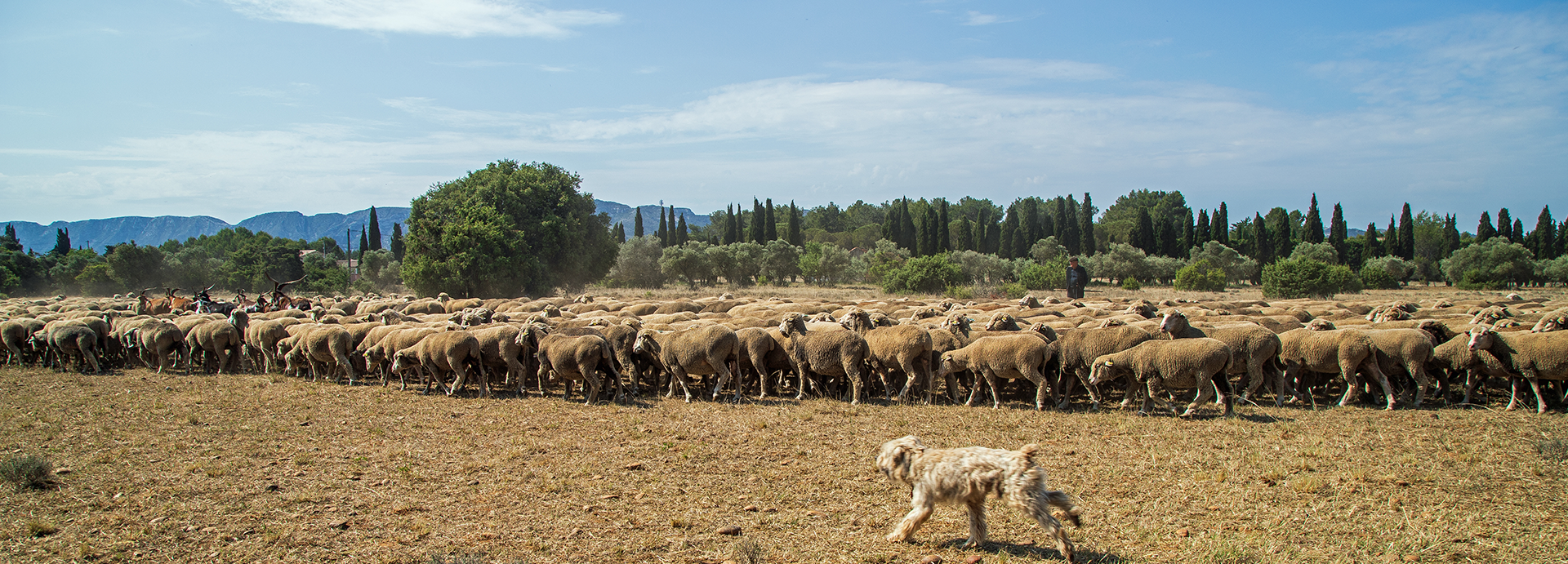
Sheep have crossed the Crau since antiquity, with traditional flocks grazing the coussoul before leaving for summer pastures in the Alps. Their influence is written directly into the vegetation: grazing retains the short, open structure needed by steppe birds and warmth-loving insects and limits the gradual spread of scrub.
The coussoul is therefore both ancient and actively maintained, a natural steppe whose modern ecology remains closely tied to transhumant pastoralism.
Canals, Wells & Wet Margins
Irrigation canals and old wells provide narrow freshwater interruptions across the otherwise dry plain. Their aquatic wildlife is completely different from that of the surrounding coussoul and includes one of the Crau’s less obvious natural-history stories.
Birding the Coussouls de Crau
Almost 150 bird species have been recorded in the reserve, but a handful explain why birders travel to the Crau from across Europe.
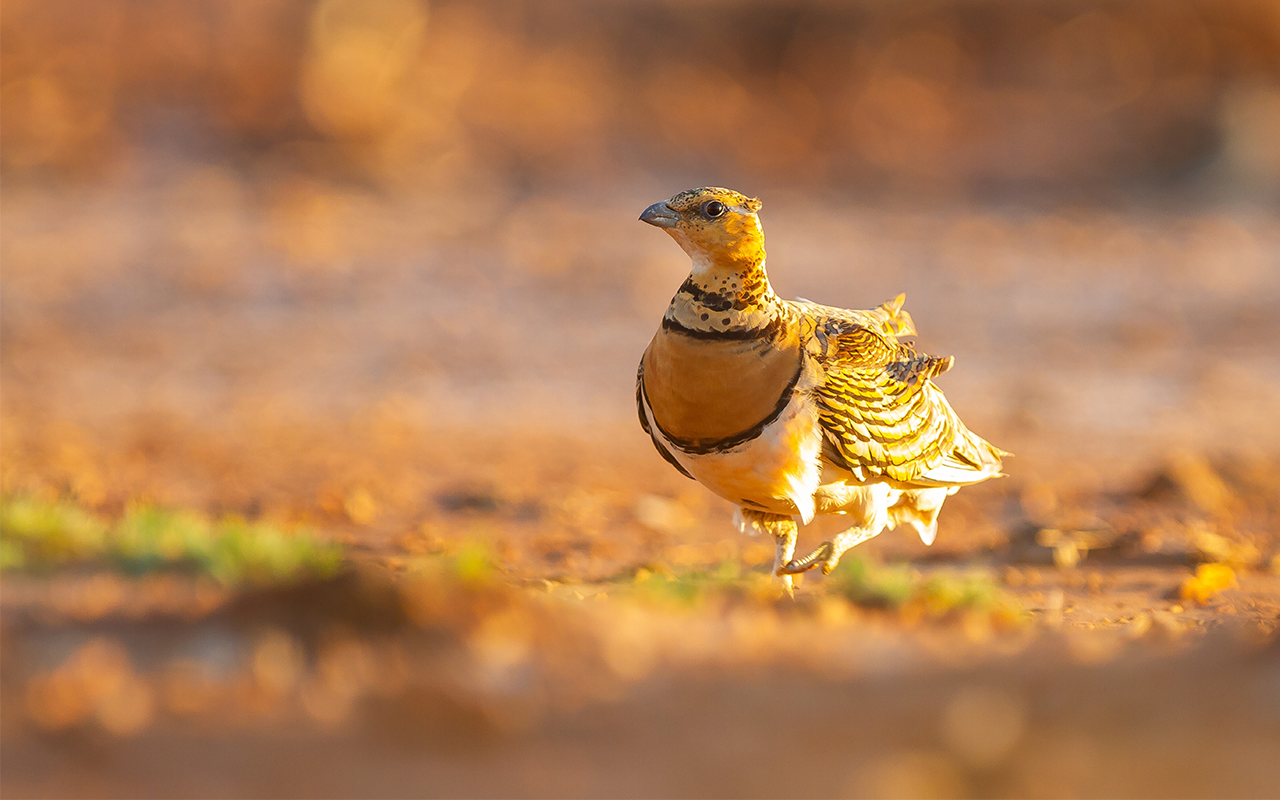
The extraordinary bird is Pin-tailed Sandgrouse. The Crau holds the only breeding population in France, making this stony plain the country’s sole breeding ground for a bird otherwise associated with Iberian and North African steppe. Sandgrouse can disappear remarkably well against the ground despite their distinctive shape and fast, direct flight.
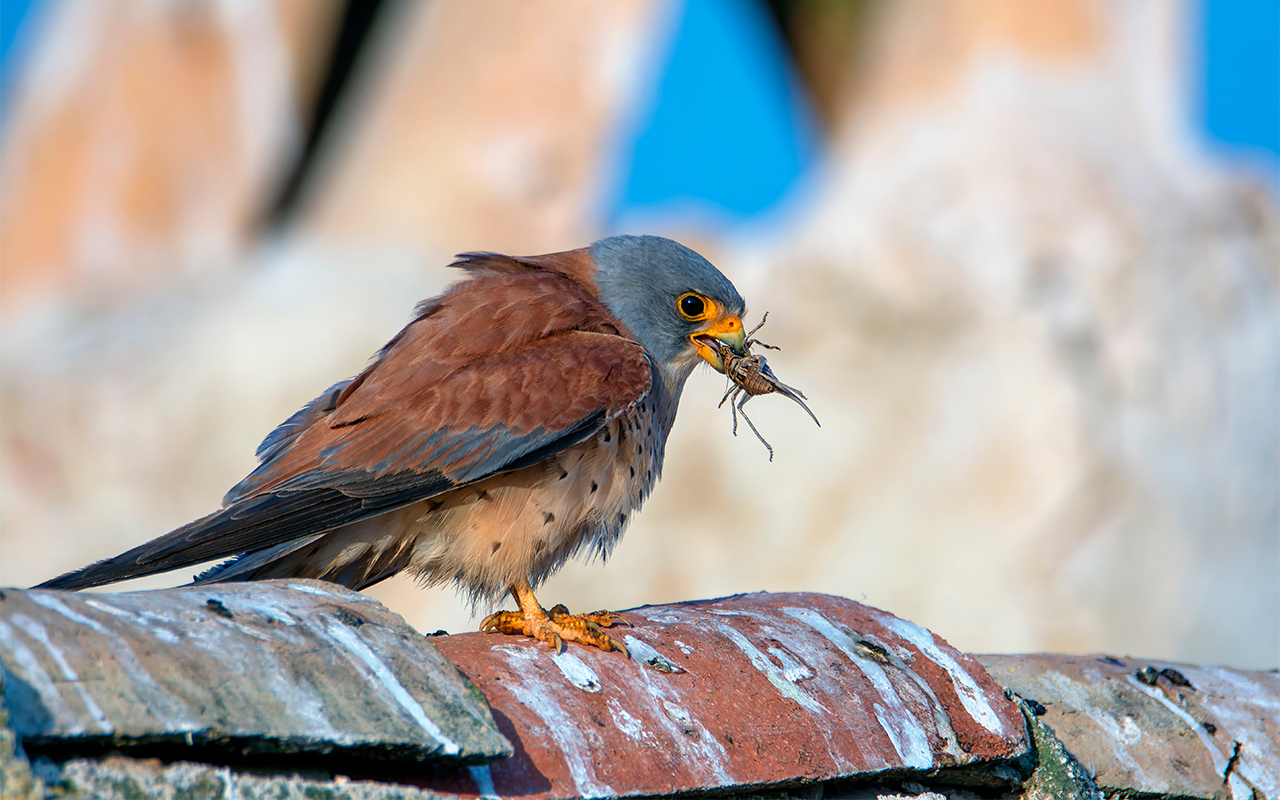
Little Bustard, Stone-curlew, Calandra Lark, Greater Short-toed Lark and Tawny Pipit make up much of the characteristic open-country community. Spring brings the strange display calls of male Little Bustards, while Stone-curlews become noticeably more vocal towards evening. Lesser Kestrel hunts the same plain for grasshoppers and other large insects, with European Roller, Little Owl and Southern Grey Shrike adding interest around the few trees, buildings and elevated perches.
Migration and winter alter the possibilities. Dotterel can stop on the open ground during passage, Red-footed Falcon may appear during migration and Red Kite adds interest outside the breeding season. Birding the Crau means becoming comfortable with distance: there are few bushes to investigate and little woodland edge to work slowly, so attention shifts instead towards stones, isolated structures, the horizon and the enormous sky above them.
Mammals
The coussoul does not support a conspicuous large-mammal community. European Rabbit and Red Fox are much more characteristic of the open plain, with Wild Boar using parts of the wider Crau landscape. Bats feed over the steppe and along the canals after dark, exploiting insects associated with both dry grassland and water.
Reptiles & Amphibians
Ocellated Lizard is the main reptile of the Crau, where the reserve protects one of the important French populations of this spectacular Mediterranean species. Stones provide basking sites and shelter, while burrows and underground cavities offer refuge from predators and the extremes of summer heat. The species was once more abundant across the Crau but has declined substantially.
Amphibians are naturally restricted by the dryness of the coussoul itself, with their opportunities concentrated around canals, ditches and the scattered places where freshwater reaches the surface.
Grasshoppers, Butterflies & Other Invertebrates
The most extraordinary invertebrate is the Crau Grasshopper, found nowhere else on Earth. It survives within a small area of coussoul and is now one of Europe’s most threatened grasshoppers, its mottled colouring making it exceptionally difficult to see amongst stones and dry vegetation.
The Onopordum Jewel Beetle is another Crau endemic. The wider steppe supports hundreds of butterfly, moth, beetle, ant, spider, grasshopper and bush-cricket species, forming a food supply used by Lesser Kestrels, larks, pipits and other birds of the open plain.
The irrigation canals crossing the wider Crau support an unexpectedly rich dragonfly and damselfly community, with almost 50 speciesrecorded. Mercury Bluet favours clean flowing water, while Orange-spotted Emerald, Mediterranean Bluet and Yellow Clubtail add further interest along the canal network.
The canals are artificial in origin, but centuries within the Crau have turned them into valuable freshwater corridors through a landscape where permanent surface water is naturally scarce.
Botanical Highlights
The coussoul does not depend on botanical spectacle. Branched Brachypodium is one of its characteristic grasses, growing amongst the stones with thyme, Hollow-stemmed Asphodel and Hairy Feather-grass. Together these low plants help create the sparse vegetation structure on which much of the steppe fauna depends.
The stones themselves carry lichens, including a local endemic form, adding another biological layer to surfaces that may appear bare from a distance. Arrow-leaved Spleenwort, an extremely rare fern, survives in some of the Crau’s old wells, where humid shafts provide almost the opposite conditions from the exposed steppe above.
Explore Further
- CEN PACA – Coussouls de Crau National Nature Reserve – the reserve co-manager’s main resource, covering the coussoul, steppe wildlife, transhumant grazing, conservation and access
- Réserves Naturelles de France – Coussouls de Crau – a useful natural-history overview covering Pin-tailed Sandgrouse, Little Bustard, Lesser Kestrel, Crau Grasshopper, Ocellated Lizard, dragonflies and the characteristic coussoul flora.
- Écomusée de la Crau – the best starting point before entering the reserve, with exhibitions and natural-history material explaining the Crau’s steppe, pastoralism and wildlife.
- Sentier de Peau de Meau – the official 4.7 km interpretation trail into the reserve, with an observation point for birds including Pin-tailed Sandgrouse, Little Bustard, Stone-curlew and Hoopoe. A permit must be obtained from the Écomusée before visiting.
- Écomusée de la Crau – Practical Information – current opening times, permit arrangements, prices and practical information for accessing Peau de Meau.
- Atlas Biodiv’PACA – Coussouls de Crau – the LPO PACA biodiversity atlas for the reserve, with more than 1,100 recorded species and extensive observation data for its steppe birds and other wildlife.