


Mont Sainte-Victoire
The Sainte-Victoire National Nature Reserve protects around 140 hectares at Roques-Hautes, but for wildlife the meaningful landscape is much bigger. The reserve sits beneath the long limestone crest of Sainte-Victoire, surrounded by garrigue, pine and oak woodland, dry grassland, rocky slopes and the great south-facing escarpment that dominates the country east of Aix-en-Provence. This is classic inland Mediterranean Provence, but altitude, exposure and geology create important differences across the massif. Hot open ground favours reptiles and insects, mature woodland carries a quieter community and the cliffs provide nesting and hunting country for some of Provence’s most characteristic raptors.
Beneath Roques-Hautes lies another natural-history story altogether. Fossil-bearing rocks preserve dinosaur eggs, nests and bones from a landscape that existed here around 75 million years ago.
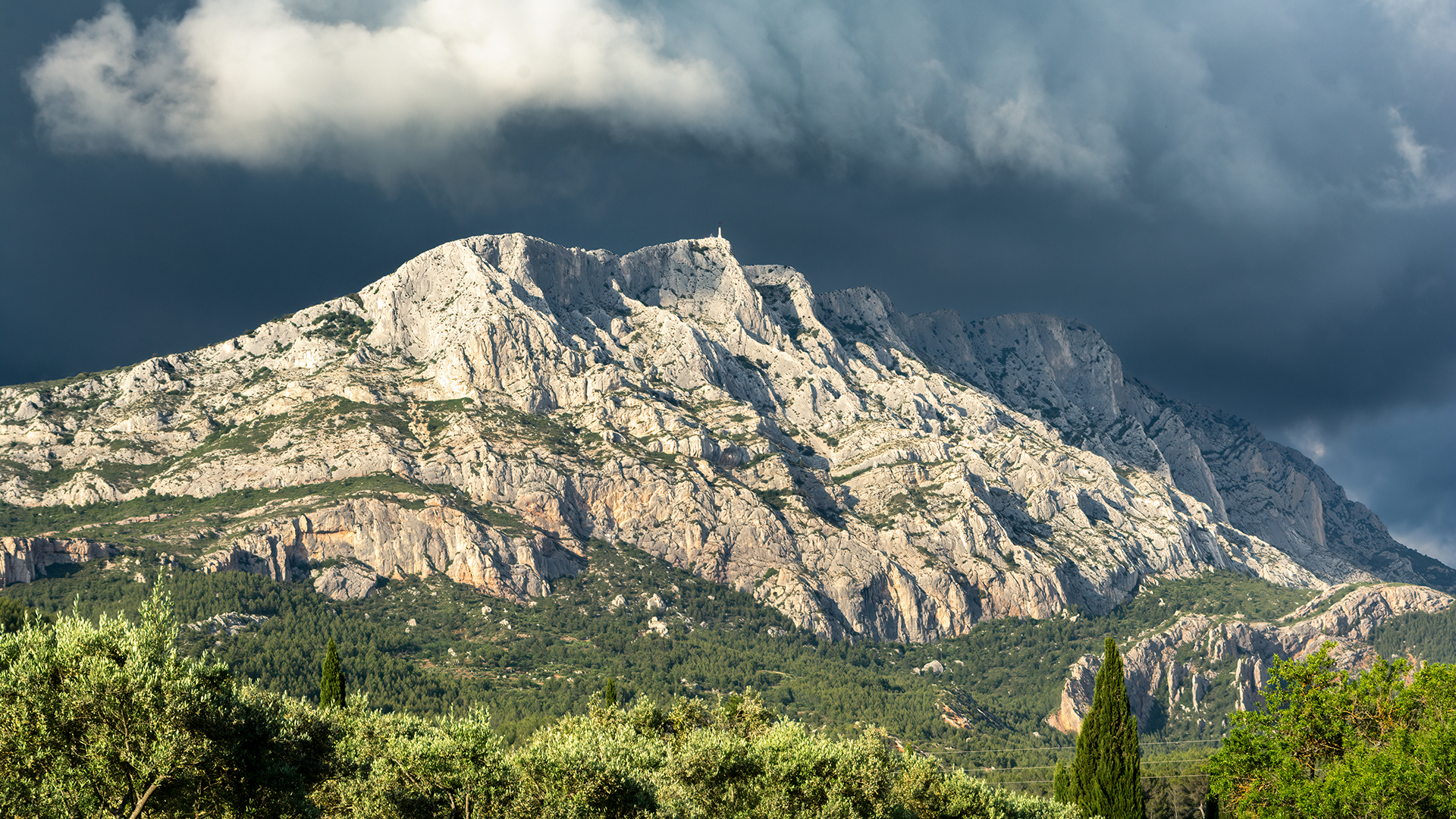
A long, austere limestone massif
A Landscape of Interlocking Habitats
Sainte-Victoire is particularly valuable to naturalists because multiple habitats sit side by side, allowing species-rich communities to exist within a relatively compact area.
Landscape & Habitats
Roques-Hautes & the Western Foot
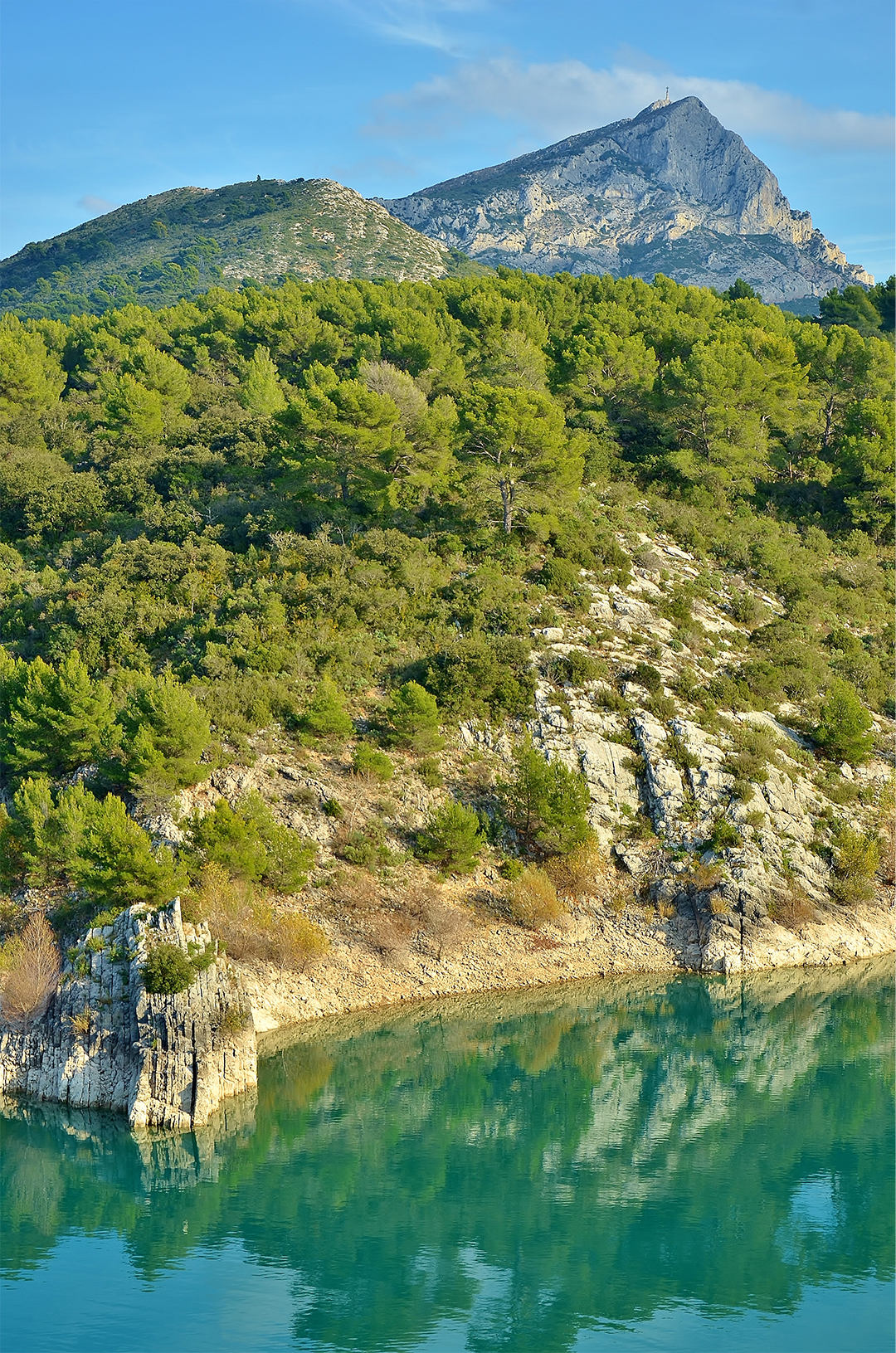
Around Roques-Hautes, garrigue, dry grassland and Aleppo Pine woodland spread beneath Sainte-Victoire. Open ground is particularly important, with low vegetation, bare soil and rocky patches creating warm conditions for insects, reptiles and birds of Mediterranean scrub. The National Nature Reserve also contains the red Cretaceous clays and sandstones associated with the fossil deposits, adding a very different geology from the pale limestone dominating the mountain above.
Garrigue & Dry Grassland
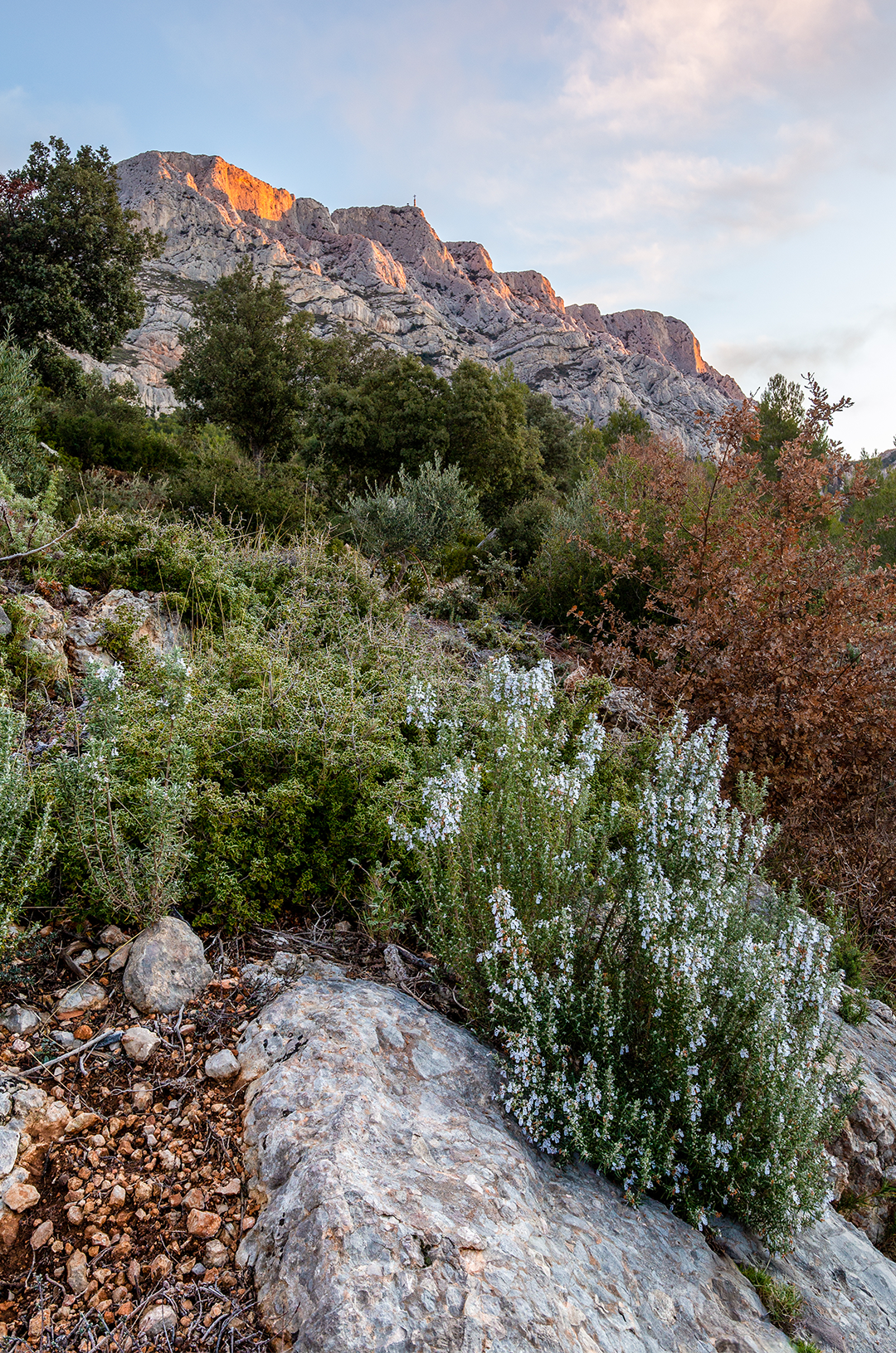
The lower slopes carry extensive garrigue and grassland, shaped by shallow soils, prolonged summer drought and repeated disturbance through grazing and fire. These open habitats are easily lost when scrub and pine close over them. Their importance lies partly in remaining open, providing basking and hunting ground for reptiles, feeding areas for raptors and sunlit habitat for butterflies, spiders and other invertebrates.
Woodland
Aleppo Pine, Holm Oak and Downy Oak contribute to the wooded landscape around the foot of the massif, with woodland becoming more substantial away from the most exposed slopes. Forest edges are particularly productive, bringing trees, garrigue and open ground together without the dense shade of continuous woodland.
The Sainte-Victoire Escarpment
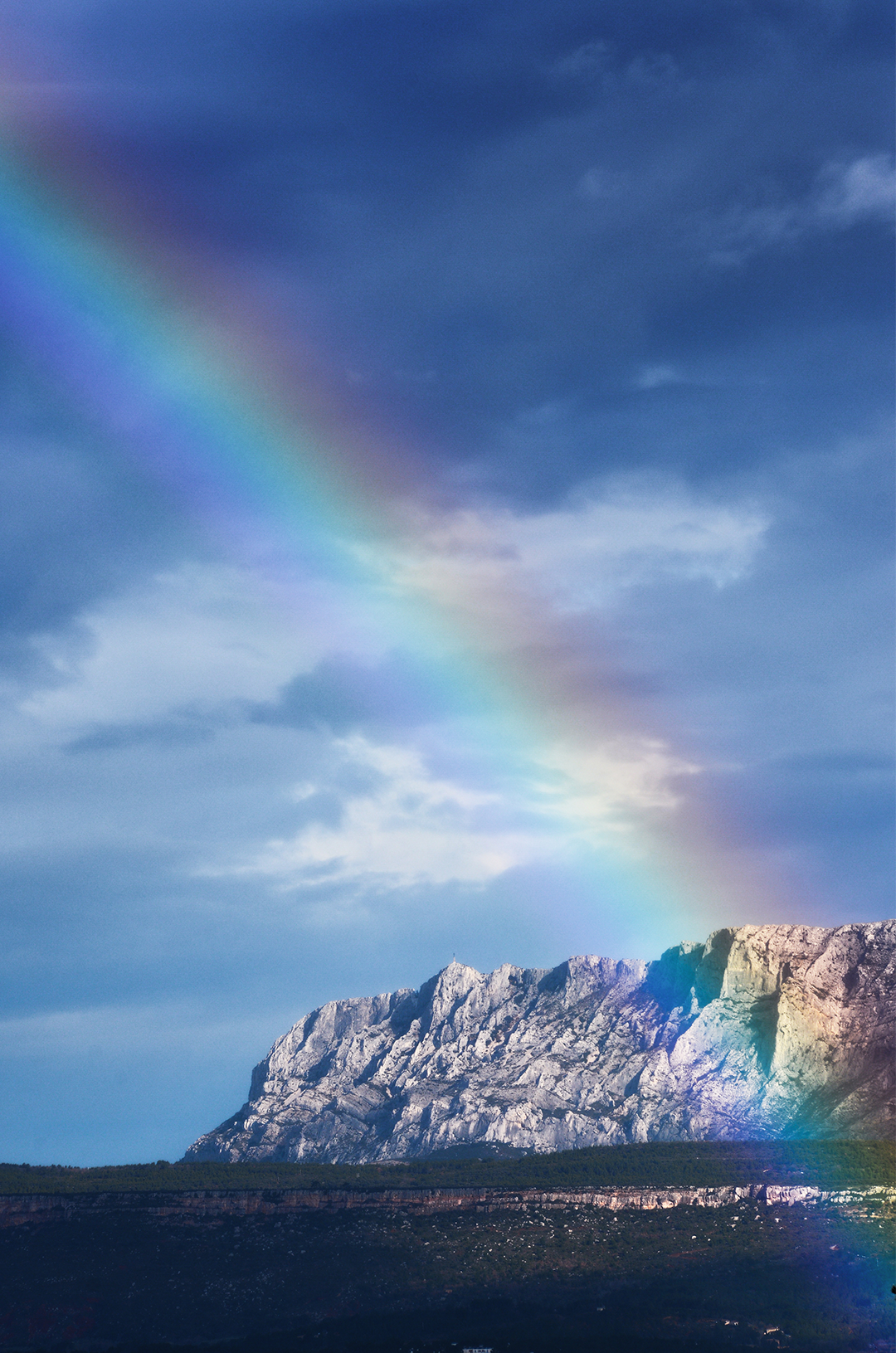
Above the lower country rises the great limestone face of Sainte-Victoire. Cliffs, ledges, scree and rocky ridges provide a very different environment from Roques-Hautes below. The distinction matters for wildlife. Birds ranging from the escarpment regularly use the surrounding grassland, scrub and woodland, making the reserve part of a much larger functioning landscape rather than an isolated 140-hectare island.
Birding Sainte-Victoire
Bonelli’s Eagle is the defining raptor of Sainte-Victoire. The mountain provides nesting cliffs while the surrounding garrigue and open country provide the hunting ground required by a bird that ranges far beyond any individual crag. It remains scarce, so the presence of suitable habitat should never be confused with an expectation of an easy sighting. Short-toed Snake Eagle becomes considerably more conspicuous from spring, searching the open Mediterranean country for reptiles. Peregrine Falcon belongs more closely to the cliffs, while Eurasian Eagle-Owl adds another substantial predator after dark.
The smaller birds reveal the Mediterranean character of the mountain just as clearly. Dartford Warbler, Western Subalpine Warbler and Western Bonelli’s Warbler use different mixtures of scrub and woodland, while Woodlark belongs to the more open ground. European Turtle Dove is a particularly worthwhile summer bird around quieter woodland edges, with European Bee-eater adding another unmistakable voice during the warmer months. The woods bring Crested Tit, Firecrest, Short-toed Treecreeper, Eurasian Nuthatch and the more familiar Mediterranean forest birds into the picture. Clearings and edges deserve particular attention rather than treating woodland simply as somewhere to cross on the way towards the mountain.
Rock and open sky add another community. Alpine Swift sweeps around the escarpment during summer, Blue Rock Thrush on suitable sunny rock faces and broken limestone. Red-legged Partridge is more likely on open rocky ground and scrub below.
Mammals
Sainte-Victoire’s mammals are much less conspicuous than its birds. Wild Boar, Roe Deer, Red Fox, European Badger and martens use the woodland, scrub and quieter slopes, with tracks and other signs generally easier to find than the animals themselves.
Bats emerge into a landscape rich in insects after dark, feeding along woodland edges, clearings and open ground. The wider massif also provides cliffs, cavities, mature trees and buildings capable of supplying different roosting opportunities.
Reptiles & Amphibians
The warm southern country around Sainte-Victoire is excellent reptile habitat. Ocellated Lizard is the standout, favouring sunny open ground where stones, scrub and shelter occur together. Montpellier Snake and Ladder Snake belong to the same Mediterranean landscape, while Western Green Lizard is more closely associated with vegetated edges and scrub. These reptiles are also part of the raptor story. A healthy population of snakes and lizards is what allows Short-toed Snake Eagles to spend long periods hunting over the garrigue.
Amphibians occupy a much smaller part of this overwhelmingly dry landscape, depending on scattered pools, temporary water and other wetter refuges.
Butterflies, Spiders & Other Invertebrates
The reserve itself has an unexpectedly rich spider fauna, with around 160 arachnid species recorded. Stones, leaf litter, garrigue, bare ground and dry grassland provide markedly different hunting conditions within a relatively small area. Butterflies add a more visible element. Spanish Gatekeeper belongs naturally to the warm Mediterranean grassland and scrub around Roques-Hautes, while Western Marbled White uses similarly open, dry habitats.
The wider Sainte-Victoire landscape supports a much broader invertebrate community across garrigue, woodland edge and flower-rich open ground. Grasshoppers and bush-crickets become increasingly conspicuous as the landscape dries through summer, providing prey for birds, reptiles and other predatory insects.
Botanical Highlights
The limestone of Sainte-Victoire carries far more botanical interest than its familiar garrigue shrubs suggest. Provence Sandwort is one of the strongest examples, a small white-flowered plant endemic to Provence and associated with dry, open rocky ground. Its restricted distribution makes it a far more revealing Sainte-Victoire speciality than another list of rosemary and thyme. The high rocky country adds Rock Candytuft, while St Bruno’s Lily, Yellow Asphodel and Dwarf Iris bring further variety to grassland and stony slopes. Woodland and its margins support orchids including Broad-leaved Helleborine, Violet Limodore and Pyramidal Orchid.
The real botanical surprise lies in the temporary Mediterranean pools. Many-seeded Water-starwort was rediscovered on the Cengle plateau, one of fewer than twenty known populations in France. It develops while shallow pools hold water in spring, then flowers and fruits as the water retreats. The same temporary wetlands support other highly specialised plants, including the rare Three-bracted Loosestrife. Sainte-Victoire also holds an exceptional record of Mirror Orchid, one of France’s rarest orchids. Its extraordinary blue reflective flower attracts a particular scoliid wasp through sexual deception. Only two flowering stems arising from a single plant were recorded during the Grand Site monitoring, making this a remarkable botanical record rather than a species visitors should expect to find routinely.
Dinosaurs Beneath Sainte-Victoire
Around 75 million years ago, dinosaurs were nesting in what is now Provence. The deposits at Grands Creux contain fossilised eggs and nests in exceptional numbers, together with bones that have greatly expanded what is known about the animals living here during the Late Cretaceous.
Finds include the predatory Arcovenator, the herbivorous Rhabdodon, the theropod Variraptor and an unidentified titanosaur. The modern garrigue and pine woodland therefore sit directly above evidence of an ecosystem profoundly different from anything alive around Sainte-Victoire today. The fossil beds themselves are protected and closed to public access, so there is little reason for a naturalist to treat them as a destination within the reserve. The better way to explore this part of the story is at Maison Sainte-Victoire, where genuine fossil material and the palaeontological discoveries can be seen without disturbing the site.
Explore Further
- Sainte-Victoire National Nature Reserve – Département des Bouches-du-Rhône – official information on Roques-Hautes, the reserve, scientific work and the protected fossil deposits.
- Sainte-Victoire – Réserves Naturelles de France – a useful overview of the reserve’s habitats, recorded wildlife and palaeontological importance.
- Sainte-Victoire Natural Reserve – Grand Site Concors Sainte-Victoire – particularly useful for understanding how the reserve fits into the much larger Sainte-Victoire landscape and where access is restricted.
- Maison Sainte-Victoire – the best visitor resource for the natural and palaeontological history of the mountain, including genuine dinosaur material.
- WoodPACA Wildlife in Focus: Lord of the Garrigue – Bonelli’s Eagle – WoodPACA’s illustrated guide to one of Provence’s most distinctive raptors, its Mediterranean hunting landscape, ecology and conservation.