


Haute Vallée de la Séveraisse National Nature Reserve
The Haute Vallée de la Séveraisse National Nature Reserve protects just 155 hectares of valley floor within the Valgaudemar, adjoining Écrins National Park. Created in 1974, it follows a short section of the Séveraisse between approximately 1,150 and 1,600 metres.
This is not a reserve of the highest summits. Its interest lies lower down, where a fast mountain river runs between riparian woodland, grassland, scrub and rocky gneiss slopes. The small scale brings these contrasting habitats unusually close together.
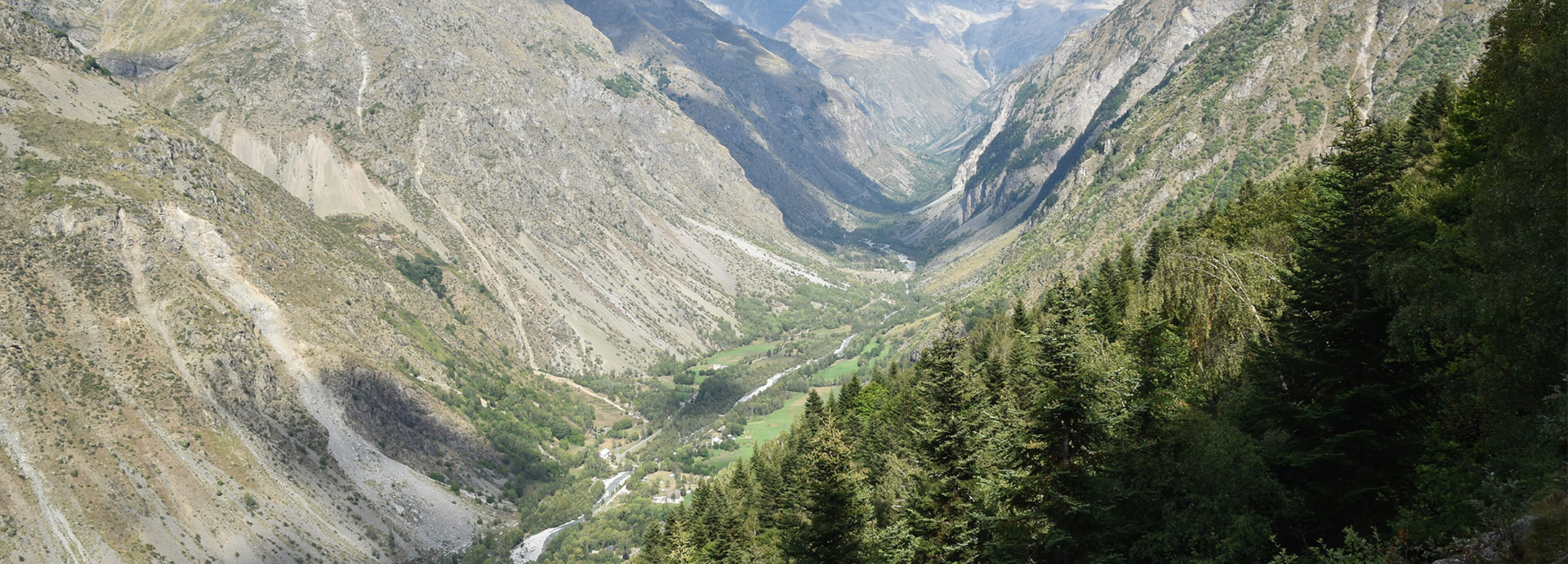
U-shaped glacial valley
Following the Séveraisse
The Séveraisse forms the natural backbone of the reserve. Fast-flowing water passes through a valley floor bordered by riverine woodland, grassland and rocky slopes. Alder is characteristic of wetter sections along the river corridor.
Away from the water, grasslands, scrub and exposed gneiss create another set of habitats. Over a relatively short distance, the reserve moves between river, woodland edge, open ground and rock.
Birding the Reserve
For only 155 hectares, the reserve has a surprisingly varied bird community, with 79 species recorded and 44 identified as breeding. Along the Séveraisse, look for Dipper, Grey Wagtail and Common Sandpiper. Woodland and mature trees add Black Woodpecker, Lesser Spotted Woodpecker, Treecreeper, Willow Tit and Common Crossbill.
Open grassland, scrub and rocky slopes produce a different community. Rock Partridge, Rock Bunting, Red-backed Shrike, Wryneck, Rufous-tailed Rock Thrush and Northern Wheatear have all been recorded, while Wallcreeper is the outstanding cliff specialist.
Golden Eagle, Griffon Vulture and Bearded Vulture also occur overhead, although these wide-ranging birds belong as much to the surrounding Valgaudemar as to the reserve itself.
What makes birding here particularly interesting is the proximity of the habitats. Fast water, woodland edge, grassland, scrub and exposed rock can all be worked within a relatively small area.
Mammals
The reserve inventory includes more than twenty mammal taxa. Alpine Ibex, Chamois and Alpine Marmot provide the conspicuous mountain element, while Mountain Hare, Stoat and Pine Marten are among the less obvious species recorded. Grey Wolf has also been recorded, although its presence should be understood in the context of a wide-ranging animal moving through the much larger Écrins landscape rather than as something likely to be encountered within this tiny reserve.
Bats add a nocturnal component. Common Pipistrelle and Schreiber’s Bent-winged Bat are both recorded, linking the reserve’s woodland, rocky habitats and insect-rich river corridor with wildlife that becomes active after dark.
Reptiles & Amphibians
Despite its cool mountain setting, the reserve has several reptiles associated with warmer, exposed habitats. Slow Worm, Western Green Lizard, Common Wall Lizard, Asp Viper and Western Whip Snake have all been recorded. Sunny rocks and open slopes create local pockets of warmth within the considerably cooler valley environment.
The amphibian community includes Common Frog and Fire Salamander. Their habitat requirements lead towards damp woodland, springs and quieter wet places rather than the fast current of the Séveraisse itself. The close juxtaposition of sun-warmed rock and cool, humid ground helps explain how these quite different animals occur within such a small reserve.
Butterflies & Other Invertebrates
Around 200 insect species have been recorded within the reserve, with a particularly interesting mixture associated with grassland, woodland edge and mountain habitats. Butterflies include Apollo, Clouded Apollo and Large Blue, while Purple Emperor, Lesser Purple Emperor, Poplar Admiral and Scarce Swallowtail show that the interest is by no means confined to familiar high-Alpine species.
The Mountain Cicada adds something particularly distinctive and takes the invertebrate story beyond butterflies. These species occupy different parts of the reserve. Flower-rich grasslands, warmer scrub, woodland edge, rocky ground and damp riverside vegetation can each produce a different invertebrate community through spring and summer.
Freshwater Life
The Séveraisse is the ecological backbone of the reserve. Cold, fast and strongly influenced by snowmelt, the river creates demanding conditions. Stones and submerged surfaces provide habitat for aquatic invertebrates adapted to flowing water, while calmer edges and side channels offer refuge from the strongest current.
The river continually reshapes its margins through erosion, flooding and deposition. Alder and other riparian vegetation provide shade, leaf litter and woody material, connecting the aquatic ecosystem with the woodland and grassland beside it. Aquatic insects complete that connection when their adult stages emerge from the river, becoming available to birds, bats and other insectivores above the water.
Botanical Highlights
The botanical interest of the reserve reflects the close meeting of river, grassland and rocky valley side. Alder and other moisture-loving plants follow the Séveraisse, while grasslands and drier rocky ground support quite different communities only a short distance away. Among the more notable plants are Liotard’s Star-of-Bethlehem, Bird’s-eye Primrose and Piedmont Primrose.
Moisture, exposure, soil and proximity to the river continually alter the growing conditions across the valley floor. This gives the reserve a botanical character quite distinct from the glacier margins, scree and extreme high-altitude flora covered elsewhere in the Écrins.
Visiting the Reserve
The Refuge du Clot – Xavier Blanc lies within the reserve. Routes through the area connect with the wider Valgaudemar and Écrins trail network. Conditions remain strongly seasonal, and snow, floods, storms and winter damage can affect paths and crossings from year to year.
Explore Further
- Réserves Naturelles de France – Haute Vallée de la Séveraisse
The best starting point for the reserve itself. It provides the protected area’s habitats, species inventory and conservation background. - Biodiv’Écrins – Wildlife & Flora Atlas
The useful next step for serious naturalists. Search individual species and explore observations and distributions across the reserve, Valgaudemar and the wider Écrins. - https://destination.ecrins-parcnational.fr/
Useful for exploring the landscape on the ground. Official routes, maps and natural-history points help place the small reserve within the much larger Valgaudemar valley. - Écrins National Park – Official Website
For the wider natural-history context. The national park provides deeper information on Valgaudemar, species monitoring, conservation programmes and the surrounding high-mountain ecosystems.