


Réserve Naturelle Régionale Poitevine–Regarde–Venir
West of Salon-de-Provence, Poitevine–Regarde–Venir protects two very different faces of the Crau within around 220 hectares. To the west lies the Crau sèche, the ancient stony coussoul. To the east is the Crau verte, where irrigation created hay meadows divided by hedgerows planted during the nineteenth century.
That meeting of dry steppe and irrigated meadow is the reserve’s real identity. Little Bustards and Stone-curlews breed in the open country, butterflies and spiders exploit the grasslands and old hedgerows and Arles Merino sheep continue a pastoral cycle closely tied to the ecology of the Crau.
Open limestone grasslands shaped by exposure and continuity
Landscape and Habitats
Crau Sèche
Around 140 hectares are coussoul, the characteristic stony grassland of the dry Crau. Vegetation remains low and open between the rounded stones, creating the exposed conditions required by steppe birds, reptiles and warmth-loving invertebrates.
This is the same extraordinary habitat protected on a much larger scale by the neighbouring Coussouls de Crau National Nature Reserve, but here it forms only one half of the story.
Crau Verte
The eastern side is altogether greener. Old Crau hay meadows are irrigated and cut for hay, producing a taller, more humid grassland than the coussoul only a short distance away.
A dense network of hedgerows, some established in the nineteenth century, divides the meadows and introduces trees, shade and shelter into an otherwise open landscape. Their age gives the Crau verte considerably more structural variety than a modern block of agricultural grassland.
Old Orchards
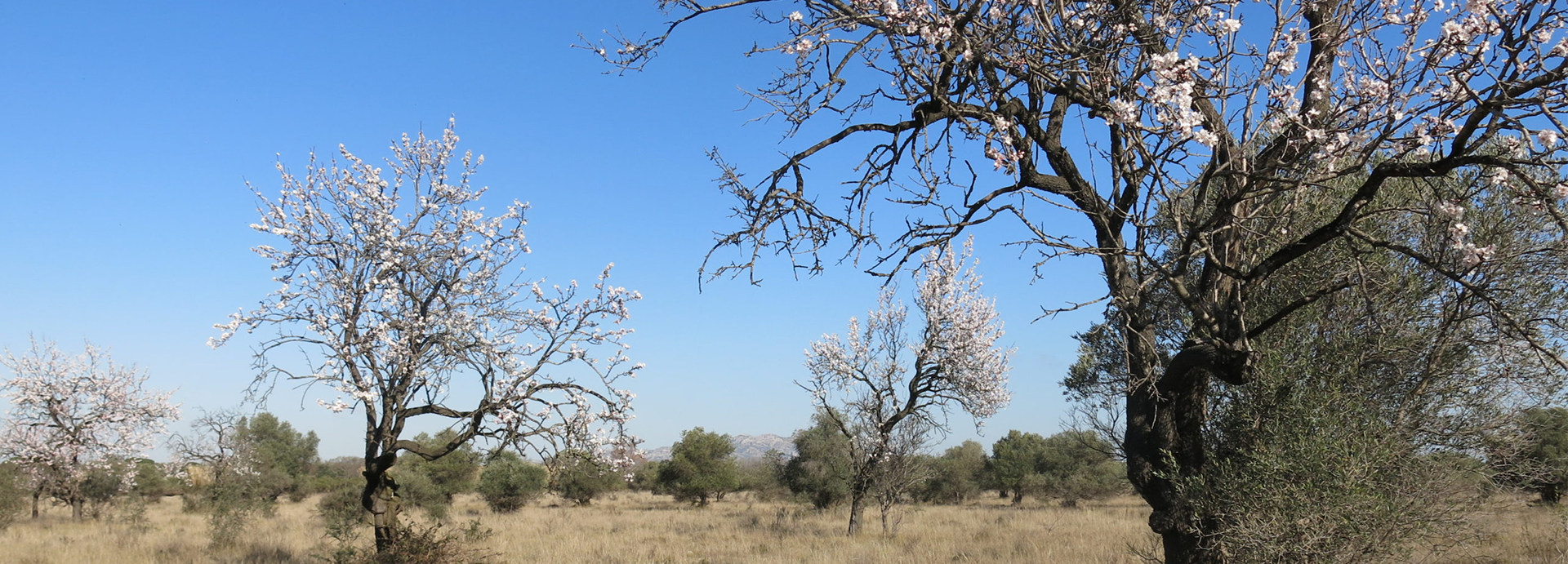
Poitevine also retains old almond and olive trees, a small but distinctive remnant of the cultivated Crau. Veteran fruit trees add cavities, bark and dead wood to a reserve otherwise dominated by grassland and hedgerows.
Biodiversity Significance
The ecological importance of Poitevine–Regarde–Venir lies in its role as a refuge for open-habitat specialists, many of which are declining elsewhere as grasslands disappear.
Birding Poitevine–Regarde–Venir
Little Bustard is one of the reserve’s defining birds. Females nest on the ground and rear their chicks amongst the low vegetation, while outside the breeding season the species becomes gregarious. The reserve is particularly valuable during winter, when much larger groups can use the open ground for feeding and daytime resting.
Stone-curlew also breeds here. Large yellow eyes reveal something of its behaviour: birds are often inconspicuous by day before becoming more active towards dusk, when their carrying calls are much easier to detect across the plain.
The wider open-country community includes Skylark, Woodlark and Red-legged Partridge, while Meadow Pipit becomes more relevant in winter. Black Kite and Common Buzzard work the airspace above the meadows and coussoul, with the taller hedgerows providing perches and shelter for birds largely absent from the neighbouring treeless steppe. Pin-tailed Sandgrouse belongs to the wider Crau and is associated with the reserve, but its principal location is the Coussouls de Crau.
Reptiles
Ocellated Lizard is the standout reptile. The dry coussoul provides the warmth and openness required by Europe’s largest lizard, with stones, burrows and cavities offering shelter from predators and the extremes of summer heat. The contrast between Crau sèche and Crau verte matters here too. The Ocellated Lizard belongs to the exposed side of the reserve rather than the irrigated meadow landscape.
Butterflies, Spiders & Other Invertebrates
Crau Grayling is one of the characteristic butterflies of the dry Crau, flying across the coussoul from late spring into summer. At rest its subdued colouring makes considerably more sense, blending readily into dry grass and stony ground.
The Onopordum Jewel Beetle has a much tighter relationship with a particular plant. This small Provençal endemic is associated with Illyrian Thistle, linking one of the reserve’s most distinctive insects directly to the vegetation of the open Crau.
Spiders are exceptionally well represented, with more than 100 species recorded. The assemblage ranges from web-building species amongst taller vegetation to wolf spiders and jumping spiders hunting at ground level. Tarantula Wolf Spider is among the more striking inhabitants of the dry open country.
Botanical Highlights
The coussoul vegetation is sparse but highly characteristic. Branched Brachypodium, Hairy Feather-grass, Hollow-stemmed Asphodel, thyme, Autumn Daisy and Seguier’s Spurge grow between the stones, with dwarf irises and orchids adding colour through the flowering season.
Giant Orchid can be particularly conspicuous, while stands of Illyrian Thistle support the endemic Onopordum Jewel Beetle. One of the more interesting grasses is Late Moor-grass, a regionally protected species discovered on the reserve. Its presence adds another element to a site where the plant communities shift quickly between very dry coussoul and irrigated meadow.
Pastoralism & Hay Meadows
Two flocks of Arles Merino sheep graze the coussoul in spring and the meadows during winter. In summer the animals leave the Crau for Alpine pastures, continuing the transhumant cycle that has shaped the open landscapes of southern Provence for centuries.
The Crau verte follows a different management rhythm. Irrigation and mowing maintain the hay meadows, while the old hedgerows remain threaded through them. These are working agricultural habitats rather than abandoned grasslands and their wildlife is tied to the way the land continues to be used.
Visiting the Reserve
Poitevine–Regarde–Venir is not open for unrestricted public access. The reserve can be visited during organised activities and naturalist outings run by its manager, CEN PACA.
That makes the reserve different from the nearby Peau de Meau trail in the Coussouls de Crau. Anyone wanting to experience the open Crau independently should use the authorised public routes rather than treating Poitevine–Regarde–Venir as another freely accessible steppe site.
Explore Further
- CEN PACA – Poitevine–Regarde–Venir Regional Nature Reserve – the reserve manager’s information on the Crau sèche, irrigated hay meadows, wildlife, management and organised access.
- Réserves Naturelles de France – Poitevine–Regarde–Venir – a useful reserve profile with habitats, recorded species and the contrast between coussoul and hay meadow.
- Atlas Biodiv’PACA – Poitevine–Regarde–Venir – reserve-level wildlife records, particularly useful for checking birds, spiders and other recorded fauna.
- WoodPACA Poitevine–Regarde–Venir Reserve Guide – the downloadable WoodPACA guide to the reserve’s coussoul, Little Bustard, Stone-curlew, Ocellated Lizard, Crau Grayling and characteristic flora.