


Partias Regional Nature Reserve
Just outside Briançon, the Partias Regional Nature Reserve protects nearly 802 hectares of mountain country rising from about 1,600 metres to 2,940 metres at the Cime de la Condamine. The reserve climbs through larch woodland, grassland and wetlands into Alpine heath, snow hollows, scree and exposed high mountain. That altitudinal range, combined with varied geology, creates an unusually concentrated mixture of habitats.
Partias is particularly valuable because those habitats remain connected. Forest runs into treeline, grasslands surround small wetlands and rocky slopes continue upwards into the high Alpine zone. Wildlife changes with them.
Around 520 plant species have been recorded within the reserve
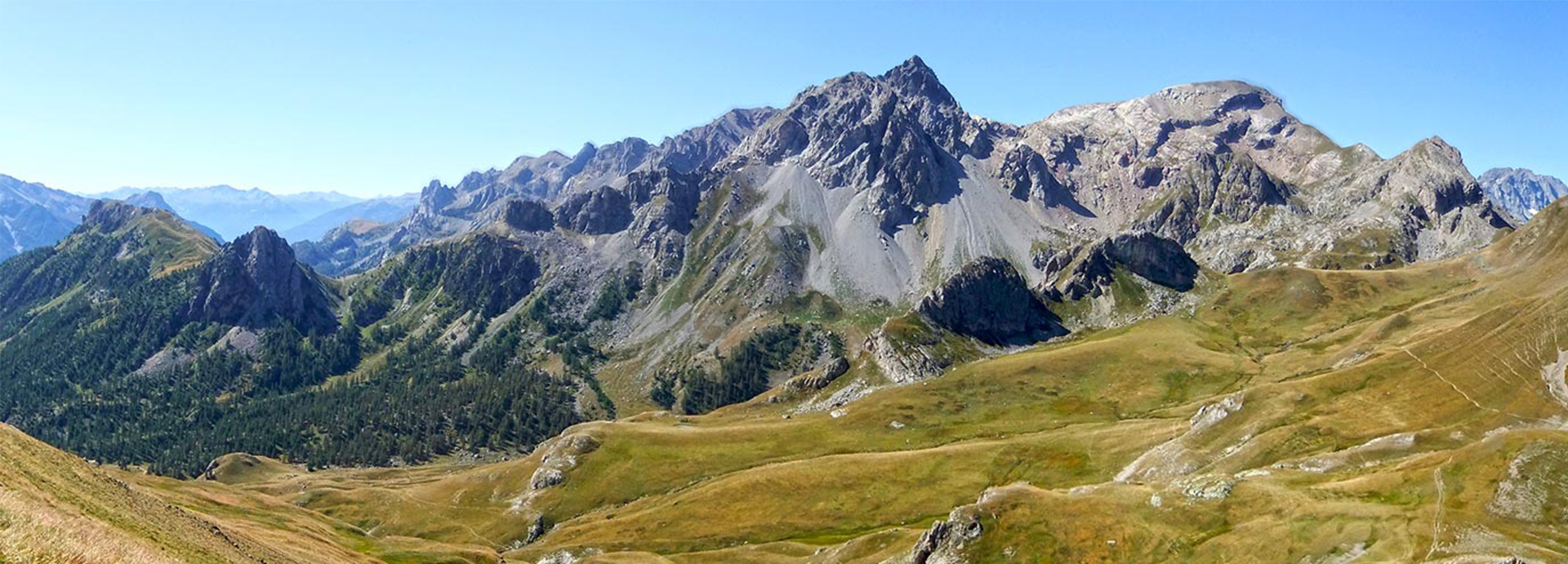
From Larch Forest to High Mountain
The lower reserve is characterised by larch woodland, with Swiss Stone Pine adding another high-mountain conifer towards the upper forest. These woods are not simply a transition on the way to somewhere higher. Old trees, dead wood, open clearings and the forest floor support their own community of birds, mammals, fungi and invertebrates.
Around treeline the woodland becomes increasingly open. Heath, grassland and scattered trees create particularly important habitat for Black Grouse, while above them Alpine grasslands eventually give way to snow hollows, scree and rock. Small wetlands interrupt this predominantly dry mountain landscape, introducing another set of plants, dragonflies, amphibians and small mammals.
Birding the Reserve
With 107 bird species recorded, Partias offers considerably more than the familiar collection of headline Alpine birds. The larch forests are worth working slowly. Willow Tit, Crested Tit, Coal Tit, Common Crossbill, Northern Nutcracker, Treecreeper and Black Woodpecker occur here, while Eurasian Pygmy Owl and Tengmalm’s Owl add two much less conspicuous forest specialists. Around treeline and the more open slopes, attention shifts towards Black Grouse, Rock Partridge, Rock Bunting, Yellowhammer, Linnet and Rufous-tailed Rock Thrush.
Higher still, Rock Ptarmigan, White-winged Snowfinch, Alpine Accentor, Water Pipit and Northern Wheatear bring a much more distinctly high mountain community. Both Red-billed Chough and Alpine Chough occur, making Partias a useful place to become familiar with the differences between the two. One of the reserve’s more surprising records concerns House Martin. A colony of around 30 birds has nested at approximately 2,750 metres, a remarkable setting for such a familiar species.
Partias therefore rewards birders prepared to spend time at several elevations. The smaller woodland and treeline birds can be every bit as interesting as the Ptarmigan and Black Grouse higher up.
Mammals and Bats
The reserve supports a substantial mountain mammal community. Chamois, Alpine Marmot, Mountain Hare and Stoat occupy different parts of the grassland and high-mountain landscape. One of the most interesting smaller mammals is the Eurasian Water Shrew, associated with clean water and wet habitats rather than the exposed mountain slopes that dominate the scenery.
Bats are exceptionally well represented. Sixteen species of conservation interest have been recorded, including Barbastelle, Savi’s Pipistrelle, Parti-coloured Bat and Northern Bat. That diversity reflects the variety of feeding and roosting habitat available. Woodland, cavities, wetlands, grassland and insect-rich forest edges continue to support wildlife well after the more conspicuous daytime mammals become difficult to see.
Reptiles and Amphibians
Partias provides a particularly good demonstration of how important local microclimate can be in the mountains. Western Green Lizard has been recorded in Alpine grassland at approximately 2,350 metres, an exceptional altitude for a species normally associated with considerably warmer environments.
Sunlight and exposure explain how this is possible. Rocky, south-facing ground can become surprisingly warm even when the surrounding mountain climate remains cool. Wet habitats support a contrasting amphibian community. Common Frog and Common Toad are both recorded, exploiting the reserve’s ponds, wet ground and small bodies of water.
Butterflies & Other Invertebrates
Around 220 insect species have already been documented at Partias, with the varied grasslands and wetlands providing much of the interest. Notable butterflies include Apollo, Clouded Apollo, Large Blue and Marsh Fritillary. Each occupies rather different habitat, from sunny mountain slopes and grasslands to wetter vegetation.
The reserve’s wetlands add dragonflies and damselflies, including Black Darter and Scarce Emerald Damselfly, while grasshoppers and other Orthoptera become increasingly conspicuous across the warmer grasslands during summer.
Botanical Highlights
More than 520 plant species have been recorded within Partias. The flora changes from larch woodland and grassland through wet areas and Alpine heath towards increasingly sparse vegetation amongst scree, snow hollows and high rocky ground. Several plants stand out. Alpine Columbine, Dwarf Bulrush, Dauphiné Cinquefoil, Martagon Lily and Edelweiss are among the notable species recorded in the reserve.
The woodland has its own conservation story. Swiss Stone Pine is being encouraged as part of work to increase the structural and biological diversity of the mountain forest and improve its resilience as environmental conditions change. Around 3,000 Swiss Stone Pines have been planted across seven hectares, with the developing woodland monitored over the longer term. This is therefore not simply a reserve protecting existing habitats. Partias is also providing an opportunity to observe how mountain woodland, grasslands and wetlands respond to a changing climate.
Visiting the Reserve
Partias is a protected mountain landscape rather than simply an extension of the surrounding walking and skiing terrain. Black Grouse, Rock Ptarmigan and other cold-adapted wildlife are particularly vulnerable to disturbance during winter, when conserving energy becomes critical. Wetlands and sensitive vegetation bring their own pressures during the growing season. Following current reserve guidance is therefore especially important when moving through the area.
Explore Further
- LPO PACA – Partias Regional Nature Reserve
The best natural-history starting point for Partias. The LPO co-manages the reserve and provides detailed information on its 107 recorded bird species, 16 bat species, mountain mammals, reptiles, amphibians, insects and flora. - Réserves Naturelles de France – Partias
A useful overview of the reserve and its habitats. Particularly good for understanding the altitudinal range and how larch forest, grasslands, lakes, wetlands, Alpine heath, snow hollows and rocky high ground fit together. - LPO Provence-Alpes-Côte d’Azur
Useful for going beyond the reserve summary. LPO PACA undertakes monitoring, ecological research and conservation work across the region and is particularly relevant for the birds, bats and invertebrates of Partias. - Biodiv’Écrins – Wildlife & Flora Atlas
Useful for exploring the surrounding Briançonnais and Écrins fauna in greater depth. It complements the Partias inventories where species range beyond the relatively small reserve. - Écrins National Park – Official Website
For the wider mountain context. Partias sits within the greater Briançonnais and Écrins landscape, so the national park’s material helps place its high-mountain wildlife within the surrounding Southern Alps.